If you’re just getting into Wuyi rock oolong, one of the first questions you might have is whether you can reuse the leaves for multiple infusions. The answer is a solid yes. Wuyi rock oolong, often called Yancha, was essentially designed for resteeping, with each infusion bringing out new and different flavors.
High-quality Yancha doesn’t release everything in the first cup. The leaves are thick, medium to high oxidized, and roasted in a way that builds layers into the flavor rather than pushing it all to the surface at once. Reusing them isn’t just possible. It’s genuinely the best way to understand what makes this tea worth drinking.
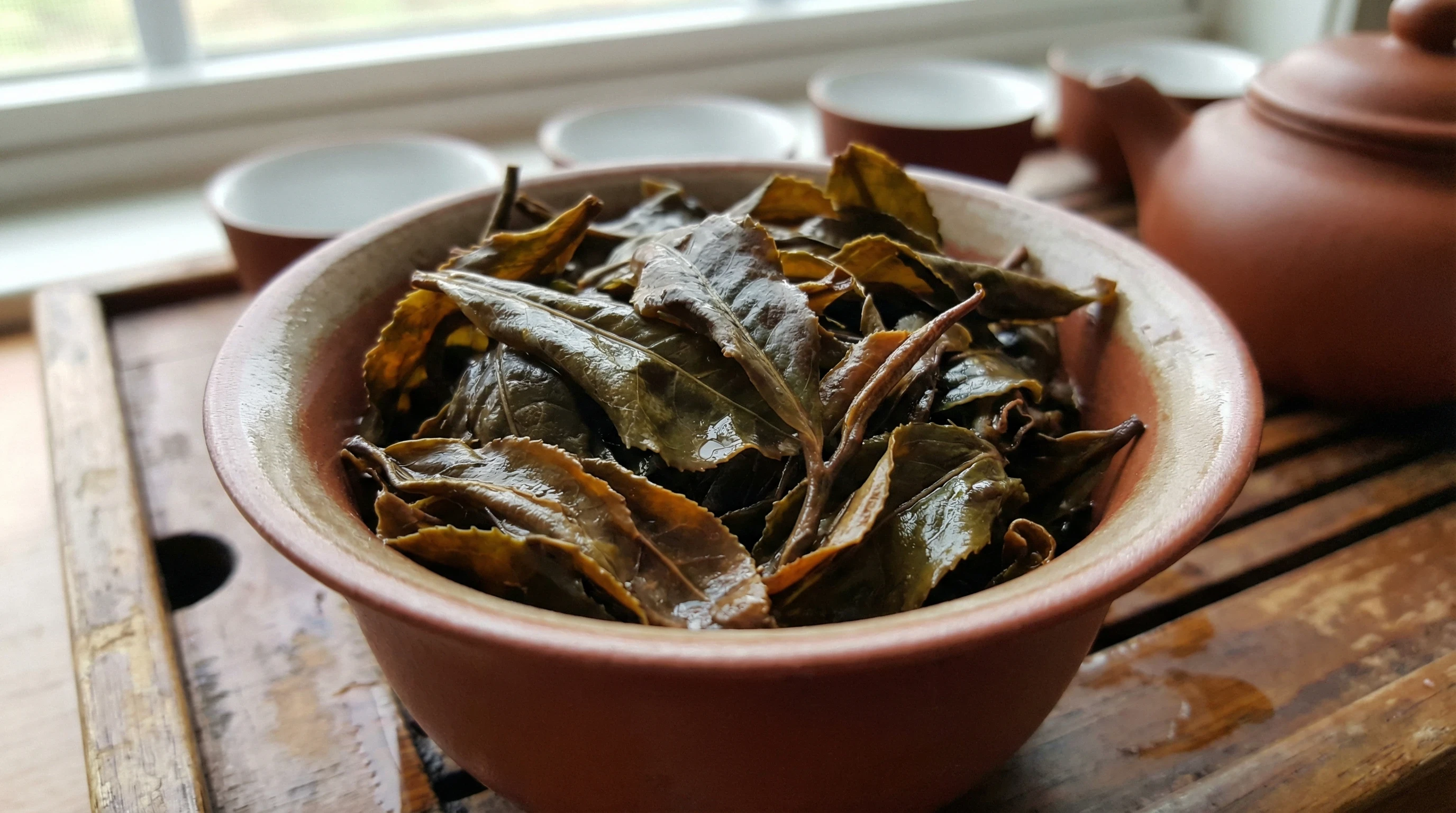
Can You Reuse Wuyi Rock Oolong Leaves for a Second Brew?
If you’re wondering whether you can reuse Wuyi rock oolong leaves for a second brew, the answer is yes, without hesitation. Part of what makes Wuyi oolongs worth returning to is the production process behind them. The leaves are harvested from older, mature bushes, then tightly rolled and carefully roasted. These steps lock in aroma and create flavor layers that don’t surface all at once. It’s more of a slow, measured release across multiple steeps.
What surprises a lot of people is that the second and even third infusions are often smoother, richer, and more nuanced than the first. The first steep brings out the initial roast character and strong fragrance, but later infusions tend to deliver more body, cleaner minerality, and sweeter notes as the leaves gradually open up.
This is exactly why enthusiasts reach for Yancha over teas that peak and fade in a single cup. If you’re exploring how to reuse Wuyi rock oolong tea leaves, it’s not just allowed. It’s how the tea is meant to be experienced.
How Many Times Can You Steep Wuyi Rock Oolong?
With Western-style brewing, using larger mugs or teapots with longer steep times, you’ll generally get two to four good infusions from Wuyi rock oolong. If you’re brewing Gongfu style, the traditional approach for Wuyi teas, using a small gaiwan or yixing pot with short, controlled steeps, it’s common to get anywhere from six to ten infusions from quality leaves. Premium Da Hong Pao and other top-tier Yancha can sometimes stretch to twelve steeps before the flavor genuinely starts to fade.
How many resteeps you get depends on a few key factors.
Leaf quality: Better leaves from older bushes and careful processing hold up longer across multiple brews. This becomes clear by the third or fourth infusion, when lesser-quality leaves start falling flat.
Roast level: Heavier roasts tend to carry through more brews, though the flavor profile can shift noticeably as you progress through the session.
Leaf to water ratio: More leaf in the vessel means more material to work with across infusions, which generally extends the session.
Vessel size: Smaller gaiwans or pots used with short steeps unlock more infusions than brewing in large mugs.
Water temperature: Stick to 90-100°C (194-212°F) to fully open the leaves with each round. Cooler water leaves extraction incomplete, especially in later steeps. A variable temperature kettle makes it much easier to stay consistent across a long session.
There’s no fixed rule about when to stop, but if your tea starts tasting thin or flat, that’s usually the signal to wrap it up. Just because you can pull ten brews doesn’t mean you’ll always want to, but it’s worth paying attention to how the taste evolves round by round.
One habit worth building is to smell the wet leaves between infusions. A lot of the character reveals itself there, and some seasoned tea drinkers judge leaf quality based almost entirely on how the scent shifts from steep to steep.
Why Wuyi Rock Oolong Is Meant to Be Reused
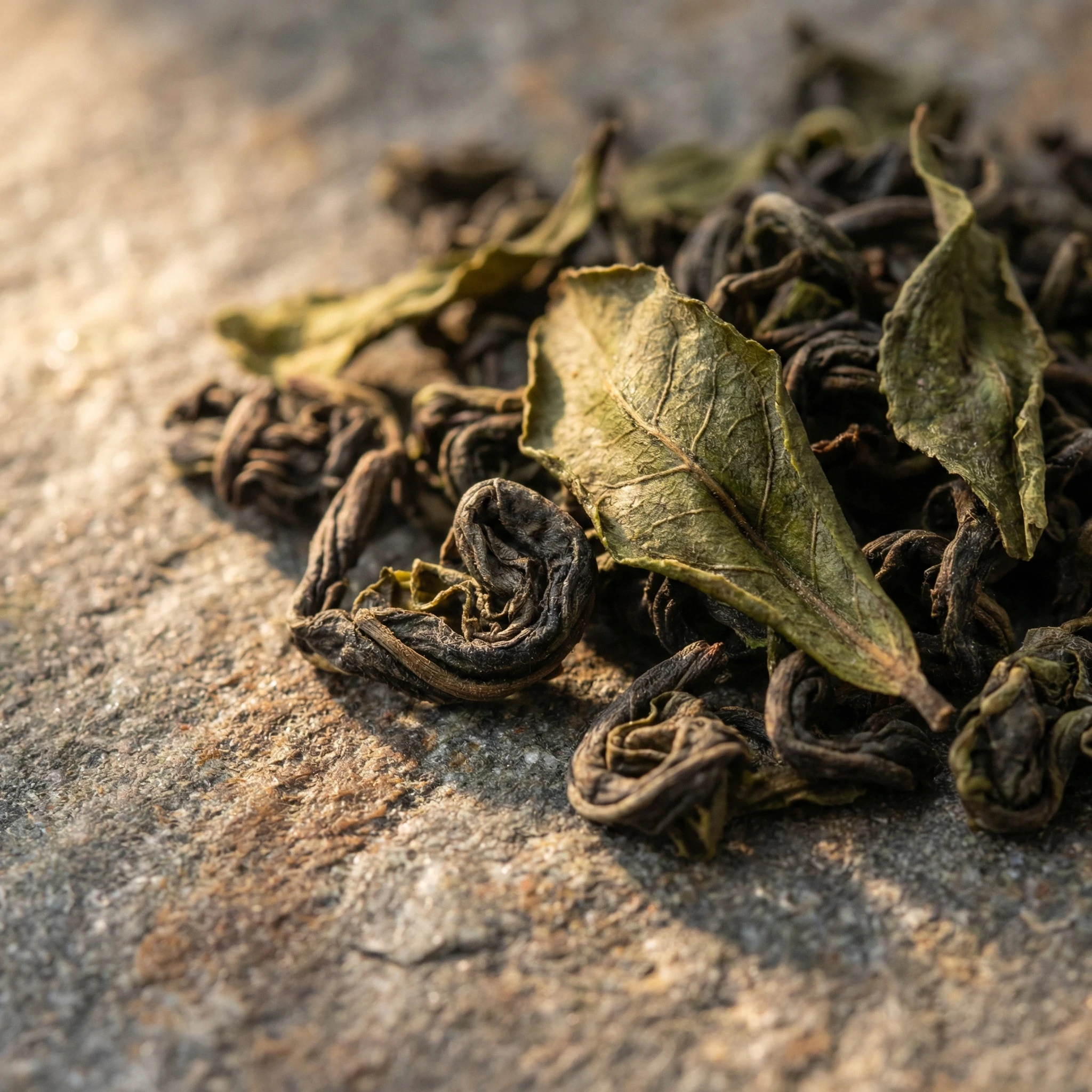
The physical structure of Yancha is a big part of why it handles resteeping so well. The leaves are thick, often picked from mature and sometimes semi-wild bushes growing in the rocky Wuyi Mountains. The roasting process stabilizes their flavor compounds and introduces complexity that lower-fired teas simply don’t have. Those thick, dense leaves hold onto aromatic oils and minerals, releasing them gradually over several pours rather than all at once.
Instead of front-loading everything into the first steep, these leaves slowly give up minerals, aromatic oils, and what tea drinkers often call “rock rhyme,” the distinct mineral quality that Wuyi teas are known for. Each infusion has its own character.
The first steep brings big roast presence, clear floral aroma, and an upfront freshness. The second and third steeps tend to shift toward deeper body, more defined minerality, and a silky texture that wasn’t as obvious in the first cup. Later steeps often carry a sweet lingering finish with mellow fruit or dried floral notes.
If you only drink the first steep and discard the leaves, you’re skipping the part of the session where the tea actually opens up. Resteeping is what gives you the full picture of what the leaves have to offer.
How to Reuse Wuyi Rock Oolong Leaves Properly
The method you choose, Western or Gongfu, shapes how much you get out of the leaves. Here’s how to approach both.
Western Style Brewing
Use about 1 teaspoon (2-3g) of loose leaf per 250ml/8oz of water. Heat water to 95°C (203°F). Steep the first round for 2 to 3 minutes. With each additional steep, add 30 to 60 seconds and adjust based on taste.
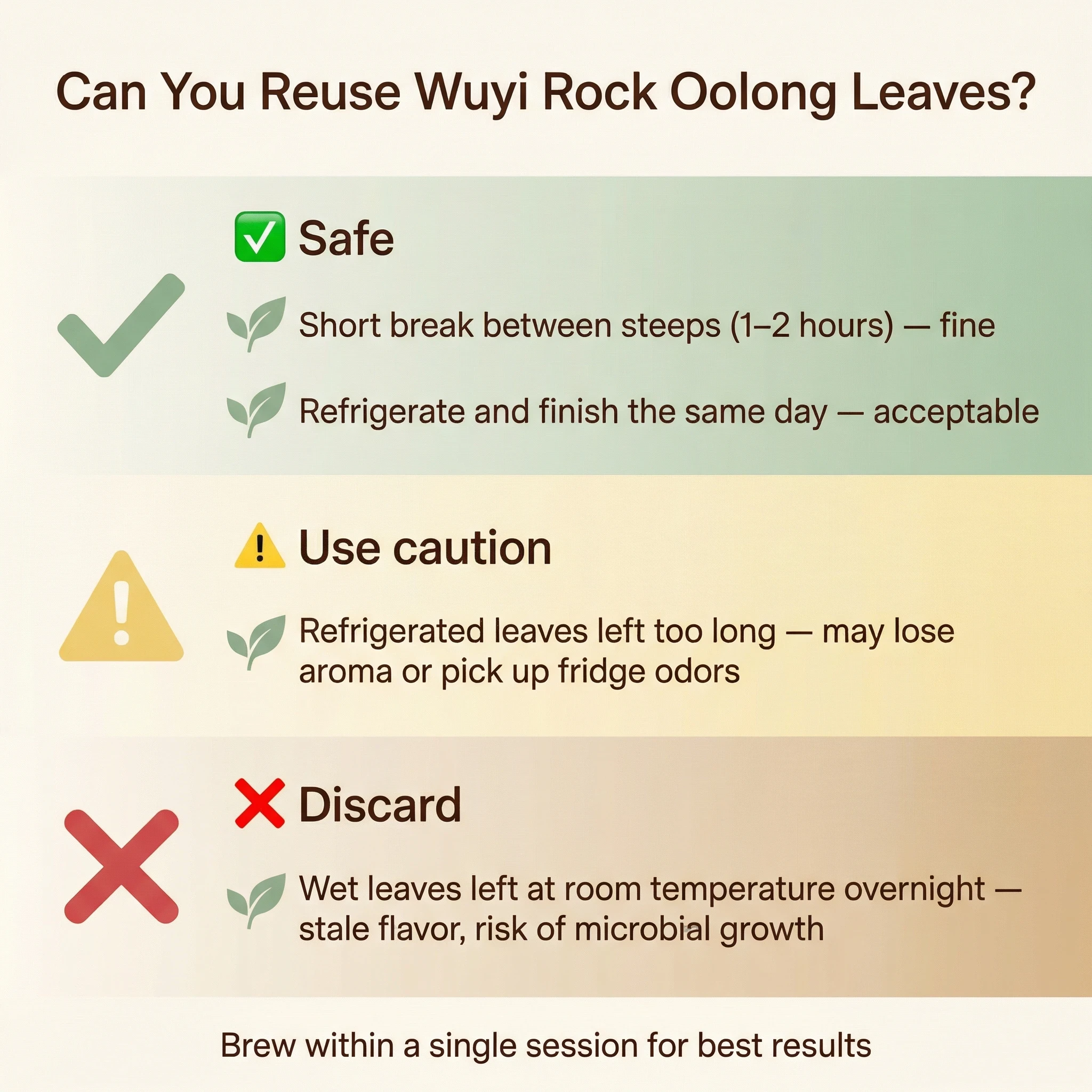
This style works well for a relaxed cup or two, but the flavor will noticeably mellow by the third or fourth round. Leaves can sit for 30 minutes to an hour between steeps without much issue, but avoid leaving them wet for extended periods. Prolonged moisture at room temperature creates conditions for stale flavors and gradual flavor degradation.
Gongfu Brewing
Use 5 to 7g of leaf per 100-120ml gaiwan or pot. Heat water to 95-100°C (203-212°F). Keep the first steep to just 10-15 seconds. After that, move to 20-30 seconds and add time gradually with each subsequent round, adjusting based on what the tea is telling you. If you’re new to this approach, the Wuyi Yancha Gongfu brewing guide walks through the full process in detail.
Gongfu brewing is the traditional method for Wuyi teas, and it pulls more from the leaves across a longer session. The short steeps give you more control and let you track how the tea evolves from round to round.
As with Western brewing, try not to leave the leaves sitting wet for long stretches. Extended rest at room temperature can lead to flavor loss and, over time, microbial growth. If you need to step away for more than about 60 minutes, refrigerate the leaves and plan to use them later the same day. Some experienced brewers actually find that a short rest between steeps can help certain flavors come forward, so brief pauses are fine. It’s the multi-hour neglect that causes problems.
When Should You Stop Reusing the Leaves?
There’s no fixed number for how many times you can steep Wuyi rock oolong leaves. The better question is what the tea is telling you. It’s time to stop when the liquor looks pale and watery, when almost no aroma rises from the cup, when the aftertaste has disappeared, and when the leaves look flat, limp, and fully spent.
If you’re adding significant steeping time and still getting weak, flavorless tea, that’s a clear sign the leaves have nothing left to give. A longer final steep can sometimes pull out the last bit of interest, but once the signs above appear together, it’s time to start fresh.
Does Reusing Wuyi Rock Oolong Reduce Caffeine?
A significant portion of the caffeine in Wuyi rock oolong extracts during the first one or two infusions. Later steeps will generally be somewhat lower in caffeine, but they are not caffeine-free. The reduction is moderate, not dramatic, and varies depending on leaf quality, water temperature, and steep time.
Some people rinse the leaves with a quick 5-second pour before the first real steep, and this can help remove surface dust and encourage the leaves to open. However, a rinse this short does not meaningfully remove caffeine. It’s a useful habit for cleanliness and preparation, not a reliable way to reduce caffeine intake.
If you’re sensitive to caffeine, the later infusions are the safer choice for an evening session, since the initial extraction has already occurred. Just keep expectations realistic. The tea will be milder in caffeine by rounds four or five, but it won’t be caffeine-neutral.
Common Mistakes When Reusing Wuyi Rock Oolong Leaves
A few recurring issues tend to derail an otherwise good resteeping session.
Using too little leaf leads to thin, flat tea across all infusions. Use an amount appropriate for your vessel and brewing style. Yancha rewards a proper leaf ratio.
Oversteeping the first infusion is one of the most common mistakes. Going too long on the first round can make later steeps taste harsh or hollow. Start conservative and work your way up.
Water below 90°C (194°F) is not enough to properly extract from these leaves, especially in later rounds when the flavor compounds are less accessible. Keep the temperature consistent.
Leaving leaves wet overnight at room temperature is a reliable way to ruin the remaining flavor. Stale, flat tea is the best-case outcome. At worst, you’re dealing with leaves that have been sitting in a warm, moist environment for hours.
Assuming the second steep is always weaker is worth unlearning. With Yancha, the second and third infusions are often more balanced and more interesting than the first. Give them the time they deserve.
Fix these habits and the tea tends to take care of itself. Good water, the right temperature, enough leaf, and attention to timing cover most of what you need.
Is It Safe to Reuse Wuyi Rock Oolong Leaves the Next Day?
Leaves that have been sitting wet at room temperature for several hours, and especially overnight, are best discarded. Short breaks between steeps of an hour or two are generally fine, but beyond that, you’re moving into territory where stale flavors and the risk of microbial growth become real factors.
Refrigerating the leaves is an option if you need to pause the session and come back later, but even refrigerated leaves can lose aroma fairly quickly and may pick up fridge odors if left too long. If you do refrigerate, plan to finish the session the same day.
The practical takeaway is straightforward. Brew within a single session when possible. The tea will taste better, and you won’t have to think about whether the leaves are still worth using.
Wrapping Up: Should You Reuse Wuyi Rock Oolong?
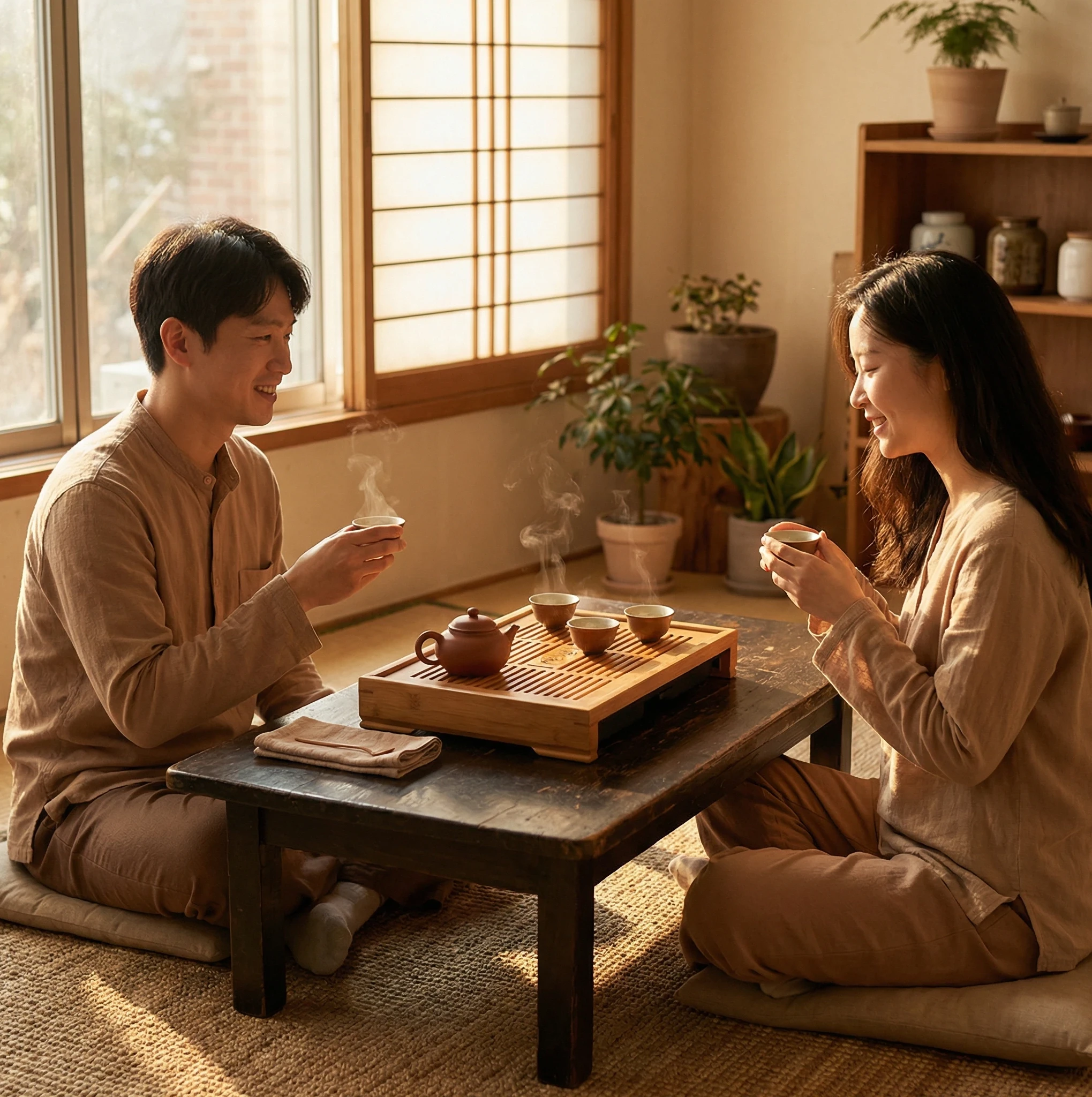
If you’re not resteeping Wuyi rock oolong, you’re skipping the part of the experience that makes the tea worth buying in the first place. These leaves are built for multiple infusions, and treating them as single-use is leaving a lot of flavor behind.
Try working through a full session, adjusting steep times as you go, and paying attention to how the character changes from round to round. If you want more detail on the process, the guides on how to brew Wuyi rock oolong Western style and the Gongfu brewing guide cover both approaches in depth. If you’re curious about which Wuyi teas work best for multiple infusions, the best loose leaf teas for Gongfu brewing guide includes Da Hong Pao and other top Yancha varieties worth trying.
For a premium experience, a high-quality Da Hong Pao is the clearest demonstration of what multiple infusions can offer. By the third steep, it becomes obvious why leaf quality matters. Finding a good source and brewing it properly is what separates a decent cup from a session you’ll actually remember.
Here’s a little transparency: Our website contains affiliate links. This means if you click and make a purchase, we may receive a small commission. Don’t worry, there’s no extra cost to you. It’s a simple way you can support our mission to bring you quality content.

Chris is the founder of Zen Tea Tools and a passionate explorer of traditional and modern tea brewing. From Gongfu sessions to smart tea technology, he shares practical insights to help others find clarity, calm, and better tea.Learn more about Chris →
Leave a Reply