If you are a fan of white tea, you probably already know that aged white tea is a completely different experience compared to young, fresh white teas. While young Bai Mu Dan (White Peony) or Shou Mei (Longevity Eyebrow) are often brewed Western style in a large pot with longer steeps, the real magic in aged white tea comes out best with gongfu brewing. This method draws out all those deep honey, woody, and fruit notes hidden in older leaves.
Here is a no-nonsense guide to how to brew aged white tea gongfu style. You will find everything you need on temperature, timing, leaf ratios, and what to expect from Shou Mei versus Bai Mu Dan.
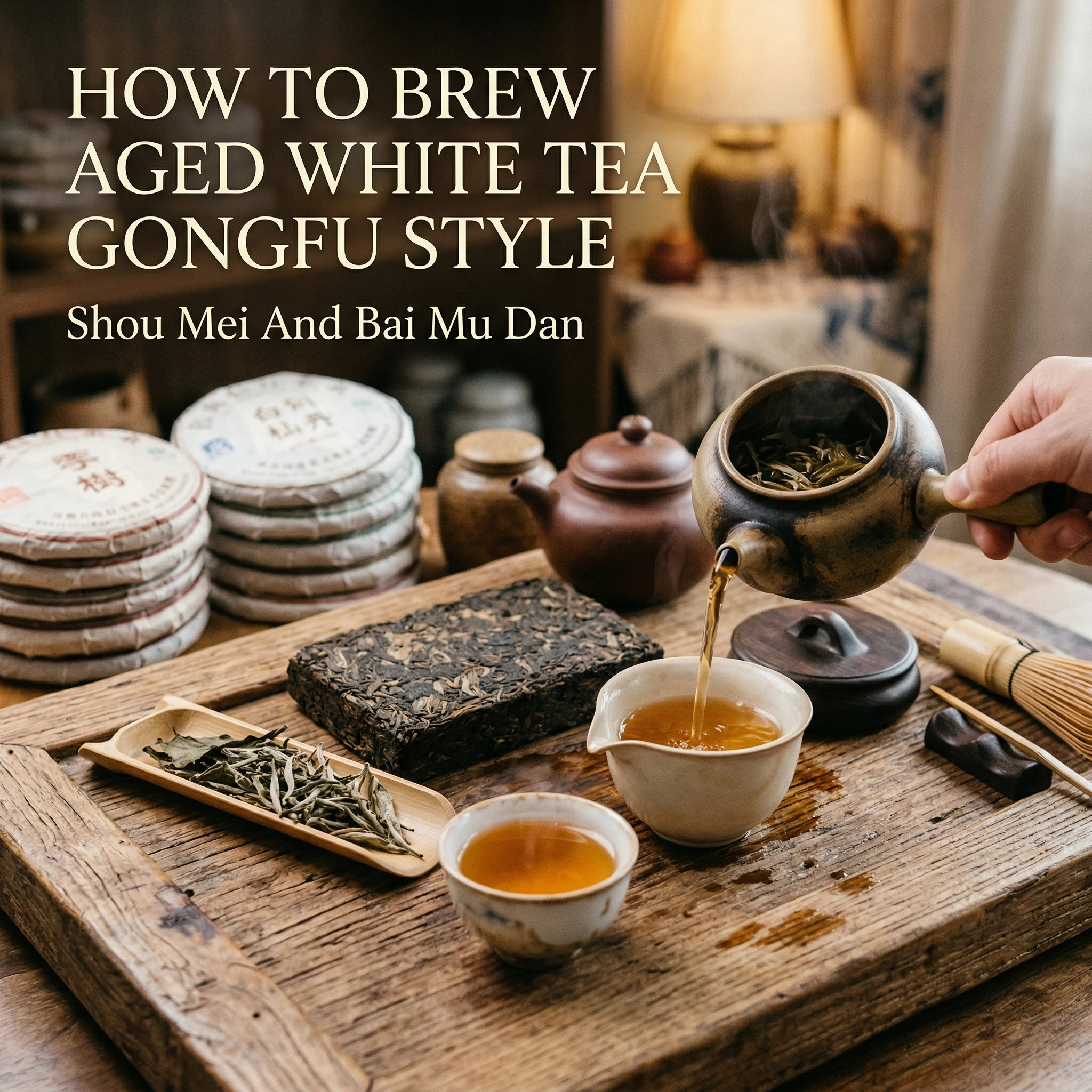
Why Gongfu Brewing Works Best for Aged White Tea
Gongfu brewing is not just about looking elegant with small pots and tiny cups. It is about unlocking a tea’s full personality, especially for older teas. When you use this method with aged white tea, you get multiple infusions that reveal layer after layer of flavor. That is because older white tea leaves open and “wake up” more slowly than young tea, so a quick single steep usually is not enough to do them justice. Smaller, shorter steeps also give you much more control over strength and flavour development.
Compared to Western-style brewing, the difference really comes through. Aged Shou Mei or Bai Mu Dan brewed in a large pot can taste muddled or even flat, with the deeper notes getting buried under a single long extraction. Gongfu, on the other hand, lets you ramp up the flavour gradually, so you can follow every transition from the first light, floral sip through to the final woody, earthy rounds. When you are looking for those subtle shifts in honey or woodiness, gongfu is the only method that really lets you track them down.
What You Need for Gongfu-Style Aged White Tea Brewing
Essential:
• Gaiwan or small teapot (100–150ml): A normal-sized gaiwan is ideal, but any small glass or porcelain teapot works well too.
• Kettle: One with temperature control is very useful, since aged white tea likes it hot.
• Aged Shou Mei or Bai Mu Dan: Both can be aged for several years and both perform well with this setup.
• Small tea cups: Small cups let you really notice the changes between steeps.
Optional:
• Scales: Useful when dialing in your leaf ratio, especially when starting out.
• Thermometer: Helpful if you do not have a variable-temperature kettle. You can eyeball it with a little practice.
• Tea tray (cha pan) or saucer: Keeps any spills stress-free during a session.
Leaf to Water Ratio
Getting the leaf ratio right changes the entire experience. The general guideline is around 5–7g per 100ml of water, with some adjustment depending on which tea you are using.
• Shou Mei: Go heavier, usually closer to 7g per 100ml. It can handle a stronger ratio and actually comes alive with a bit more leaf.
• Bai Mu Dan: 5–6g per 100ml is plenty. Too much leaf and this tea’s more subtle flavors can get drowned out quickly.
If you are just starting out, weighing your leaves makes it much easier to dial things in. A rough visual guide: fill your gaiwan about halfway with dry Shou Mei leaf, or slightly less for Bai Mu Dan. Once you have brewed a few sessions, you will be able to eyeball it more naturally. Keep in mind that aged leaves are larger and fluffier than fresh leaves, so they often look like more than they actually weigh.
Water Temperature for Aged White Tea
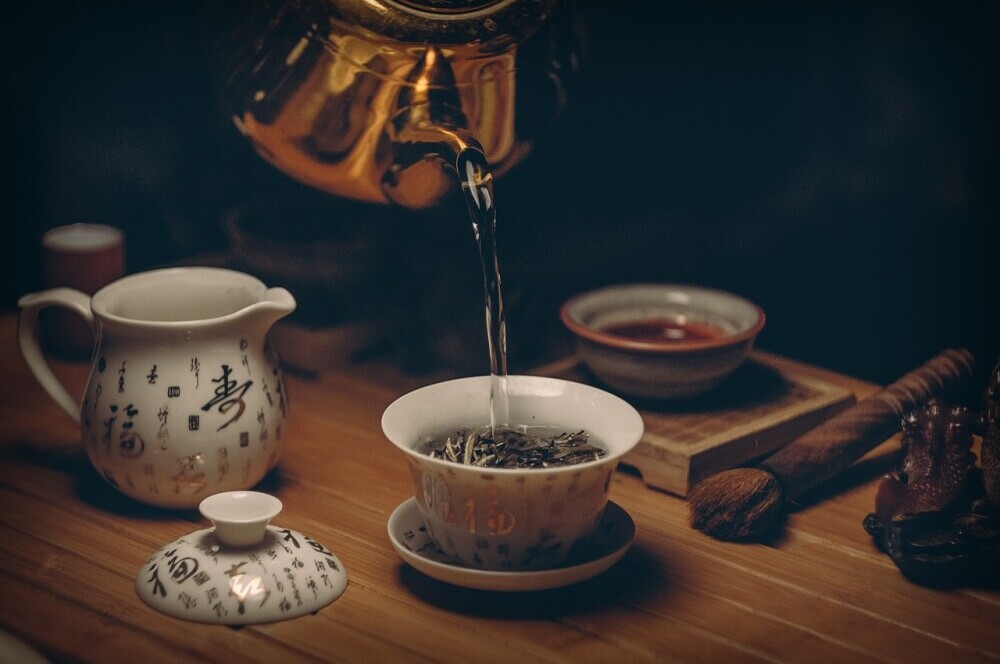
Water temperature is one area where aged white tea really stands apart from younger teas. You want it hot: 90–100°C (194–212°F).
• Aged Shou Mei (5 years or more): Go straight to boiling (100°C / 212°F) to draw out those deep, complex notes.
• Aged Bai Mu Dan (especially lighter or less aged): Just below boiling works better, around 95–98°C (203–208°F).
Hot water helps open up those thicker, older leaves and push out more of that honey and stewed fruit flavour. Water that is too cool produces a thin, weak cup that does not do the tea justice. If you do not have a kettle with temperature control, bring the water to a rolling boil and let it cool for under a minute before pouring over Bai Mu Dan. For Shou Mei, pour straight from the boil.
Step-by-Step Gongfu Brewing Method for Aged White Tea
1. Rinse (optional): Pour boiling water over the dry leaf, swirl briefly, and discard after 3–5 seconds. This removes any stale edge from storage and begins waking up the leaves.
2. First infusion: Start with 10–20 seconds, depending on the tea and how tightly packed the leaves look. Go lighter for delicate Bai Mu Dan and closer to 20 seconds for thick, dark Shou Mei.
3. Subsequent infusions: Increase the time with each round. Aged white tea is forgiving and rarely turns bitter, so there is room to experiment and stretch infusions as the session goes on.
4. Pour completely: Drain the gaiwan or teapot fully after every infusion. Leaving the leaves sitting in water between steeps muddies the flavour in later rounds, so always empty your vessel before moving on.
Quick Timing Guide
• 1st: 10–20 seconds
• 2nd: 15–20 seconds
• 3rd: 25–30 seconds
• Later steeps: add 10–20 seconds each round
High-quality aged Shou Mei can go 8–10 steeps or more before the flavour fades. Aged Bai Mu Dan typically hits its best across 6–8 infusions. If the tea is still delivering, keep going.
How Flavour Changes Across Infusions
Aged white tea is a real treat because of how much it evolves from start to finish.
• Early steeps: Light, slightly floral or grassy, with a smooth body. A creamy texture sometimes appears right at the start, especially in high-quality Bai Mu Dan.
• Middle infusions: Honey, dried fruit (apricot, fig, even raisin in some Shou Mei), a touch of vanilla, and some woodiness come through. The liquor also deepens in colour, moving into gold or light amber.
• Late infusions: Woody, earthy, and a little mellow. A gentle medicinal note may appear, which is a comfortable, cozy way to finish out a session.
Some sessions will surprise you, with aged notes like ginseng, dried apple, or even a faint hint of tobacco sneaking in on a well-aged Shou Mei. Slowing down and using smaller cups makes it much easier to spot these shifts as the leaves reveal their character.
Shou Mei vs Bai Mu Dan: Key Brewing Differences
Even though both are white teas, aged Shou Mei and aged Bai Mu Dan each call for a slightly different approach to get the best out of them.
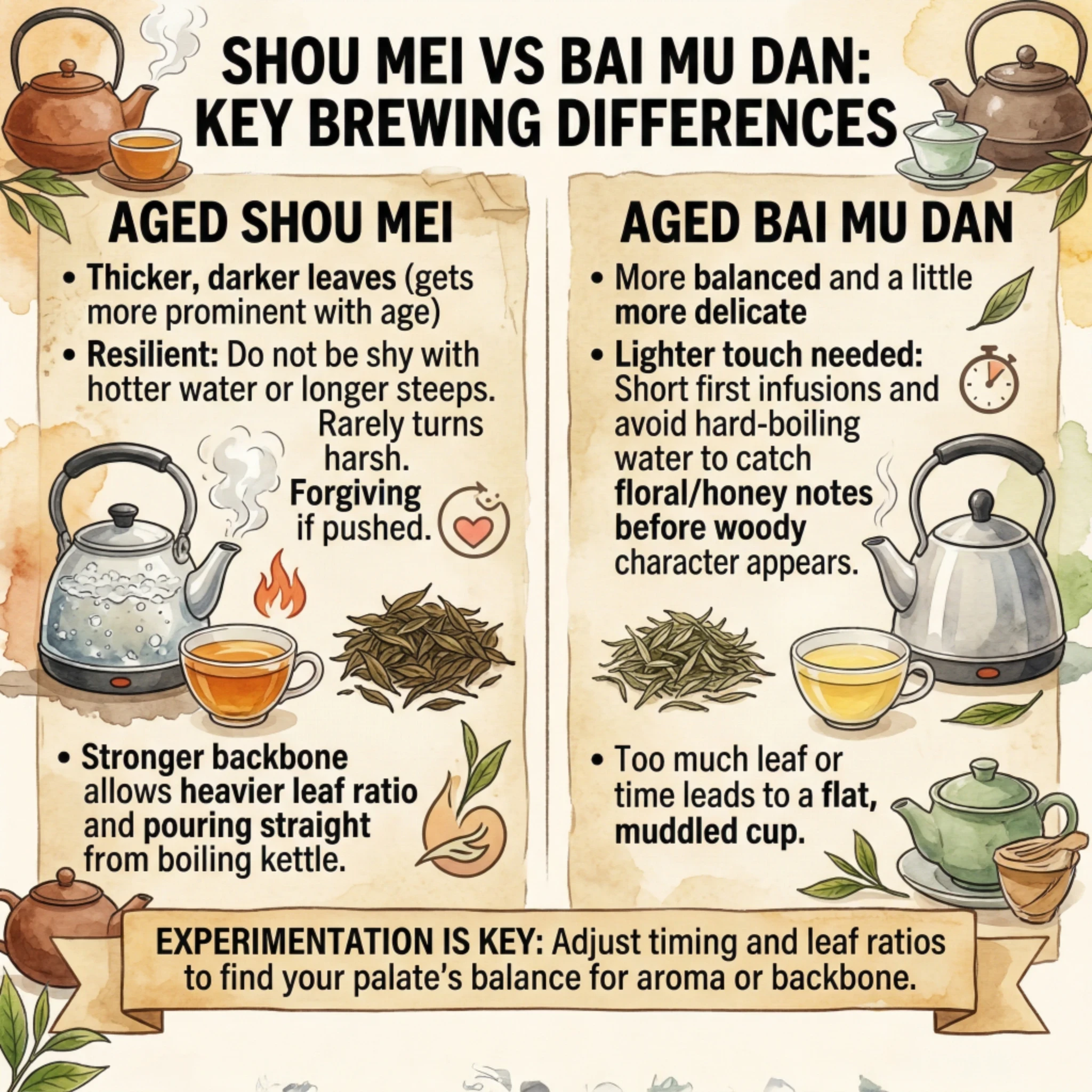
• Aged Shou Mei: The leaves are thicker and darker, especially as they age. Do not be shy with hotter water or longer steeps. Shou Mei rarely turns harsh, and it is forgiving even if you push an infusion a little too far. Its stronger backbone means you can use a slightly heavier leaf ratio and pour straight from a boiling kettle every time.
• Aged Bai Mu Dan: More balanced and a little more delicate. A lighter touch pays off here. Keep your first infusions on the short side and avoid hard-boiling water, which helps you catch the floral and honey notes before the woody character takes over. Too much leaf or time and you can end up with a flat, muddled cup.
There is plenty of room for experimentation with both. If you want more aroma from Bai Mu Dan or a stronger backbone from Shou Mei, adjust your timing and leaf ratios until you find the balance that works for your palate. Every session is a chance to fine-tune.
Common Brewing Mistakes with Aged White Tea
• Water that is too cool: This is one of the most common issues. If your water is not close to boiling, the tea will taste bland. Old leaves need the heat to open up properly.
• Too little leaf: The tea comes out thin and watery. Stick to at least 5–7g per 100ml, and go up to 8g if you are working with chunky, aged Shou Mei.
• Oversteeping the early rounds: Aged white tea does not punish oversteeping as harshly as other teas do, but those first two infusions taste best when you keep them short and controlled.
• Not increasing time as the session progresses: Each round needs a few extra seconds to pull out the full flavour. Using the same steep time all the way through means the later infusions go flat.
Everyone makes mistakes at first, and that is part of learning. If you end up with a boring or off-tasting cup, switch something up next time. Adjusting your leaf ratio, steep time, or water temperature is usually all it takes to get back on track.
Gongfu vs Western-Style Brewing for Aged White Tea
Gongfu gives you more control and a full story of flavor across many infusions, while Western style is simpler. Drop some leaves in a big pot, add hot water, and wait four or five minutes. You will get one, maybe two infusions and a decent large mug. But the subtle shifts in aged white tea, those transitions in honey, fruit, wood, and earth, get lost in a big pot. That is why gongfu is the recommended method for any serious aged tea session. You get far more out of your leaves, and it is a much more engaging experience.
For more background on the tea itself, start with my guide on what aged white tea is. And if water quality is something you want to improve, see my full guide on water for tea.
Western style works fine if you are in a rush or want something easy to sip while you are doing other things. But it tends to flatten out the complex flavours that make aged white tea special. Gongfu brewing not only reveals that complexity, it also makes each session more engaging.
My Personal Brewing Approach
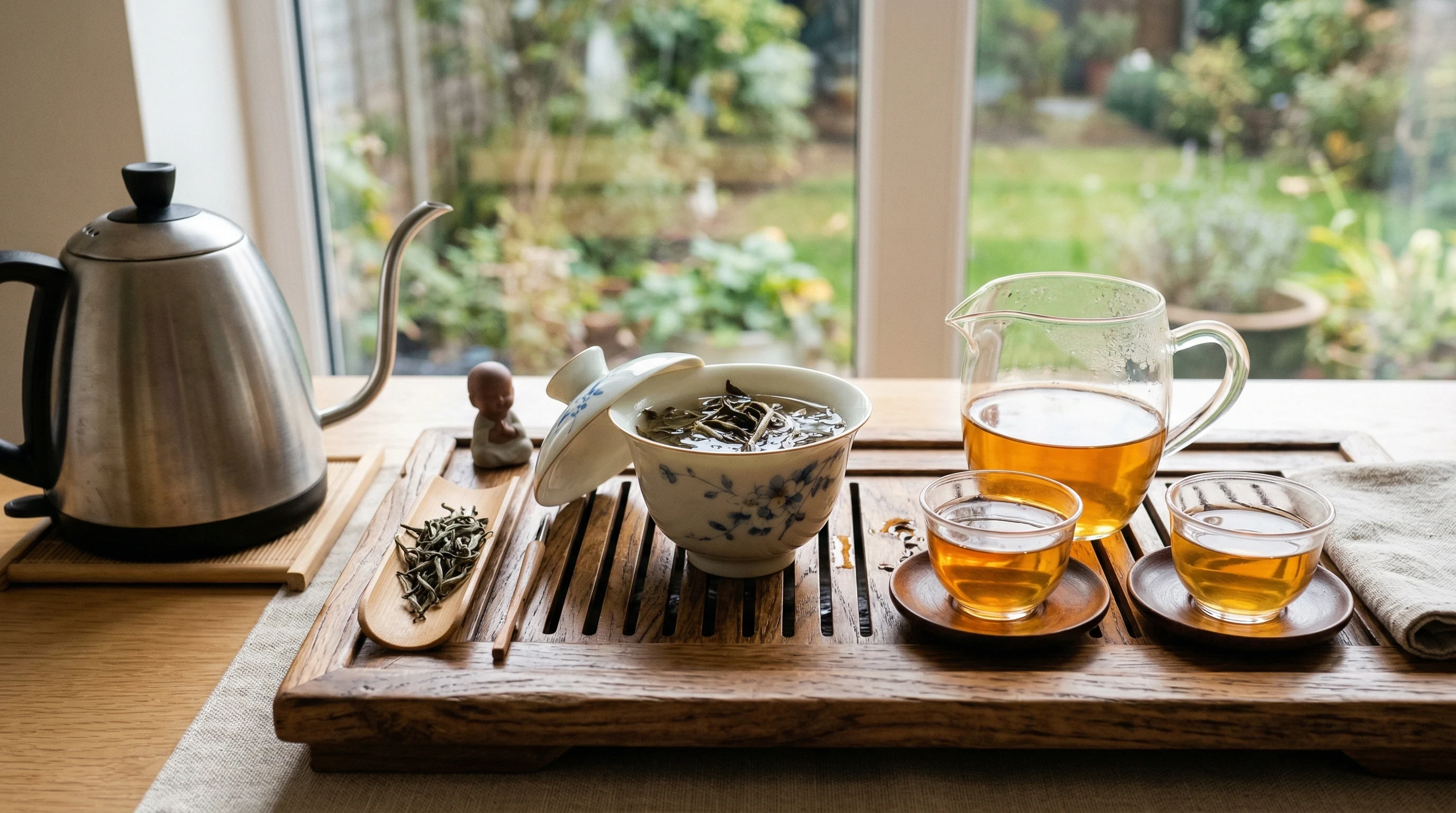
After brewing a lot of aged white tea, particularly Shou Mei from various sources and years, my standard setup has settled into a 100ml gaiwan with 7g of dry leaf and a quick rinse with freshly boiled water. I aim for around 15 seconds on the first steep, then add 10–15 seconds with each round. For Shou Mei aged over six years, I use fully boiling water throughout. It keeps the tea vibrant and draws out those deeper, sweeter notes, particularly when the tea has been stored well.
One habit that has made a consistent difference is pouring the tea out completely at every infusion. Do not let the leaves sit in water between rounds, or you will get a murkier, less defined cup after a few steeps. A tea tray or a simple saucer under your gaiwan also makes spills easy to deal with, which helps keep the whole session relaxed.
It is worth paying attention to aroma as well as taste, and to how the texture of the liquor changes from steep to steep. That shift from a thicker, silkier feel in the early rounds to something lighter and more watery at the end tells you a lot about where the tea is heading. Slowing down, using small cups, and keeping the lid on between rounds to hold the heat and aroma in all add up over a session.
FAQ: Aged White Tea Gongfu Brewing
Can you overbrew aged white tea?
With gongfu style, it is quite forgiving. Overbrewing does not ruin the session the way it might with a green or oolong tea. That said, keeping the first two rounds short and controlled helps you get the most out of the lighter, earlier flavors before the heavier notes take over.
How many times can you steep aged white tea?
High-quality aged Shou Mei and Bai Mu Dan can both handle 6–10 steeps, and sometimes more with particularly well-aged teas. If the flavor is still coming through clearly, keep going.
Is rinsing necessary for aged white tea?
It is not required, but for older teas or teas that have spent time in storage, a quick 3–5 second rinse is worth doing. It wakes up the leaves and clears any storage flavors that might otherwise affect the first infusion.
What if my aged white tea tastes flat or weak?
The most common causes are not enough leaf, water that is too cool, or early steeps that ran too long. Try increasing your leaf ratio, raising your water temperature, and shortening those first two infusions. Also check your storage conditions. Tea kept in a damp environment or near strong odors can lose a significant amount of its character over time.
Recommended Tools for Aged White Tea Brewing
• Gaiwan: Porcelain or glass is ideal. Easy to clean, does not carry over flavour from previous sessions, and lets you see the liquor clearly. Browse gaiwan options here.
• Variable-temperature kettle: A real advantage for getting the temperature right every time. See top kettle options.
• Aged white tea sampler: If you want to compare Shou Mei and Bai Mu Dan side by side, a sampler from a reputable vendor is a great way to start. Check out samplers.
You can get started with just a gaiwan, a regular kettle, and good-quality aged leaf. The tools above take some of the guesswork out of things, but they are not required to have a great session.
Fine-tuning your temperature, ratio, and timing is what makes brewing aged white tea genuinely rewarding. Take your time, pay attention to the leaf and the liquor, and adjust as you go. There is a lot to discover in a well-aged tea, and gongfu brewing is the best way to find it.
Want to Try Brewing Aged White Tea Yourself?
If you want to put this into practice, the easiest way to start is with a solid aged white tea that works well for gongfu brewing. Shou Mei is usually the most forgiving and gives you those deeper, richer flavors, while Bai Mu Dan offers a more balanced and slightly lighter experience.
Here are a couple of good options to get started:
- Aged Shou Mei Tea – rich, smooth, and very easy to brew gongfu style
- Aged Bai Mu Dan Tea – more delicate, with honey and floral notes
Both are great for learning how aged white tea behaves across multiple infusions and will give you a real feel for the differences between these two styles.
Here’s a little transparency: Our website contains affiliate links. This means if you click and make a purchase, we may receive a small commission. Don’t worry, there’s no extra cost to you. It’s a simple way you can support our mission to bring you quality content.

Chris is the founder of Zen Tea Tools and a passionate explorer of traditional and modern tea brewing. From Gongfu sessions to smart tea technology, he shares practical insights to help others find clarity, calm, and better tea.Learn more about Chris →
Leave a Reply