Many new Tieguanyin drinkers walk away underwhelmed because the tea seems weak or forgettable. Most of the time, that comes down to Western brewing habits: too little leaf, too much water, and steep times that leave Tieguanyin a shadow of what it can actually be.
Brewing Tieguanyin Gongfu style changes that entirely. With the right leaf ratio, carefully chosen water temperature, and a series of short infusions, you can draw out layers of floral, creamy flavor that a single long steep simply cannot produce. This guide walks through the whole process step by step, from teaware to drinking tips, so you know exactly what to do from the first pour.
What Is Tieguanyin Tea?
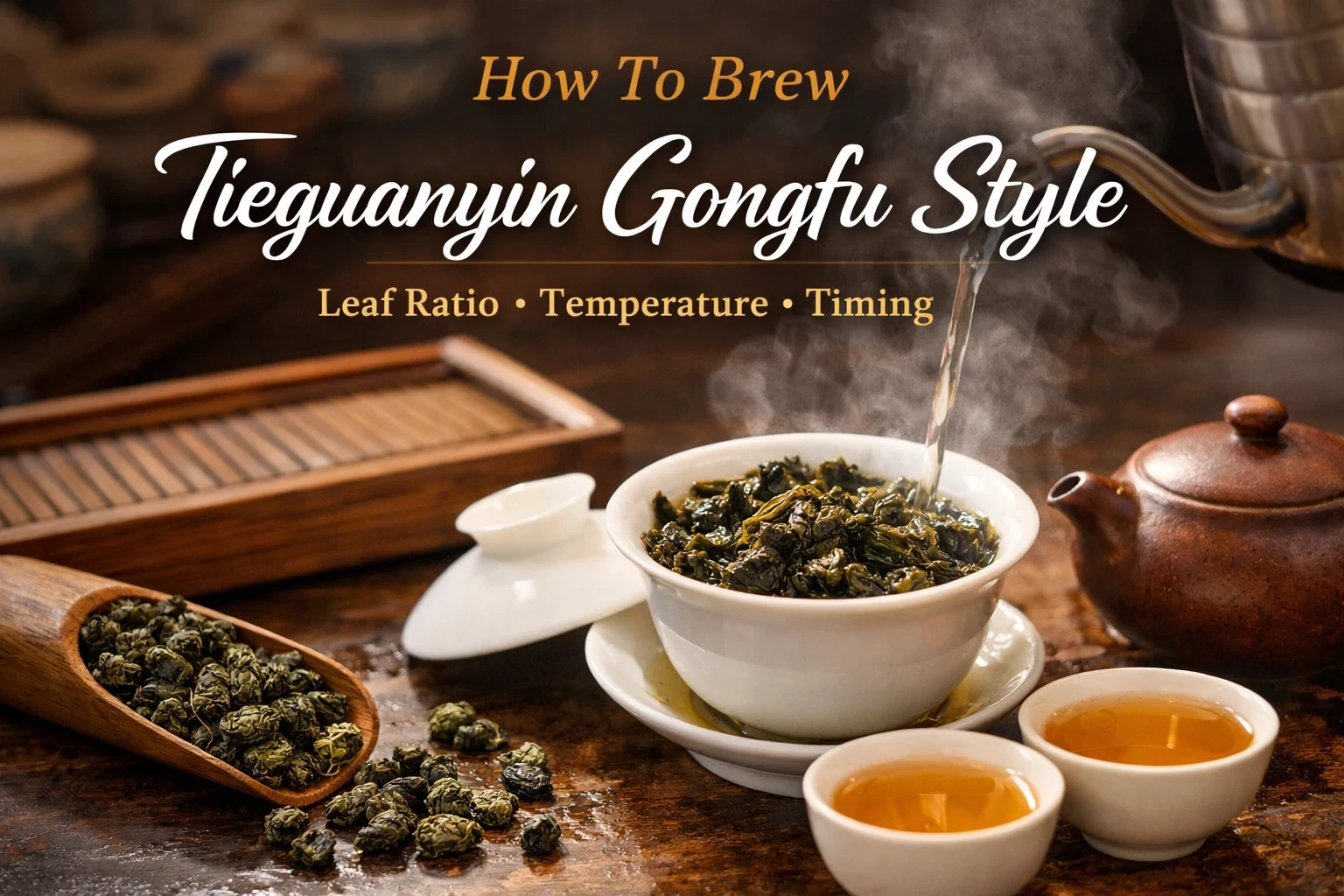
Tieguanyin is a Chinese oolong tea from Anxi County in Fujian Province. As an oolong, it sits between green and black tea in terms of oxidation, and that middle ground is exactly what gives it its character: floral notes, a creamy mouthfeel, natural sweetness, and sometimes a touch of light roast depending on how it was processed.
Here is a quick overview of what defines Tieguanyin:
• Origin: Anxi, Fujian Province, China
• Type: Semi-oxidized oolong
• Flavor Profile: Floral (orchid or lilac notes), creamy mouthfeel, natural sweetness, hints of fruitiness, or light roast
• Leaf Shape: Tightly rolled balls that slowly unfurl during brewing
That rolled shape matters a great deal when it comes to brewing method. In a small vessel, the leaves open gradually across multiple infusions, releasing flavor in stages rather than all at once. Western brewing usually uses more water and longer steeping times, which compresses the flavor into a single infusion rather than revealing it gradually. Gongfu brewing lets you follow the tea through each phase of its flavor, and that progression is where Tieguanyin really earns its reputation.
Understanding Gongfu Brewing
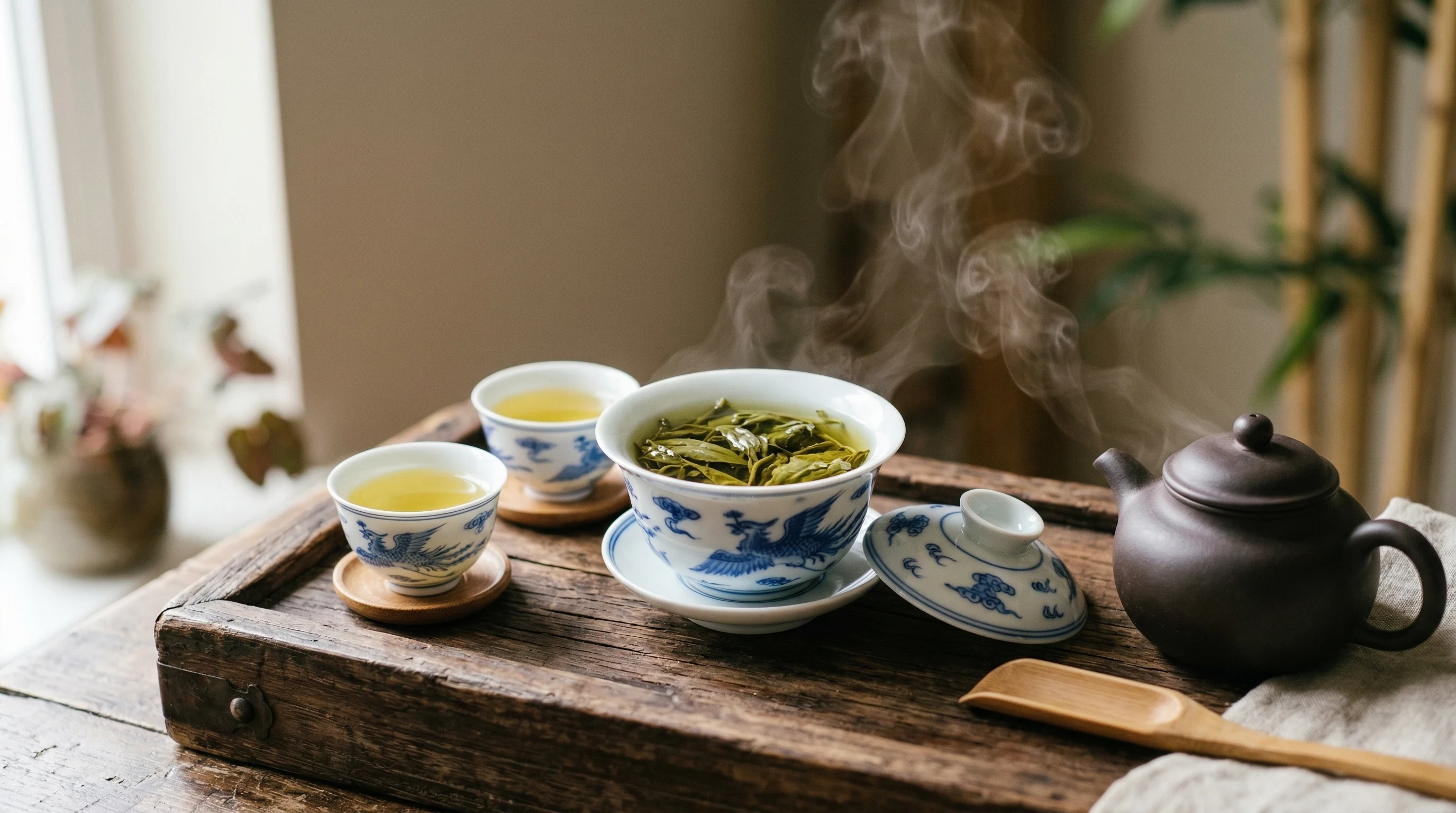
The word “Gongfu” translates roughly as “skillful effort.” In a tea context, it refers to a brewing approach built around using more leaf than usual, less water, a small vessel, and a series of short infusions rather than one long steep.
Here is why that approach works so well for Tieguanyin:
• A higher leaf-to-water ratio produces a fuller, more aromatic cup from the start.
• Brewing in a small vessel, typically a 100 to 150 ml gaiwan or mini teapot, keeps the concentration consistent and the infusions manageable.
• Early infusions are kept short, usually 10 to 30 seconds, to control extraction rather than relying on time alone.
• The flavor evolves noticeably from one infusion to the next, moving from floral and delicate early on to creamy and sweet in the middle rounds, then softening toward a quieter, more mineral finish.
The hands-on nature of Gongfu brewing is part of the appeal. Each infusion is a small decision. You can adjust timing based on what the tea is giving you, something that just is not possible when a bag is sitting in a mug for three minutes.
Essentials for Gongfu Brewing
You do not need a large collection of teaware to brew Gongfu style. The basics are straightforward, and you can add pieces over time as your interest grows.
• Gaiwan: The classic lidded brewing bowl, or a small clay or porcelain teapot. Aim for 100 to 150 ml capacity.
• Small cups: Gongfu is served in small pours meant to be sipped and reflected on, not gulped.
• Tea pitcher (fairness cup): Useful when pouring for more than one person, though entirely optional when drinking alone.
• Kettle: Precise temperature control is helpful but not essential when starting out. A thermometer or careful attention to boiling water does the job.
If you are just getting started, a basic gaiwan and a kettle are all you truly need. Everything else makes the process more comfortable, but none of it affects the quality of the tea in the cup.
Leaf Ratio: Getting the Amount Right
The leaf ratio is the single most important variable in Gongfu brewing. Get this wrong and nothing else will save the session.
The standard guideline is to use 1 gram of tea per 15 ml of water. For a 100 ml gaiwan, that works out to around 6 to 7 grams of Tieguanyin.
That may look like a lot, especially if you are used to Western-style brewing. It is worth trusting the ratio. By the third or fourth infusion, those tightly rolled balls will have fully expanded and taken over much of the gaiwan. That is completely normal and exactly what you want.
Using too little leaf will produce a thin, hollow cup, and no amount of adjusting the steep time will compensate. Measure properly, at least while you are building familiarity with the tea.
Water Temperature Tips
Water temperature has a direct effect on how the leaves open and how the aroma develops. Tieguanyin is forgiving, but it does respond to temperature in meaningful ways.
• Modern green Tieguanyin: Brew at 90 to 95°C (194 to 203°F). This preserves the floral top notes without pushing the tea toward bitterness.
• Traditional or roasted Tieguanyin: Use 95 to 100°C (203 to 212°F), just off the boil. The higher temperature helps unlock the deeper, roasted character of these styles.
The rolled leaves require enough heat to begin opening properly. If the water is too cool, the leaves stay partially closed, the aroma stays muted, and the flavor never fully comes through. For more delicate, floral types, staying at 90°C is a reasonable choice, but going lower than that is generally not recommended.
For classic or heavily oxidized versions, do not shy away from near-boiling water. The heat draws out the complexity those teas have to offer.
Steeping Times for Tieguanyin Gongfu Style
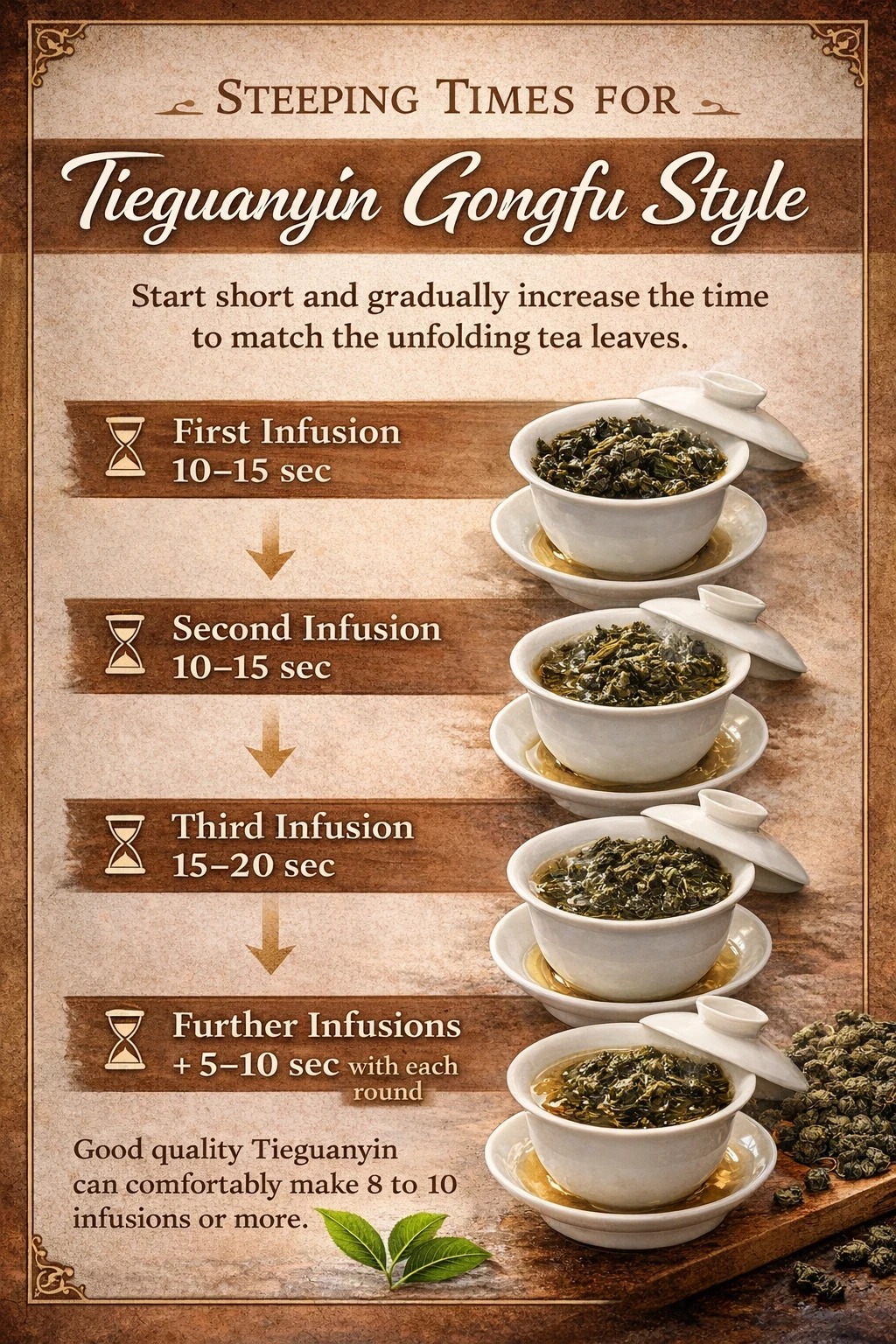
Timing is where the Gongfu method comes to life. Because you are using a high leaf ratio, the tea extracts quickly, and each infusion needs to be carefully managed. The general approach is to start short and gradually increase the time with each round.
• First infusion: 10 to 15 seconds
• Second infusion: 10 to 15 seconds
• Third infusion: 15 to 20 seconds
• Further infusions: Add 5 to 10 seconds with each subsequent round
The reason for starting so short is that the leaves are still tightly rolled in the early rounds. They release aroma and light flavor quickly, but the full body takes more time to develop as they open up. By gradually extending the infusion, you keep pace with what the leaves are giving.
Good quality Tieguanyin will comfortably deliver eight to ten solid infusions, and some exceptional leaves go well beyond that. You will notice when the tea begins to fade: the aroma quiets, the sweetness becomes faint, and the color of the liquor lightens considerably.
How Tieguanyin’s Flavor Changes Over Multiple Infusions
One of the most rewarding aspects of Gongfu brewing is watching a single session of Tieguanyin move through distinct flavor stages. It is not just that the tea changes in intensity; the character of the cup genuinely shifts from round to round.
• Early rounds: Pronounced floral aroma, often reminiscent of orchid or fresh blossoms. The body is lighter at this stage, with a clean and almost green quality.
• Middle infusions: The cup fills out considerably. The mouthfeel becomes creamier, the sweetness more apparent, and there is sometimes a gentle fruity note layered underneath.
• Later steeps: The intensity softens, but the finish often turns surprisingly smooth and buttery. In well-grown leaf, a clean mineral quality appears in these final rounds.
It is worth pausing between infusions to smell the empty cup. The lingering fragrance in the bowl often reveals subtleties that are harder to catch while drinking. This is a small habit that deepens appreciation for what the tea is doing.
If you are sharing the tea with others, pouring from each round in sequence can be an interesting way to introduce them to the idea that a single tea can taste meaningfully different over the course of a session.
Step-by-Step: Gongfu Brewing Process for Tieguanyin
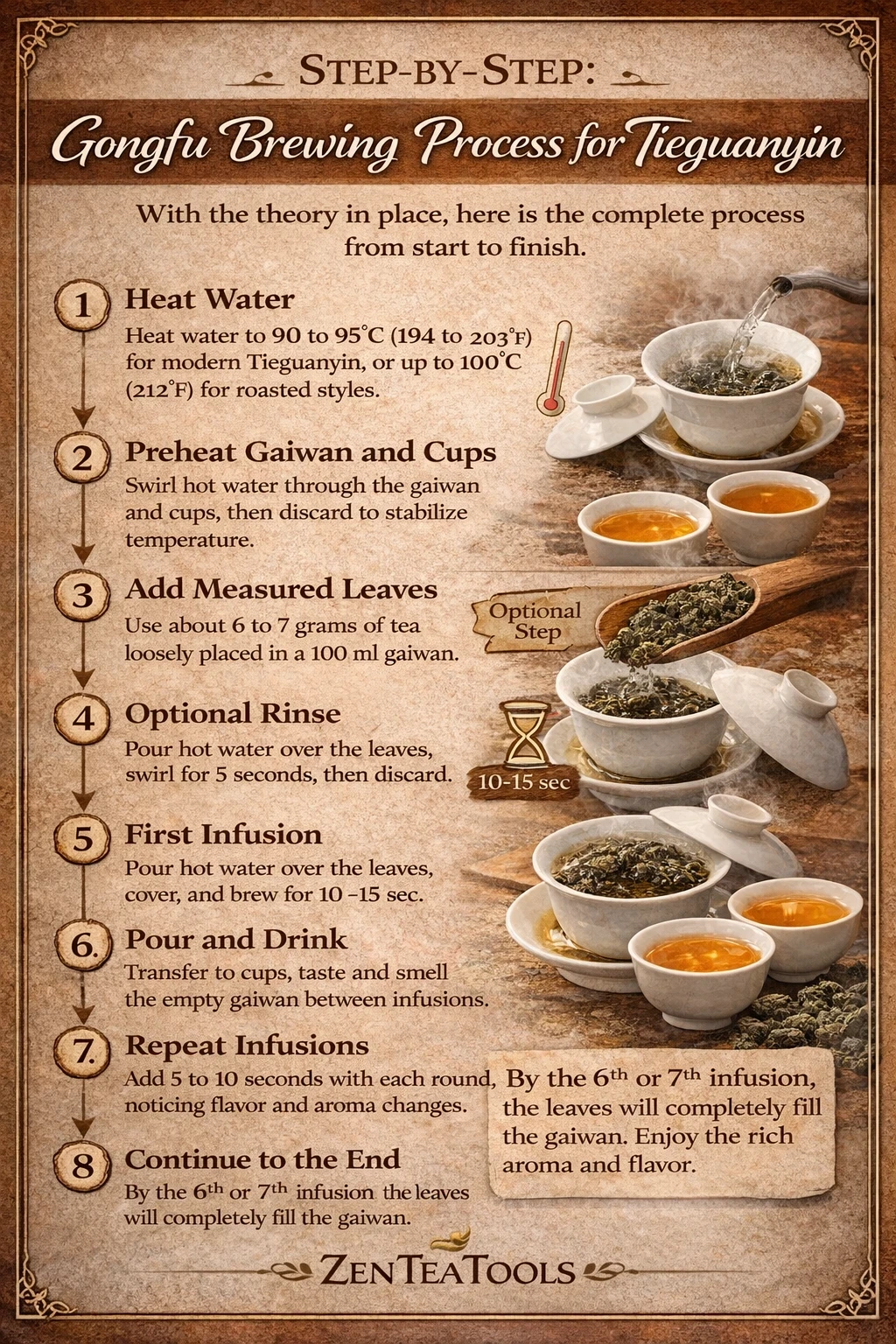
With the theory in place, here is the complete process from start to finish.
1. Heat your water to 90 to 95°C for modern green Tieguanyin, or up to 100°C for traditional and roasted varieties.
2. Preheat the gaiwan and cups by swirling hot water through them, then discarding it. This step stabilizes the temperature inside the vessel and helps maintain heat during each infusion.
3. Add your measured leaves. Around 6 to 7 grams for a 100 ml gaiwan. Place them loosely; do not press or pack them down, as they will need room to expand.
4. Optional rinse: Pour hot water over the leaves, swirl for about five seconds, then discard. This is particularly worthwhile for roasted or aged teas, as it opens the leaf and brightens the aroma from the first real infusion onward.
5. First infusion: Pour hot water over the leaves, cover, and begin your timer. Pour everything out promptly at the 10 to 15 second mark.
6. Pour and drink. Transfer to cups and taste immediately. Take a moment to smell the empty gaiwan lid and the inside of your cup. The fragrance caught there is worth noticing.
7. Continue with fresh water, adding 5 to 10 seconds to each subsequent infusion. The flavor and aroma will shift noticeably as the leaves continue to open.
8. By the sixth or seventh infusion, the leaves will have fully expanded and fill much of the gaiwan. This is the expected result of a proper Gongfu session, and the flavor at this stage often reaches its peak richness.
One practical note: do not press the leaves into the gaiwan at the start. Leave them loosely placed so they have room to bloom fully. A crowded gaiwan leads to uneven extraction and makes pouring awkward.
Common Gongfu Mistakes with Tieguanyin
Most problems in Gongfu brewing come down to a handful of recurring errors. Knowing what to watch for makes the learning curve much shorter.
• Using too little leaf: This is the most common issue. An insufficient amount of tea will produce a watery, thin cup regardless of how long you steep. Be precise with your measurements, especially while you are still building intuition.
• Steeping too long in the early rounds: With a high leaf ratio, anything beyond 30 seconds in the first few infusions tends to produce bitterness. Use a timer until the timing becomes second nature.
• Water that is not hot enough: Cool water does not give the leaves enough energy to open properly. The aroma stays flat and the flavors never fully develop. Respect the temperature guidelines for the style of Tieguanyin you are using.
• Overfilling the gaiwan: Keep the water level at around 80 percent of capacity. The leaves need space to expand, and an overfilled gaiwan makes controlled pouring difficult.
These issues are easy to correct once you are aware of them. A basic digital scale and a kitchen timer are the two most useful tools for getting consistent results while you are learning the process.
Additional Tips for Better Tieguanyin Gongfu Brewing
• Always preheat your teaware. Hot water in a cold gaiwan drops temperature fast. Preheating takes seconds and makes a real difference in the first few infusions.
• Use filtered or spring water when possible. Tap water with a strong mineral profile or chlorine can dull the tea’s natural sweetness. Clean water lets the leaf speak for itself.
• Adjust based on what the cup is telling you. If the tea feels too intense, reduce the steep time slightly. If it is lighter than expected, add a few extra seconds or a gram more leaf in the next session.
• Uncover the gaiwan briefly between steepings. Letting the leaves breathe for a few seconds before the next pour sometimes brings out an extra lift of aroma on the following infusion.
• Experiment with the same batch across different sessions. No two Tieguanyin teas behave identically. Some reveal their best qualities quickly, others take four or five infusions to open fully. Trying the same tea across a few different sessions with slightly varied parameters is one of the most reliable ways to understand it.
Some Tieguanyin teas are clearly finished at round eight. Others surprise you at round twelve. Learning to read the tea as you go is part of what makes Gongfu brewing genuinely engaging rather than mechanical.
FAQ: Tieguanyin Gongfu Brewing
What temperature should Tieguanyin be brewed at?
For modern, lightly oxidized Tieguanyin, use 90 to 95°C (194 to 203°F). For more traditional or roasted versions, 95 to 100°C (203 to 212°F) is the right range, essentially just off the boil.
How much tea should I use?
Aim for 1 gram per 15 ml of water. In a 100 ml gaiwan, that is 6 to 7 grams, or roughly two generous teaspoons. Erring slightly on the higher side is generally better with oolong; a lighter hand tends to leave the cup flat.
How many steeps can you get from Tieguanyin?
Quality leaf will typically yield 6 to 10 good infusions, and well-grown Tieguanyin can stretch to 12 or more if you extend the later round times appropriately. When the aroma becomes faint and the sweetness no longer develops, it is a reasonable signal that the session has run its course.
Can I brew Gongfu style without a gaiwan?
Yes. A small teapot works well, particularly when sharing with others. Even a mug with a strainer can work if you use an appropriate leaf amount and keep the infusions short. The key is maintaining a small batch size so the leaves can bloom fully rather than sitting in excess water.
Why does my Tieguanyin taste weak?
The most likely causes are not enough leaf, water that was not hot enough, or infusion times that are too short once the leaves have opened past round two. Try adding an extra gram of tea, raising the water temperature, or extending the steeping time by five to ten seconds on the later rounds.
Why Tieguanyin Is Best Brewed Gongfu Style
Tieguanyin rewards patience and attention. Brewed Gongfu style, with the correct leaf ratio, appropriate water temperature, and carefully timed infusions, it delivers a range of flavors that simply do not appear in a standard mug brew.
The process becomes more intuitive with each session. After a few rounds you start to read the tea as you go, adjusting timing based on what the leaves are showing rather than following a chart rigidly. That shift from measuring everything to genuinely feeling the tea is part of what makes Gongfu brewing worth the effort.
If you have not yet tried brewing your Tieguanyin this way, it is a worthwhile experiment. The depth, the flavor progression, and the quiet ritual of working through each infusion offer something that a single steep simply cannot replicate. That is ultimately what Anxi Tieguanyin, at its best, is capable of.
Try Brewing Tieguanyin Yourself
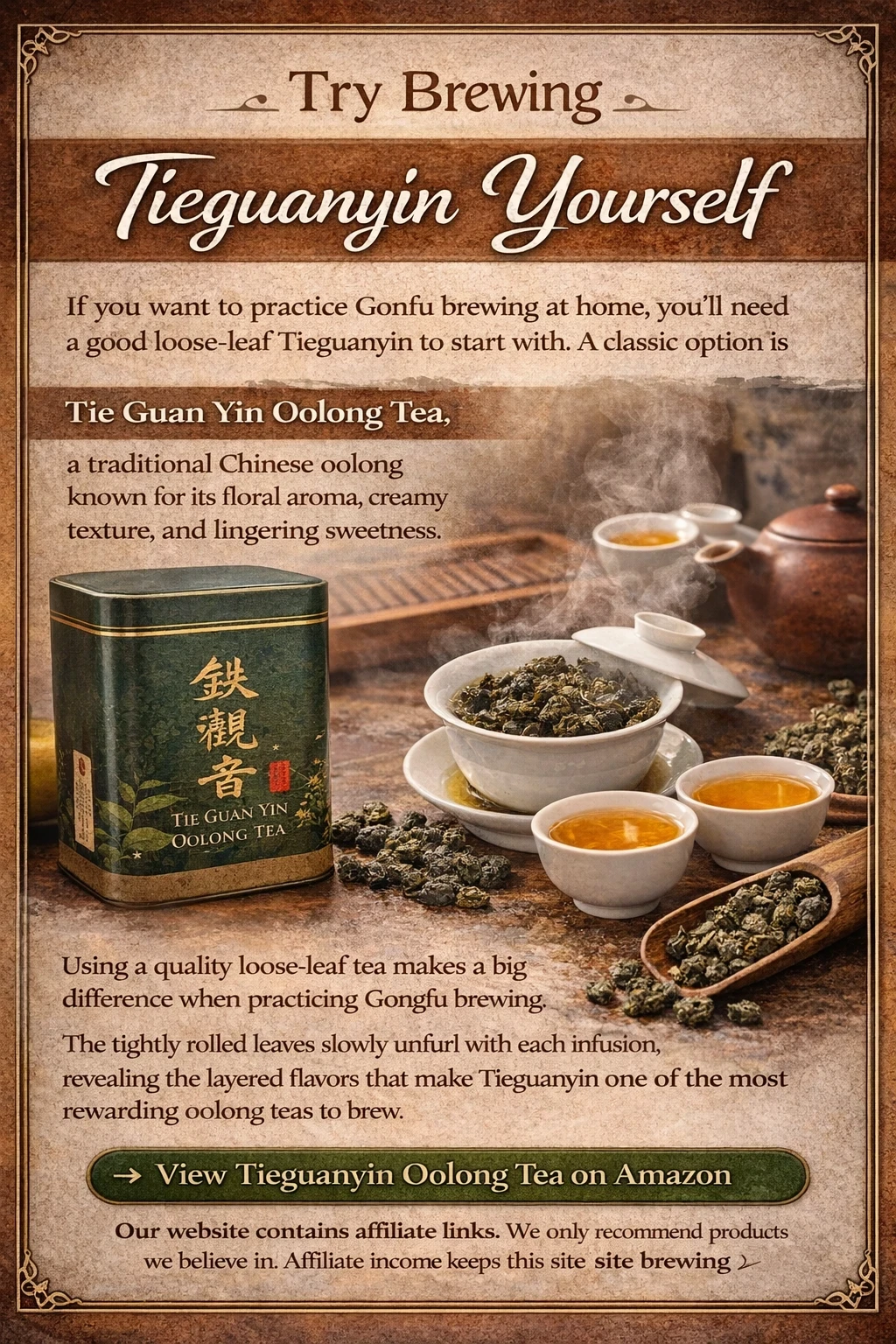
If you want to practice Gongfu brewing at home, you’ll need a good loose-leaf Tieguanyin to start with. A classic option is Tie Guan Yin Oolong Tea, a traditional Chinese oolong known for its floral aroma, creamy texture, and lingering sweetness. Tieguanyin teas from Anxi are especially prized for their orchid-like fragrance and smooth finish, which become more pronounced across multiple Gongfu infusions.
Using a quality loose-leaf tea makes a big difference when practicing Gongfu brewing. The tightly rolled leaves slowly unfurl with each infusion, revealing the layered flavors that make Tieguanyin one of the most rewarding oolong teas to brew.
You can check the current price and availability here:
→ View Tieguanyin Oolong Tea on Amazon
Here’s a little transparency: Our website contains affiliate links. This means if you click and make a purchase, we may receive a small commission. Don’t worry, there’s no extra cost to you. It’s a simple way you can support our mission to bring you quality content.

Chris is the founder of Zen Tea Tools and a passionate explorer of traditional and modern tea brewing. From Gongfu sessions to smart tea technology, he shares practical insights to help others find clarity, calm, and better tea.Learn more about Chris →
Leave a Reply