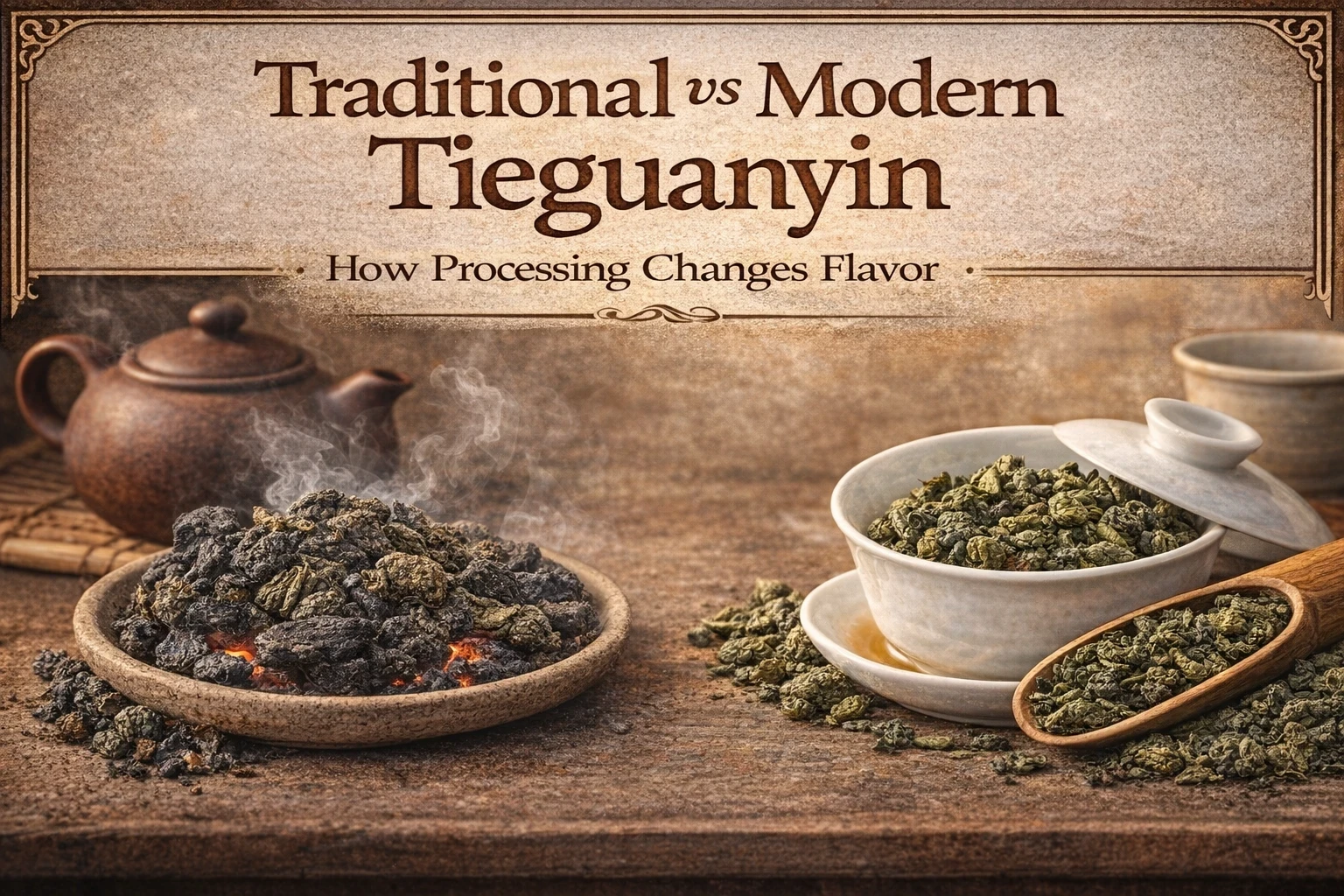
If you have tried Tieguanyin before, chances are you know the modern version: bright, floral, and green, with an aroma that jumps out of the cup the moment you lift the lid. It is beautiful tea, and it has introduced millions of people to Chinese oolong. But here is the thing most tea shops do not mention: what you are tasting is really only half the story.
Traditional Tieguanyin is a completely different experience. Darker, toasty, and layered with a depth that builds slowly across multiple steepings, it is the style that tea drinkers in Anxi County have treasured for centuries. Understanding the difference between traditional vs modern Tieguanyin is not just an interesting bit of tea history. It genuinely changes how you shop, how you brew, and what you appreciate in the cup.
Four key factors shape how any Tieguanyin tastes: oxidation level, roasting, cultivar, and terroir. Follow any one of those threads and you start to see why two teas sharing the same name can taste so remarkably different.
What Is Tieguanyin Tea?
Tieguanyin, sometimes translated as Iron Goddess of Mercy, is an oolong tea from Anxi County in Fujian Province, China. It holds a respected place among Chinese teas and is a staple in traditional Gongfu brewing sessions, where small teapots and repeated short infusions allow the tea to reveal itself gradually over many steepings.
One point worth knowing early on: “Tieguanyin” refers to both a specific tea cultivar and a style of processing. That means two teas can both carry the name while tasting quite different depending on which plant was used and how the leaves were handled after harvest. This is part of what makes exploring Tieguanyin so rewarding, and occasionally confusing for newcomers.
Traditional Tieguanyin: The Original Style
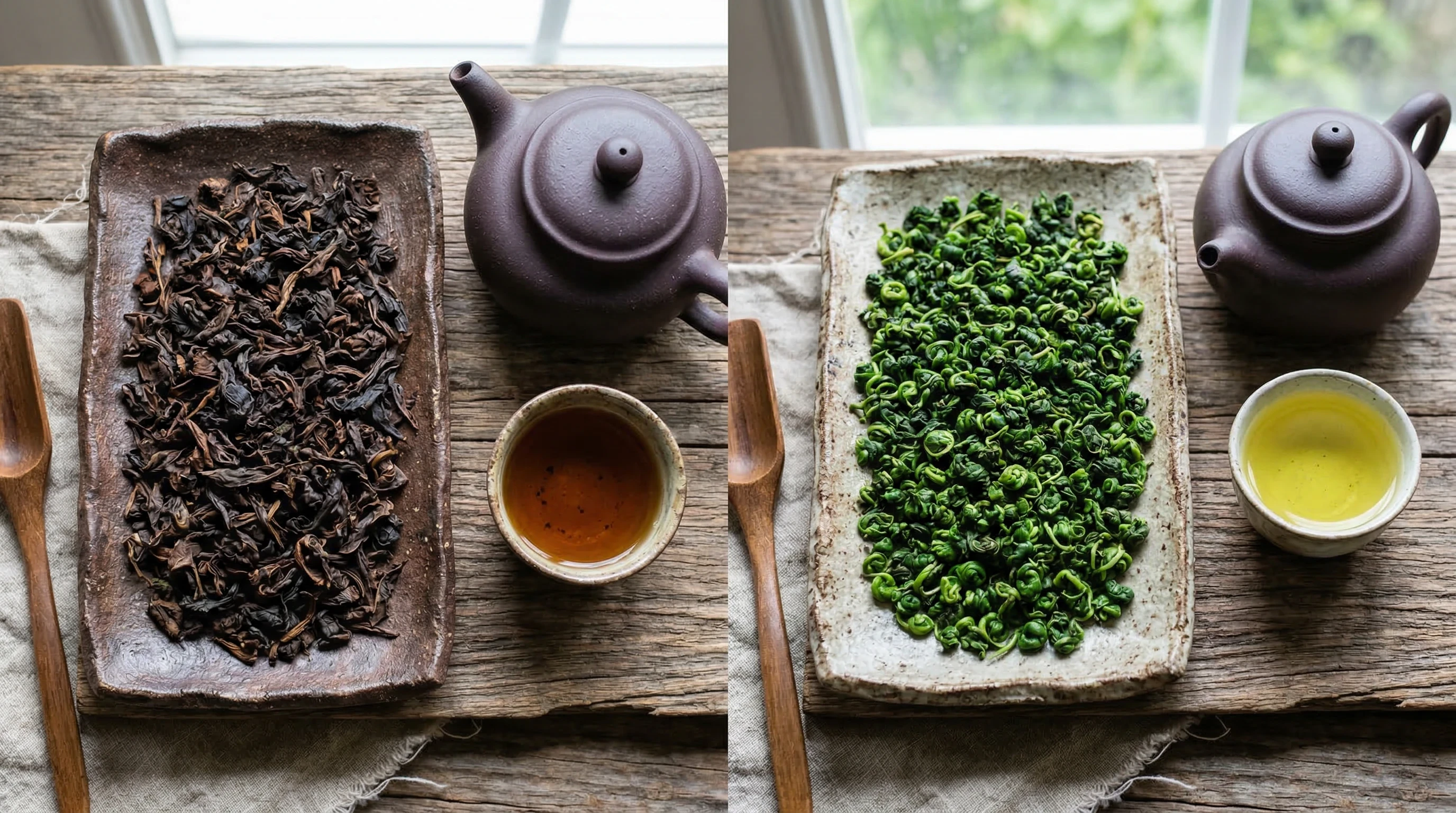
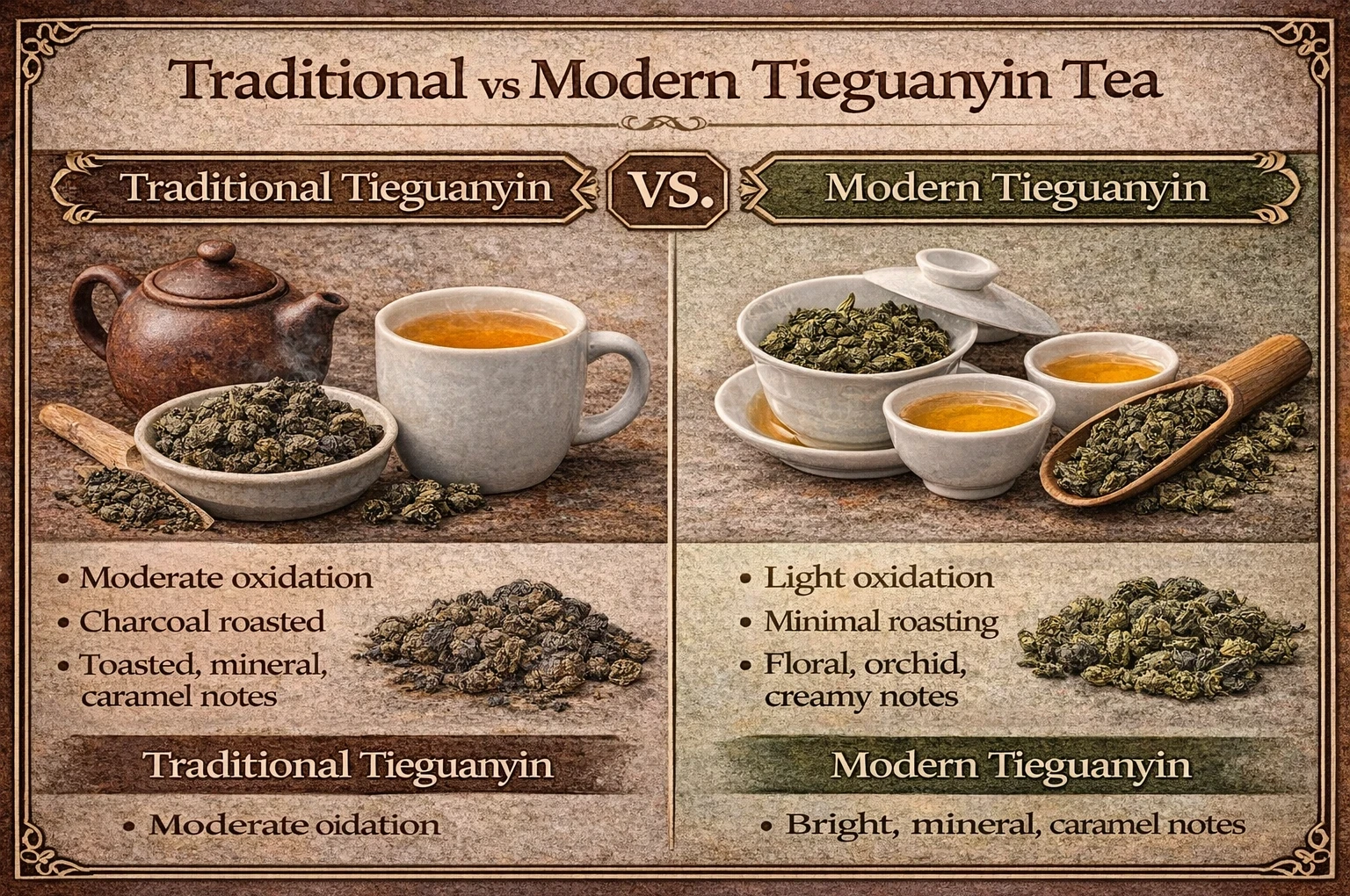
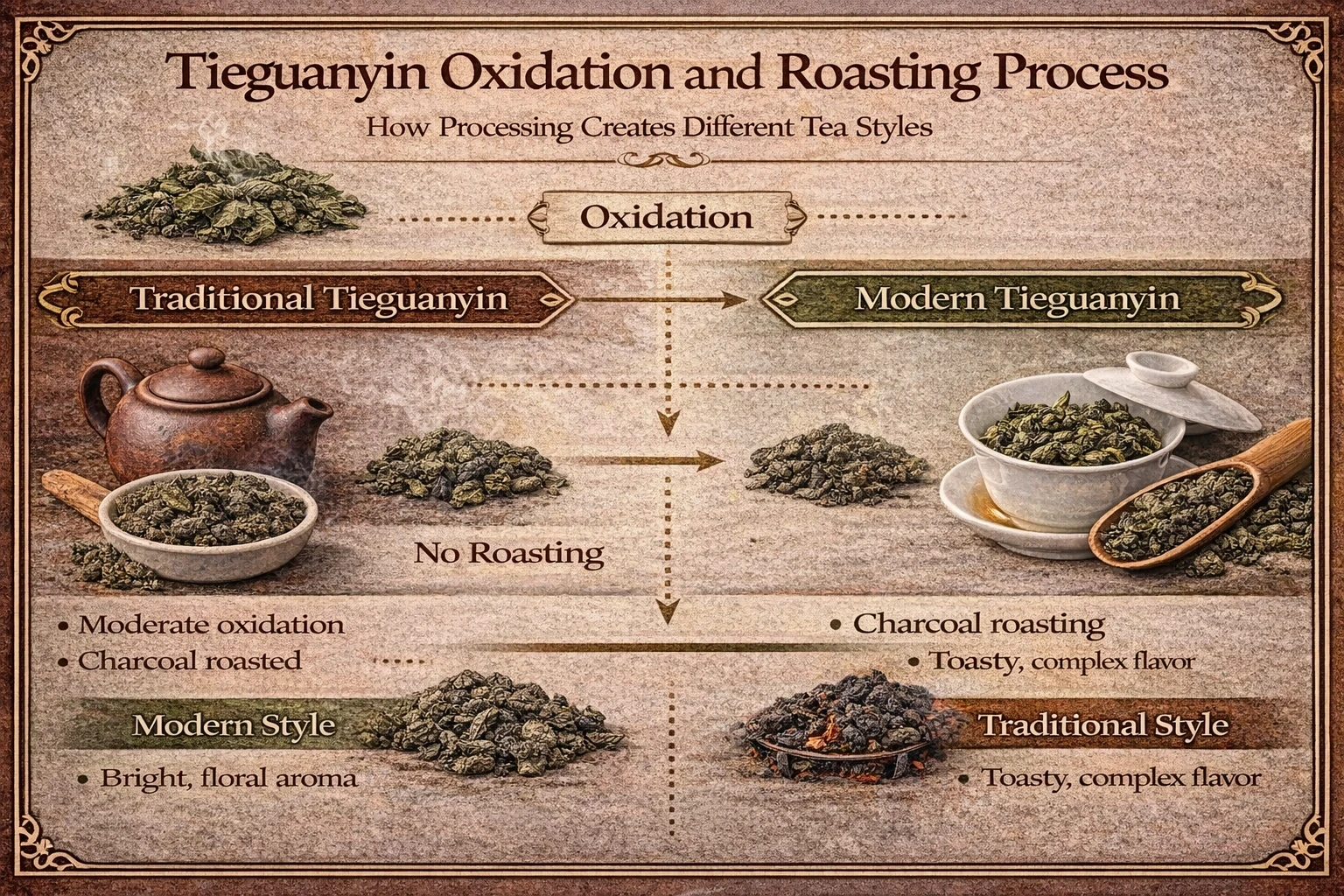
Traditional Tieguanyin is the style that shaped Anxi’s reputation. It is made with moderate oxidation and goes through a careful charcoal roasting process that can take many hours, sometimes spread across multiple sessions. The leaves emerge darker, with a warm copper-brown tone that signals the transformation they have been through.
In the cup, traditional Tieguanyin is comforting in a way that lighter teas rarely achieve. You will find notes of toasted grain, roasted nuts, and warm orchid alongside a subtle mineral quality that lingers pleasantly. Some drinkers pick up hints of caramel or dried fruit as the steepings progress. The overall character is mellow and warming, the kind of tea that feels right on a cool evening or during a slow weekend morning.
This style rewards patience. Brewed Gongfu style with a small Yixing or porcelain pot, it can deliver six, eight, or even more worthwhile steepings as the flavour evolves and deepens. That slow unfolding is part of what traditional Tieguanyin fans love most about it.
Modern Tieguanyin: The Green Style
The modern green style emerged in the 1990s as producers responded to shifting consumer tastes, particularly among younger drinkers who wanted something lighter and more immediately appealing. It caught on quickly and now dominates shelves both in China and across export markets worldwide.
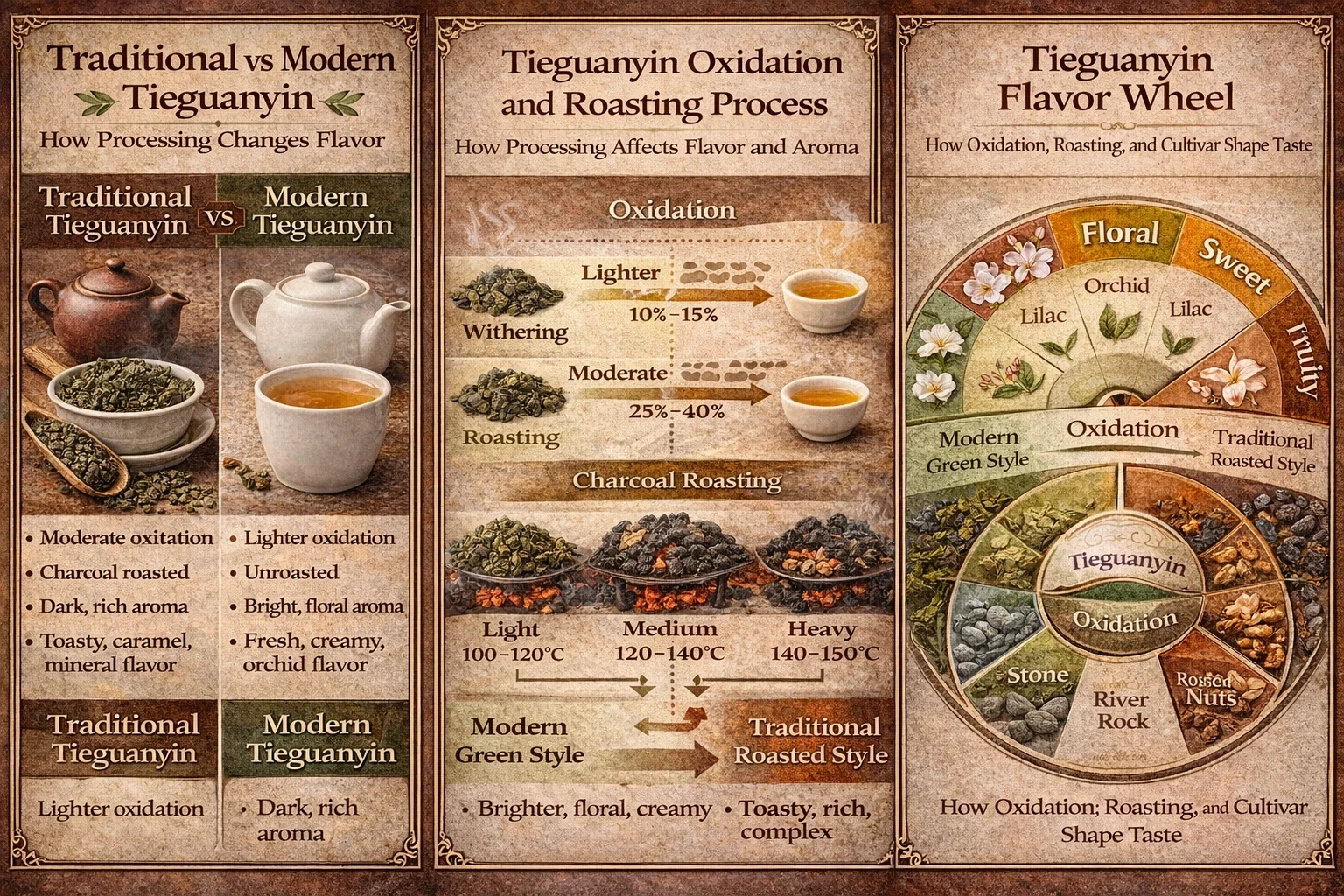
Modern Tieguanyin uses much lighter oxidation, sometimes as low as 10 to 15 percent. Roasting is minimal or skipped entirely, with the leaves receiving only a brief, light bake to stabilise them for storage. The result is vivid jade-green leaves and an intensely perfumed aroma that fills the room when you open the bag.
In the cup, this style is fresh, bright, and fragrant. Orchid and lilac florals are typical, often accompanied by a creamy sweetness and a clean finish reminiscent of fresh peas or young greens. It is smooth and approachable from the very first sip, which explains its widespread popularity.
If you have tasted Tieguanyin before and found it light, floral, and beautifully aromatic, this is almost certainly the version you had. It is excellent tea on its own terms. But it represents only one direction the tea can go.
Oxidation: The Foundation of Flavor
When freshly picked tea leaves are bruised and exposed to air, oxidation begins. This gradual reaction changes the chemistry of the leaf, shifting colour, aroma, and taste. It is the same basic process that turns a sliced apple brown, though in tea-making it is carefully controlled to produce specific results.
More oxidation moves the tea toward darker, richer flavours with coppery-brown leaves. Less oxidation keeps things greener, lighter, and more floral. Traditional Tieguanyin typically undergoes moderate oxidation, bringing out those roasted grain notes, muskier orchid aromas, and the layered complexity that makes it so compelling across multiple infusions. Modern green-style Tieguanyin is held at much lower oxidation levels, preserving the vivid florals and clean, fresh character that define it.
This single factor explains much of the difference between traditional and modern Tieguanyin. Once you understand oxidation, the difference between a dark traditional tea and a bright modern one starts to make immediate sense.
Roasting: Where Depth Comes From
Roasting is what gives traditional Tieguanyin so much of its character. After the leaves have been withered, bruised, and oxidised, they go over charcoal in bamboo baskets for a slow, careful roasting that demands real skill from the tea maker. Too little heat and the tea tastes flat. Too much and the leaves scorch, destroying the delicate aromas built up during earlier processing.
Done well, charcoal roasting creates a warmth that runs right through the tea. It adds toasty, nutty notes, smooths out the mouthfeel, and deepens the colour of both the leaves and the brew. Some traditionally roasted Tieguanyins develop hints of caramel or even a faint chocolate quality that you simply cannot achieve through oxidation alone.
Modern green Tieguanyin either skips roasting entirely or uses only a short, light bake for stabilisation. Without that sustained heat, the tea keeps its crisp brightness and jade-green colour. Neither approach is better in any absolute sense. They just produce fundamentally different teas.
Cultivar: Not All Tieguanyin Plants Are the Same
The cultivar refers to the specific strain of tea plant used. The standard Tieguanyin bush, known as Zheng Chuan Tieguanyin, is the foundation of the finest examples, prized for its thick floral perfume and rich, creamy complexity. However, Anxi farmers sometimes grow neighbouring cultivars that share processing methods but produce different results in the cup.
Ben Shan tends toward lighter, simpler florals with less structural complexity. Huang Jin Gui is known for a golden-yellow liquor and an osmanthus-like fragrance. Mao Xie, sometimes called Hairy Crab, offers softer, sweeter, and gentler aromas. Each of these can be processed in a traditional or modern style, which means the cultivar and the processing method together determine what ends up in your cup.
When buying Tieguanyin, it is worth asking whether you are getting true Tieguanyin cultivar or one of its neighbours. The difference in intensity and complexity can be significant, especially if you are paying a premium for high-grade tea.
Terroir: Why Anxi Tieguanyin Tea Matters
Terroir covers everything about the environment where a tea grows: soil, altitude, climate, humidity, and even the character of the mist that settles over the mountains each morning. In Anxi, all of these factors work together in a way that is genuinely difficult to replicate elsewhere.
High-altitude growing means the leaves develop slowly, building sweetness and aromatic complexity over time. The mineral-rich soil lends a subtle earthiness to the infusion. The cool, foggy weather keeps the leaves juicy and loaded with the aromatic oils that produce that signature orchid fragrance, whether you are brewing a traditional roasted version or a modern green one.
Tieguanyin grown outside Anxi using the same cultivar and similar methods rarely achieves the same result. That geographic character is not marketing. It is real, and it is one of the reasons that sourcing authentic Anxi Tieguanyin tea is worth the extra effort if you want the full experience.
Why the Modern Style Took Over
The shift toward lighter, greener Tieguanyin happened gradually from the late 1980s and accelerated through the 1990s. Several things drove it in the same direction at once.
Younger consumers, both in China and in export markets, were moving toward fresher, more immediately pleasing flavours. The roasted warmth of traditional Tieguanyin struck some newcomers as heavy or unfamiliar. Lighter teas were easier to enjoy without years of tea experience behind you.
Production economics also played a role. Skipping or significantly shortening the roasting stage saves time, energy, and the skilled labour required to do it well. Lighter processing made larger-scale production more practical and opened up global export markets that traditional, charcoal-roasted Tieguanyin could not easily serve at volume.
The result was that modern green Tieguanyin became the face of the category worldwide, while traditional roasted versions retreated to specialty shops, dedicated tea houses, and the cellars of people who had been drinking it for decades. That is not a tragedy. The modern style genuinely deserves its popularity. But it does mean that many tea drinkers today have never encountered the other half of Tieguanyin’s identity.
Which Style Is Better?
This question comes up often and the honest answer is that it depends entirely on what you enjoy. Both styles are expressions of the same tea tradition, processed differently to bring out different qualities. Neither is the authentic one. Both are.
If you are drawn to warm, layered, contemplative teas that reward slow brewing and multiple steepings, traditional Tieguanyin will likely become a favourite. If you love bright, fragrant, immediately pleasing teas that fill the room with floral aroma, the modern green style is probably already calling your name.
The most useful thing you can do is try both styles side by side. A Gongfu session with a traditional roasted Tieguanyin followed by the same approach with a modern green version is one of the most illuminating comparisons in Chinese tea. You will come away with a genuine feel for how oxidation and roasting shape flavour in ways that are hard to explain and easy to taste.
FAQs: Traditional vs Modern Tieguanyin
What is the easiest way to tell traditional and modern Tieguanyin apart?
Start with the leaves. Traditional Tieguanyin is dark brown, sometimes with a slight reddish edge. Modern green Tieguanyin is, as the name suggests, bright jade green. The aroma also tells you a lot before you even brew: traditional versions have a warm, roasted fragrance; modern ones have a fresh, intensely floral perfume that is hard to miss.
Why does some Tieguanyin taste bitter or sour?
Usually that points to production shortcuts, inconsistent oxidation, or poor storage rather than anything inherent to the style. Well-made Tieguanyin, whether roasted or green, should taste smooth, clean, and pleasantly sweet. If something tastes off, the tea itself is more likely the issue than your brewing.
Is roasted Tieguanyin higher in caffeine than the green style?
Not meaningfully. Caffeine levels depend more on which leaves are harvested and how the plant has been cultivated than on whether the tea was roasted or left green. Both styles tend to sit in a moderate range, making them gentler than black tea or coffee and suitable for afternoon brewing sessions without too much concern about sleep.
Can Tieguanyin be aged like puerh?
Traditional roasted Tieguanyin can age beautifully. Stored well, it develops additional depth and a smoother, more integrated character over years. Modern green Tieguanyin is a different story. Its appeal is freshness, and those vivid floral notes tend to fade relatively quickly. If you are buying green-style Tieguanyin, drink it within a year or two while it is at its best.
Finding Your Tieguanyin
Tieguanyin is one of those teas with enough range to keep you exploring for years. At one end sits the bright, floral, easy-to-love modern green style. At the other, the slow-roasted, mineral-rich, contemplative traditional version. Between them, every variation in oxidation, cultivar, roasting intensity, and terroir creates a slightly different tea.
When you are shopping for Tieguanyin, it is worth asking questions. Where does it come from? How was it processed? Is it a true Tieguanyin cultivar or a neighbouring variety? Good tea sellers will know these answers, and the information will help you find a tea that actually suits your taste rather than one that just carries a familiar name.
If you have only ever tried the modern style, seek out a traditionally roasted version and give it a fair session. If you have been loyal to roasted Tieguanyin for years, a high-quality modern green from a trusted Anxi source might surprise you. Either way, you will come away understanding this tea a little better, and understanding tea better is always a good reason to brew another pot.
Try Tieguanyin Yourself
Reading about the differences between traditional and modern Tieguanyin is helpful, but the best way to understand them is simply to taste the tea yourself. Tieguanyin is one of the most rewarding oolongs to explore because its flavor changes noticeably depending on how it is processed and brewed.
A good starting point is a classic Tie Guan Yin Oolong Tea (Iron Goddess of Mercy) sourced from China. This style is known for its floral aroma, smooth body, and lingering sweetness, which makes it ideal for both Western-style brewing and Gongfu tea sessions.
If you are curious to experience the layered flavors described in this guide, you can check the current price and availability here:
→ View Tie Guan Yin Oolong Tea on Amazon
Once you have a quality Tieguanyin on hand, try brewing it using both Western and Gongfu methods. You may be surprised how much the same leaves can change from one session to the next.
Transparency note: ZenTeaTools uses affiliate links. If you purchase through this link, we may earn a small commission at no extra cost to you. It helps support the site and allows us to continue publishing detailed tea guides like this one.

Chris is the founder of Zen Tea Tools and a passionate explorer of traditional and modern tea brewing. From Gongfu sessions to smart tea technology, he shares practical insights to help others find clarity, calm, and better tea.Learn more about Chris →
Leave a Reply