Most people think of tea as something that’s either fresh or past its prime, but aged white tea is a real exception to that rule. Unlike most teas that go stale over time, white tea can actually improve with age, developing a mellower, more complex character that’s nothing like what it started as. For tea drinkers who enjoy smooth, layered flavors and are curious about how a tea can change, aged white tea is definitely worth exploring. In this article, I’m covering what makes it interesting, what you actually get from aging it, how the flavor shifts over the years, and how you can get started at home.
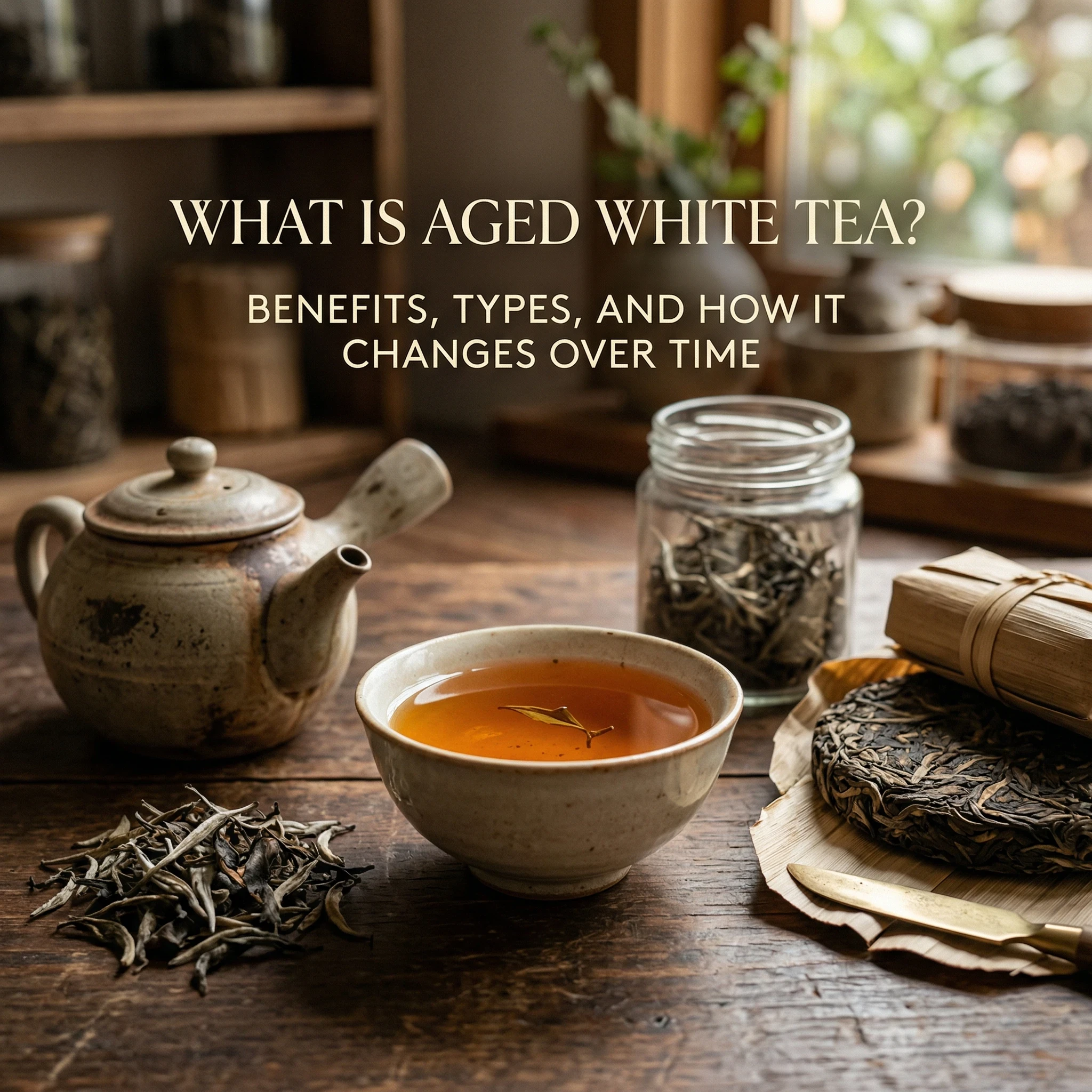
What Is Aged White Tea?
Aged white tea is white tea that has been stored under dry, controlled conditions for several years, allowing it to slowly oxidize and develop deeper, smoother flavors over time.
Unlike pu-erh, which relies on post-fermentation from special microbes, aged white tea ages through a long, slow natural oxidation process. Freshly made white tea is really delicate and light, but as it gets older, both the taste and aroma shift, often developing honeyed, fruity, and even slightly woody notes. Instead of going stale, the tea transforms.
This change only works when white tea is stored carefully, free from excess humidity and strong environmental odors. Most aged white teas come from China’s Fujian province, where the climate and traditional handling create the right conditions for slow, steady change. Typical aging windows range from about three to twenty or more years, with some collectors even tracking down rare batches from the 1990s or earlier.
Does White Tea Really Age Well?
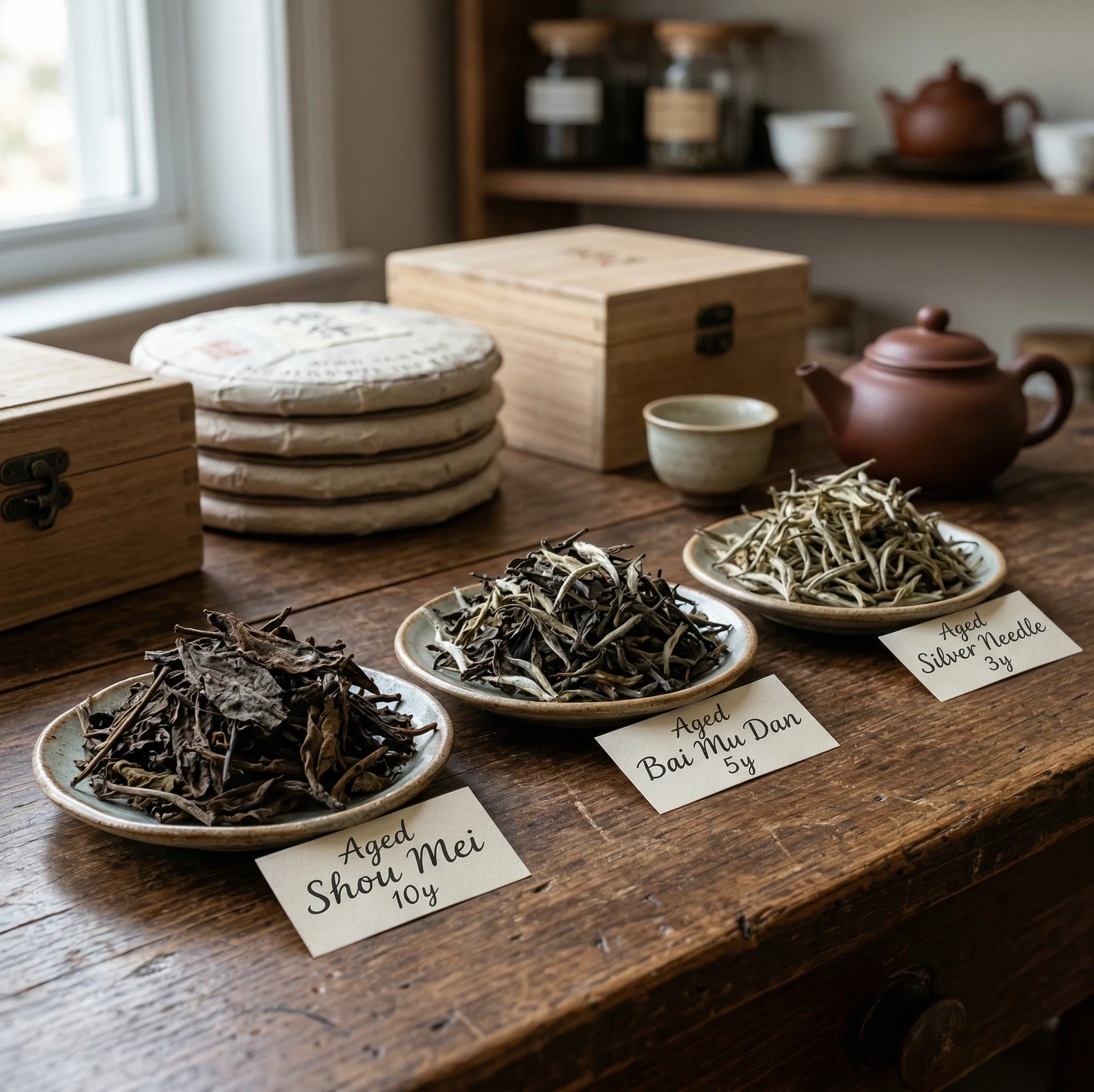
White tea can age surprisingly well, but that doesn’t mean every bag in your cupboard is going to taste amazing in a decade. The type of white tea, the original leaf quality, and how you store it all matter quite a bit. Shou Mei and Bai Mu Dan (White Peony) have thicker, more robust leaves that hold up to aging much better than the super-delicate Silver Needle types.
If the storage area has steady, cool temperatures, stays dry, and is free from kitchen smells or mustiness, white tea can develop richer and more complex notes over time. Toss a pack onto a sunny windowsill or keep it in a plastic bag near your spice shelf, and you’ll end up with something musty and flat. It’s a little like how wine or cheese develops character in the right environment, while green tea just goes lifeless with age.
The chemical changes inside aged white tea come from slow oxidation. The polyphenols and other plant compounds in the leaves react gently with air, gradually converting some of the brighter, grassy notes into smoother honey, fruit, and wood flavors. You get less astringency, more body, and a deeper color in both the liquor and the leaves themselves.
How Aged White Tea Changes Over Time
The transformation over time is really noticeable, even after just a few years. I’ve tasted white teas at all stages, and the differences can be eye-opening:
0–2 Years (Young): Fresh, floral, slightly grassy, with a crisp feel and a pale color in the cup. You get more brightness than depth at this stage, along with a clean sweetness, but not a lot of complexity.
3–7 Years (Mid-Aged): Smoother texture, with flavors shifting from fresh-cut hay and flowers to include honey, dried apricot, and herbal notes. There’s a roundness here: less sharp, almost creamy at times, and the color starts darkening. This is when sweetness and body really begin to shine.
8+ Years (Old): Deep and sometimes slightly medicinal, with notes of sweet dates, dark honey, and woody undertones. The mouthfeel is thicker, and the brew takes on a light amber color instead of straw yellow. There’s almost zero bitterness, and a cooling, lingering aftertaste that’s genuinely pleasant on the throat. This is what a lot of tea enthusiasts are chasing.
This is why aged white tea is often compared to wine, though the process is much slower and more subtle. Each year brings a different version of the same leaf, which is a big part of the appeal.
Main Types Used for Aging
Not every white tea is suited for aging, and even among the main types there are differences worth knowing about.
Shou Mei: This is the most common white tea for aging. The leaves are bigger and thicker, picked later in the season, and have enough strength to hold up through years of storage. After aging, Shou Mei turns rich and slightly earthy, producing a deeper brew. It’s a good entry point if you want obvious changes in taste.
Bai Mu Dan (White Peony): Made from both buds and young leaves, White Peony turns smoother and more complex as it matures, with notes of stone fruits, honey, and sometimes melon. After about five years, it becomes rounder and more layered without losing all of its lighter character.
Bai Hao Yin Zhen (Silver Needle): Packed with white buds, Silver Needle is beautiful and delicate. It does age, but it’s less common for long-term aging because the buds can lose their signature subtlety unless handled with extra care. The aged version becomes gentler, almost syrupy, with mild sweet spice. It’s usually pricier, so most people drink it young.
Aged White Tea Benefits
There’s a fair amount of discussion around the health benefits of white tea in general, and it is naturally rich in polyphenols and antioxidants. Even after several years of aging, a good portion of these plant compounds remain.
Potential Benefits of Aged White Tea
• A gentle caffeine lift without the jitteriness of stronger teas
• Refreshing hydration
• A soothing effect on the throat, which is part of why it’s traditionally used during summer or when you’re under the weather
Older white tea also tends to be easier on the stomach, with a smoother texture and less sharpness compared to fresh tea. In my experience, it just feels gentle and calming, especially when I’m run down.
That said, aged white tea isn’t a miracle drink, and it won’t change your health overnight. If you enjoy a mellow, pleasant cup and like the idea of some antioxidant support as part of a balanced lifestyle, it’s a solid and enjoyable option.
Why People Drink Aged White Tea
For most tea drinkers, aged white tea is about flavor first. The lack of bitterness, soft mouthfeel, and easy sweetness set it apart from both green and black teas. It’s comfortable to drink at any time of day, even on an empty stomach, without worrying about strong aftertastes or jitters.
The range of flavors is genuinely interesting: floral, honey, dried fruit, and in really old batches, even a faint hint of Chinese herbal medicine. That complexity is what keeps people coming back. Tea collectors also enjoy the aging process itself, tracking how their tea develops year by year, not unlike the way wine or whisky fans follow a special bottle. There’s a collectible and experimental side to it that’s a lot of fun.
How to Store White Tea for Aging
If you’re thinking of starting your own aged white tea collection, or just want to keep your current stash in good shape, storage is everything. Here’s how I keep mine:
Keep it dry. Even a little moisture leads to mold and ruins the tea. I use paper bags, cardboard boxes, or breathable clay jars, never plastic.
Avoid strong odors. White tea absorbs smells easily, so keep it away from spices, soap, or fragrant foods. A closed cupboard works well.
Stable temperature. Wild temperature swings can interfere with aging. Find a cool, consistent spot away from your oven or any heat source.
Let it breathe. Tea needs gentle airflow, but no humidity. Some air circulation helps, but don’t seal it in vacuum bags. If you’ve got loose leaf, wrap it in thick paper. For cakes, keep them in their natural wrapper inside a box.
Keep out of sunlight. Direct light ages the tea poorly and kills delicate flavors. Always store in a dark spot.
Some collectors prefer cakes (compressed white tea) because they’re easy to stack and age more slowly. Others prefer loose leaf for convenience. Both work fine as long as you follow the storage basics above. For a deeper breakdown, see my full guide on how to store tea properly.
Common Myths About Aged White Tea
“All white tea gets better with age.” Only certain types, like Shou Mei and Bai Mu Dan, improve with time, and only if they’re high quality and stored properly. Cheap or poorly kept tea just gets musty.
“Older always means better.” There’s a sweet spot for each tea. After about fifteen years, most white tea peaks in flavor and can fade if kept even longer, turning flat or dusty.
“It’s just like pu-erh.” Not really. The aging process is slower, drier, and the flavor profile is smoother and lighter than aged pu-erh. Don’t expect earthy, fermented notes; aged white tea is much gentler.
My Personal Experience With Aged White Tea
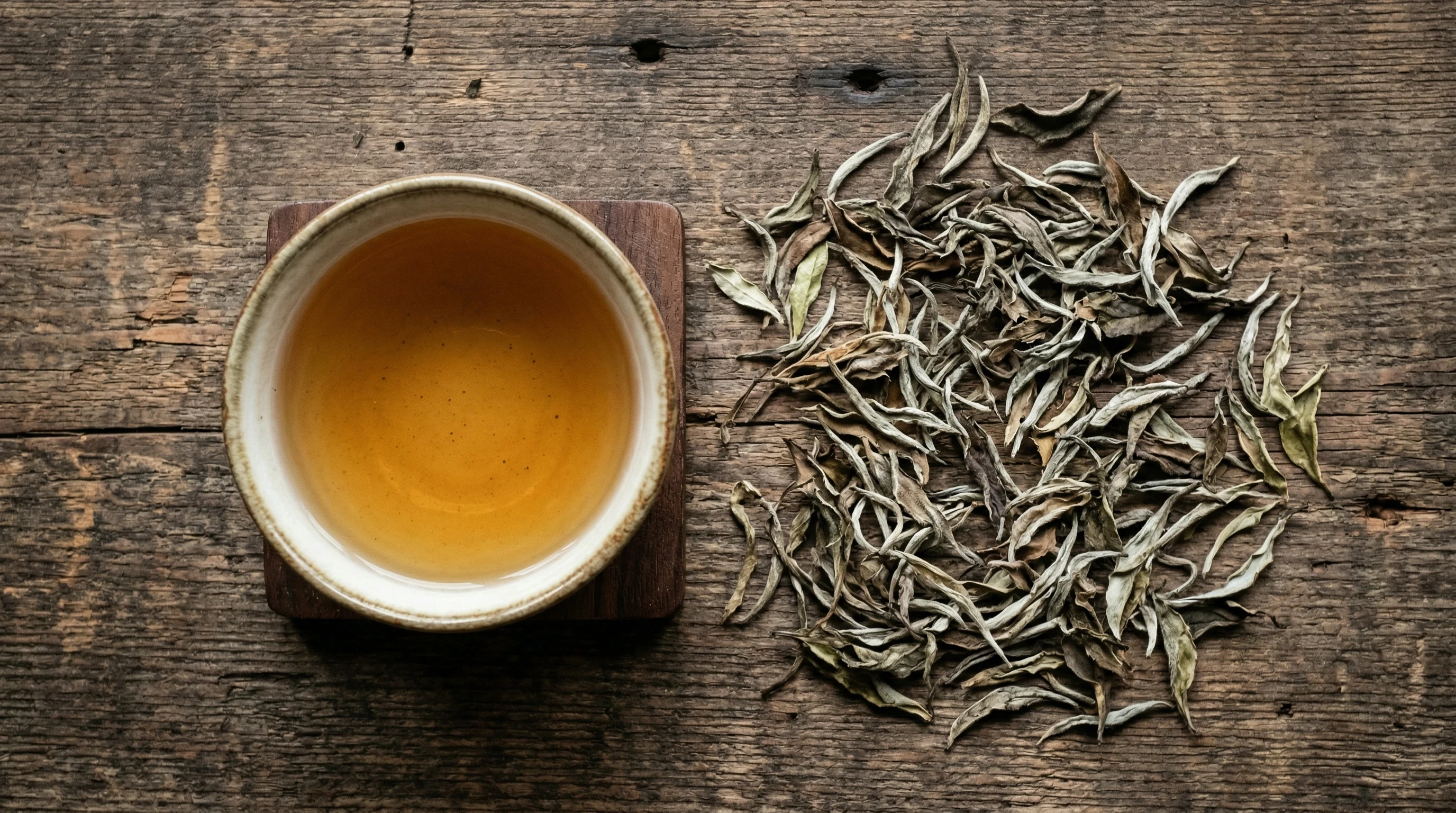
When I first got into aged white tea, I started with a seven-year-old Shou Mei cake. What blew me away was how different it was from the same tea fresh. Where the new version was brisk and grassy, the aged version was dark gold, noticeably thicker in the cup, and smelled like wild honey and dried apricots. Over the years, I’ve had White Peony that turned almost syrupy sweet, and even some old Silver Needle that tasted like warm sugar water with a faint herbal kick. Every batch is different, and for me, that’s one of the best parts.
If you want to see the differences for yourself, try brewing a two-year-old White Peony next to a ten-year-old Shou Mei. I usually go gongfu style with short, repeated steeps in a small teapot. You’ll see right away how the flavor and color shift with each infusion, and the older batch really shines in terms of aftertaste and mouthfeel.
Where to Buy and Try Aged White Tea
Not all tea shops carry aged white tea, but plenty of online vendors specialize in it. A good starting point is aged Shou Mei or Bai Mu Dan cakes: they’re solid, reasonably priced, and the differences are easy to spot. Amazon has some legitimate options from Chinese brands if you read reviews carefully and look for listings that specify the harvest year. For loose leaf, make sure the seller lists both the harvest year and storage method. Bai Hao Yin Zhen (Silver Needle) is fun to try aged, but expect to pay more for less dramatic changes than you’d get with Shou Mei.
For a deeper look at technique, see my full guide on how to brew tea Gongfu style and my guide on choosing the best water for tea. Both are worth reading before diving into your aged stash.
FAQ
Does white tea expire?
White tea doesn’t “expire” in the sense of spoiling, as long as it’s stored properly. Instead, it evolves, and with good care, it can last for years or even decades. If it smells moldy, sour, or otherwise off, it’s best to toss it.
How long should you age white tea?
Most aged white teas start developing richer flavors after about three years. Many people find the sweet spot somewhere between 5 and 10 years old, but you can experiment and see what you prefer. Some teas hold up well beyond 15 years, but not all age the same way.
Is aged white tea expensive?
Aged white tea can get pricey, especially for older batches or rarer types like aged Silver Needle. Shou Mei is usually the best value and has plenty of character without breaking the bank. Expect to pay more for teas that are over 8 to 10 years old.
Can you age white tea at home?
Yes. As long as you follow good storage practices (keeping it dry, cool, dark, and free from strong odors), you can absolutely age white tea at home. It works with both loose leaf and cakes, and it makes for a rewarding project. Tasting your own stash each year to track how it changes is one of the more enjoyable things you can do as a tea drinker.
Here’s a little transparency: Our website contains affiliate links. This means if you click and make a purchase, we may receive a small commission. Don’t worry, there’s no extra cost to you. It’s a simple way you can support our mission to bring you quality content.

Chris is the founder of Zen Tea Tools and a passionate explorer of traditional and modern tea brewing. From Gongfu sessions to smart tea technology, he shares practical insights to help others find clarity, calm, and better tea.Learn more about Chris →
Leave a Reply