If you’ve come across a samovar and weren’t sure how it actually works, that’s normal. It doesn’t behave like a kettle, and that’s where most of the confusion starts.
The electric samovar brews an intentionally strong tea concentrate in a small teapot at the top, then uses hot water from the large boiler below to dilute that concentrate cup by cup. The result is a practical system that keeps tea and hot water ready for hours without any reboiling or rebrewing.
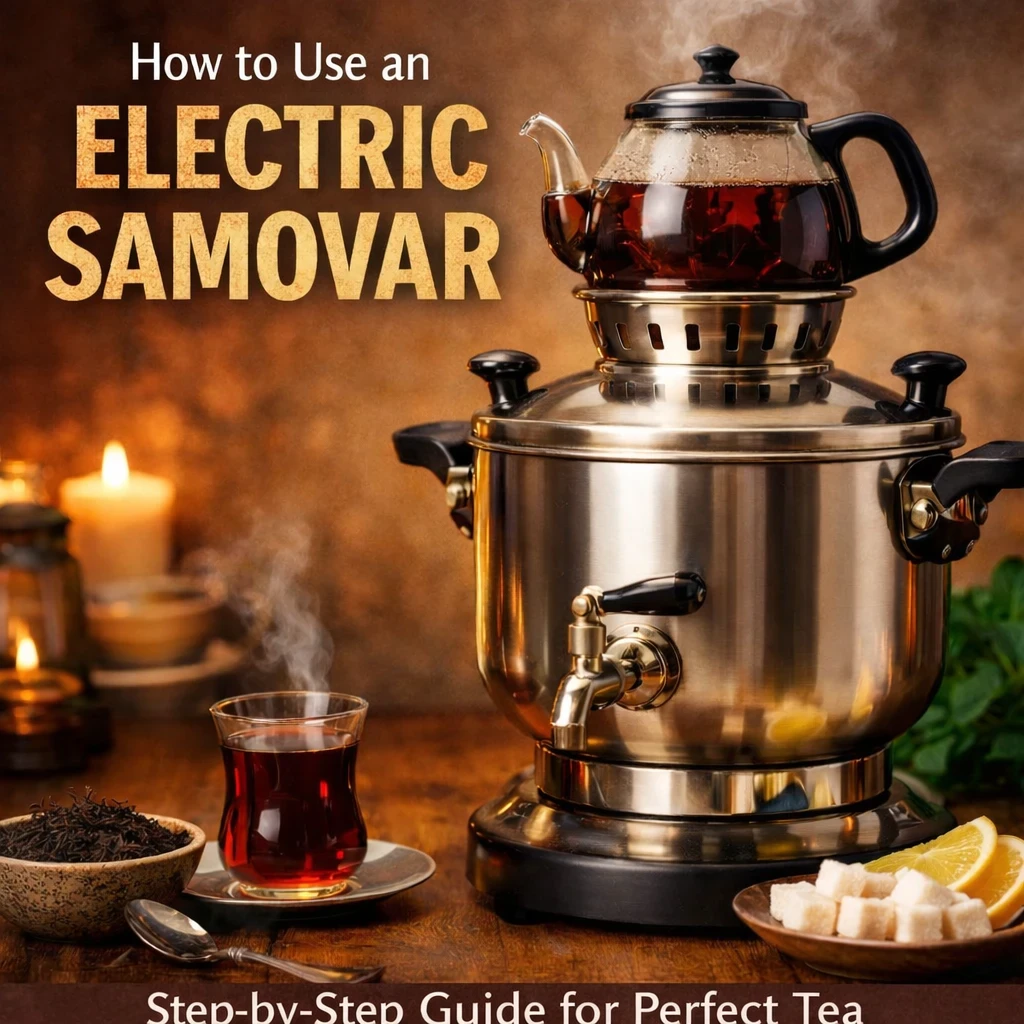
What Is an Electric Samovar and How Does It Work?
An electric samovar has two main components. The bottom section is a water boiler that heats and holds a large volume of water at near-boiling temperature for hours. The top section is a small teapot, sometimes called a zavarka, where you brew a concentrated tea base.
The logic behind the system is different from standard teapot brewing. You’re not brewing a finished cup; you’re brewing a concentrate that gets diluted at the point of serving. This is what catches most beginners off guard. The tea in the top pot is supposed to be much stronger than anything you’d drink straight. That’s not a mistake; it’s the whole point.
The samovar is built for volume and sustained service, not for precision or delicate flavor profiles. It suits situations where multiple people want tea over the course of a few hours, and each person wants a different strength.
How to Use an Electric Samovar (Quick Answer)
If you want a summary before diving into the detail, using an electric samovar correctly comes down to three steps:
• Fill the base: Add clean, cold water to the lower boiler and switch on the samovar.
• Brew a strong concentrate: Add loose black tea and a small amount of water to the upper teapot and let it steep until very dark and strong.
• Dilute by the cup: Pour some concentrate into your glass and top it up with hot water from the samovar tap. Adjust the ratio to taste each time.
The concentrate is never drunk straight. Diluting it is how the system is designed to work.
How to Set Up an Electric Samovar
Getting the setup right from the start avoids most common problems.
Rinse before first use: Run clean water through both the boiler and the teapot to remove any factory residue or packaging oils.
Fill the water tank to the indicated line: Overfilling causes water to bubble over as it boils. Underfilling puts stress on the heating element and shortens its lifespan. Most samovars have a clear max-fill mark.
Seat the teapot securely: The small teapot sits on top of the boiler lid, which is usually shaped to hold it in place. Make sure it’s stable before switching on.
Plug in and turn on: Basic models have a simple on/off switch. Some have temperature settings, but a standard boil setting works well for black tea. The boiler will reach temperature and then hold it automatically.
Safety basics: Never run the samovar without water in the base. Keep the cord away from steam and moisture. Assume the tap is hot once the unit reaches temperature and treat it accordingly.
Step-by-Step Brewing Method
The brewing method here is different from what most people are used to, and that gap is where most beginners go wrong. The first time you use a samovar, it will feel counterintuitive. Most people instinctively try to make a normal-strength tea in the top pot, which doesn’t work here. You’re not aiming for a drinkable brew in the teapot. You’re making a concentrated base.
Use robust loose leaf black tea: A full-bodied black tea works best. Use roughly double the amount you would for a standard teapot brew. A useful starting ratio is two to three heaped teaspoons per cup capacity of the top teapot.
Pour water over the leaves: Use hot water from the boiler below, not cold water from the tap. Pour in just enough to fully submerge the leaves. The teapot should be roughly half to two-thirds full at most.
Steep for 10 to 15 minutes: This is much longer than the three to five minutes you’d use for a regular pot. The goal is a very dark, intensely flavored brew that looks and tastes far too strong to drink on its own. That concentration is exactly what you need.
Keep the concentrate hot: The teapot sits above the boiler, which keeps it at a steady warm temperature. If your teapot loses heat quickly, drape a small tea cozy or folded cloth over it. A well-insulated samovar can hold the concentrate at serving temperature for several hours.
Mix and serve by the cup: Pour concentrate into the glass first, roughly a quarter to a third of the volume. Top up with hot water from the samovar tap. This is where each person controls their preferred strength. There is no single correct ratio.
Add extras after diluting: Lemon, sugar, or mint go into the individual cup, not into the teapot. That way one person’s preference doesn’t affect everyone else’s brew.
Common Mistakes
Tea too weak: Almost always caused by not using enough leaf, not steeping long enough, or diluting too heavily. Increase the leaf quantity first, then adjust steep time.
Using it like a regular teapot: The samovar doesn’t work well as a direct-serve pot. The concentrate is too strong to drink straight, and a fully brewed tea left in the top pot will turn bitter over time. Use the concentrate-and-dilute method as intended.
Choosing the wrong tea: Green, white, and oolong teas are too delicate for this system. Extended steeping and sustained heat will make them harsh and unpleasant. Stick to robust black teas designed for strong brewing.
Over-steeping the concentrate: If the concentrate tastes bitter rather than just strong, either reduce the steep time or let the boiler water cool for a minute before pouring it over the leaves. Actively boiling water can bruise even black tea leaves if poured directly.
Inconsistent dilution: If your cup keeps coming out too strong or too weak, track how much concentrate you’re using per cup. A rough starting point is one part concentrate to three parts hot water, then adjust from there.
Best Teas for an Electric Samovar
The samovar works best with full-bodied black teas that can withstand long steep times without turning harsh.
Turkish black tea: Finely cut, strong, and well-suited to the concentrate method. Widely available at international grocery stores and typically sold in large quantities.
Persian or Iranian tea: Often a blend of black teas, sometimes with cardamom or bergamot. These teas are designed to be brewed very strong before diluting, which makes them a natural fit for samovar use.
Russian blends: Russian Caravan and similar malty, sometimes smoky blends work well and have a long association with samovar brewing.
Any strong loose leaf black tea: English Breakfast, Assam, or Ceylon are all reliable choices. Look for a tea that holds its flavor when diluted and doesn’t turn astringent after a long steep.
Green, white, and oolong teas are better brewed with precision in a separate teapot. They’re not suited to the heat levels or steep times involved in samovar brewing.
Why People Use Samovars
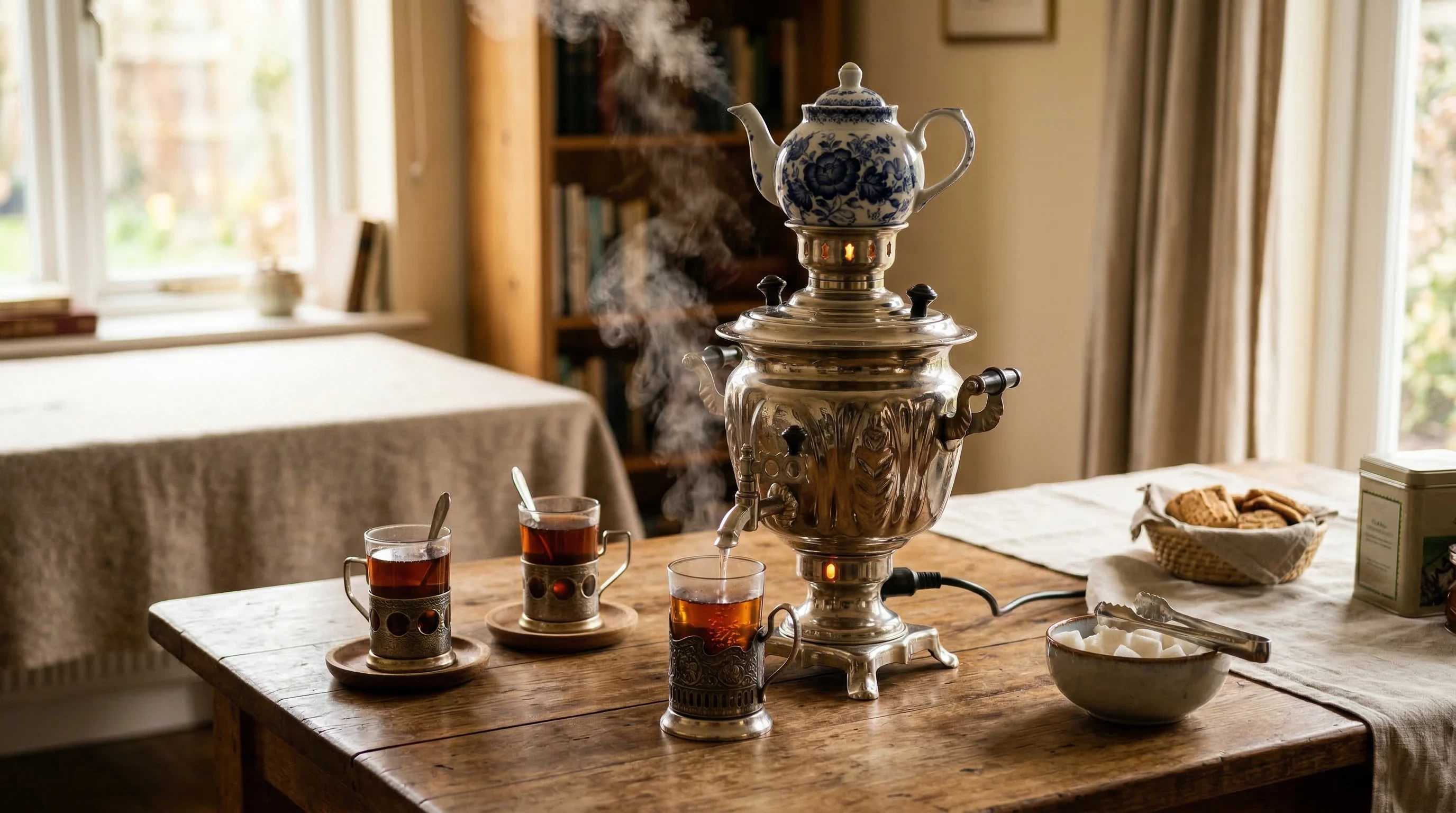
The advantages are mostly practical.
No constant reboiling: Once switched on, the boiler holds water at temperature for as long as you need. There’s no returning to the kitchen to reboil a kettle between rounds.
Easy serving for groups: Multiple people can pour their own cups and adjust strength individually without anyone managing a communal pot. Strong or mild, each cup is mixed on the spot.
Hours of service from one setup: Brew the concentrate once, and the samovar handles the rest. For long gatherings or extended tea sessions, that saves significant time and effort.
Practical for daily tea drinkers: If you drink three or four cups of black tea throughout the day, a samovar means you’re not repeatedly boiling and rebrewing. Fill it once in the morning and the system does the rest.
It’s worth noting that the samovar doesn’t suit every use case. For single cups, delicate teas, or precise temperature control, a kettle and teapot give you more flexibility. The samovar earns its place when volume and sustained service matter.
Electric Samovar vs Kettle
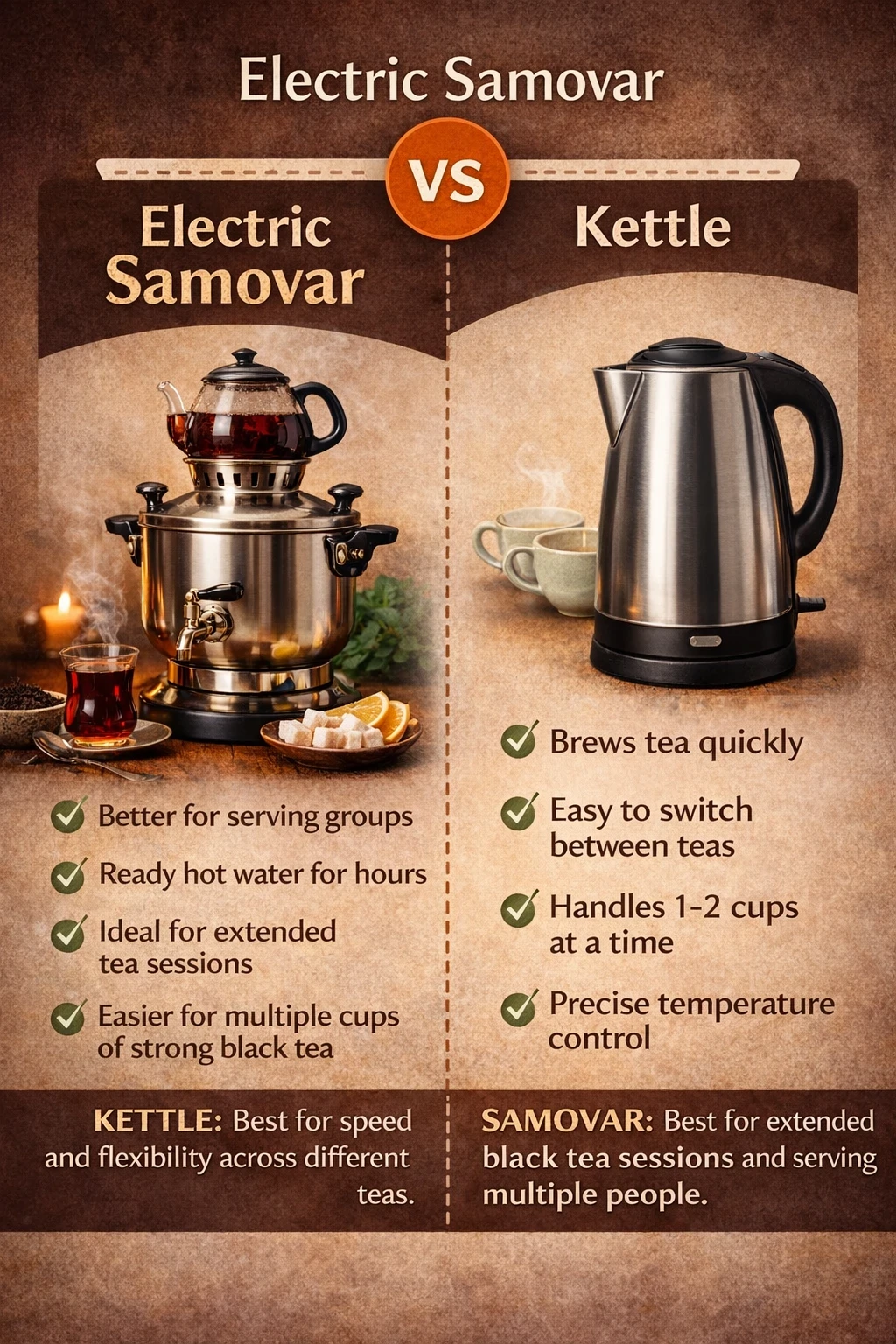
A kettle is the right tool when you want speed, flexibility, or precise temperature. It handles one or two cups at a time well, and you can switch between different teas easily.
A samovar is the better option when you’re serving multiple people, drinking several cups over an extended period, or want a ready supply of hot water without repeated boiling. It’s not a general-purpose appliance. It’s built for a specific use case and does that job efficiently.
If you mostly brew for yourself or switch between tea types regularly, a kettle will likely serve you better. If you drink a lot of black tea and regularly have people around for tea, the samovar makes the process noticeably simpler.
Is It Worth Using One?
The answer depends on how you drink tea. The samovar makes sense for households that go through a significant amount of black tea, for hosts who serve tea to groups, and for anyone who finds themselves constantly reboiling water throughout the day.
If you mainly drink one or two cups at a time, or you enjoy different tea types and brewing methods, the samovar may feel like too much for your needs. It’s a specialized tool, and it works well when used for the right job.
How Strong Should the Tea Be?
This is the part that takes the most adjustment for newcomers, because the concentrate should look and taste noticeably wrong if you’re used to standard brewing.
What “concentrate” means in practice: The tea in the top pot should be dark, deeply flavored, and far too strong to drink on its own. Think of it as a base to build from, not a finished brew. If it looks like regular tea, it’s not concentrated enough.
How strong is too strong: If the concentrate is bitter rather than just bold, you’ve likely over-steeped or used water that was still actively boiling. Bitterness is the signal to pull back. Strong and slightly astringent is acceptable; sharp and unpleasant is not.
Adjusting strength per cup: Start with roughly one part concentrate to three parts hot water. From there, adjust toward more concentrate if you want a bolder cup, or add more hot water if you want something lighter. There is no universal ratio; it depends on the tea, the steep time, and personal taste.
It takes a few attempts to calibrate: Most people find the right concentrate strength and dilution ratio after two or three sessions. If the cup is consistently too weak, increase the leaf quantity before changing the steep time. Adjust one variable at a time and it becomes straightforward quickly.
FAQ
How do you use an electric samovar?
Fill the lower boiler with water and switch it on. Brew a strong tea concentrate in the small teapot on top. To serve, pour some concentrate into a glass and top it up with hot water from the samovar tap, adjusting the ratio to taste.
Can you use loose leaf tea in a samovar?
Yes, and it’s the recommended approach. Loose leaf black tea produces better flavor and holds up to extended steeping better than tea bags, which can turn bitter more quickly.
What tea works best in an electric samovar?
Robust black teas are the practical choice: Turkish, Persian, Russian blends, English Breakfast, Assam, or Ceylon. Avoid green, white, or oolong teas; they’re not suited to the heat levels or steep times involved.
Is an electric samovar better than a kettle?
They serve different purposes. A kettle is more practical for quick, individual cups and flexible tea types. A samovar is better suited to extended tea sessions and serving multiple people from a single setup.
How strong should the tea be in the top pot?
Significantly stronger than you’d drink it straight. The concentrate should be dark and bold enough that it needs dilution before it’s pleasant to drink. That’s the starting point, not a mistake. Adjust the leaf quantity and steep time until the diluted result suits your taste.
Can you leave an electric samovar on all day?
Yes. Most electric samovars are designed for sustained use and will hold water at temperature for several hours without issue. The main thing to monitor is the water level. As the day goes on, water evaporates slowly and the level drops. Top it up as needed and never let it run dry, as that puts strain on the heating element.
Ready to See What’s Out There?
If you’re not sure which model to start with, the guide to the best electric samovars compares four options by capacity, build quality, and temperature control.
If you’re curious about electric samovars and want to see how different models look and compare, you can browse a wide selection of electric samovars on Amazon. It’s a good way to get a feel for what’s available before committing to one.
Here’s a little transparency: Our website contains affiliate links. This means if you click and make a purchase, we may receive a small commission. Don’t worry, there’s no extra cost to you. It’s a simple way you can support our mission to bring you quality content.

Chris is the founder of Zen Tea Tools and a passionate explorer of traditional and modern tea brewing. From Gongfu sessions to smart tea technology, he shares practical insights to help others find clarity, calm, and better tea.Learn more about Chris →
Leave a Reply