Most aged white tea on Amazon isn’t actually aged. That’s where people go wrong. The word “aged” on a listing means nothing without a harvest year, and a surprising number of popular products don’t include one. Add in vague tea names, prices that vary wildly for what looks like the same product, and packaging that tells you nothing useful, and you end up with one of the more confusing buying decisions in tea.
The good news is that a few filters cut through most of the noise quickly. If you want to buy aged white tea on Amazon without wasting money on something mislabeled or poorly sourced, you don’t need deep tea knowledge. You just need to know what to look for and what to skip.
What follows is a practical breakdown of how to read Amazon listings for aged white tea without getting misled, which formats suit which situations, some products worth actually buying, and how to brew them. No fluff, no rankings dressed up as recommendations.
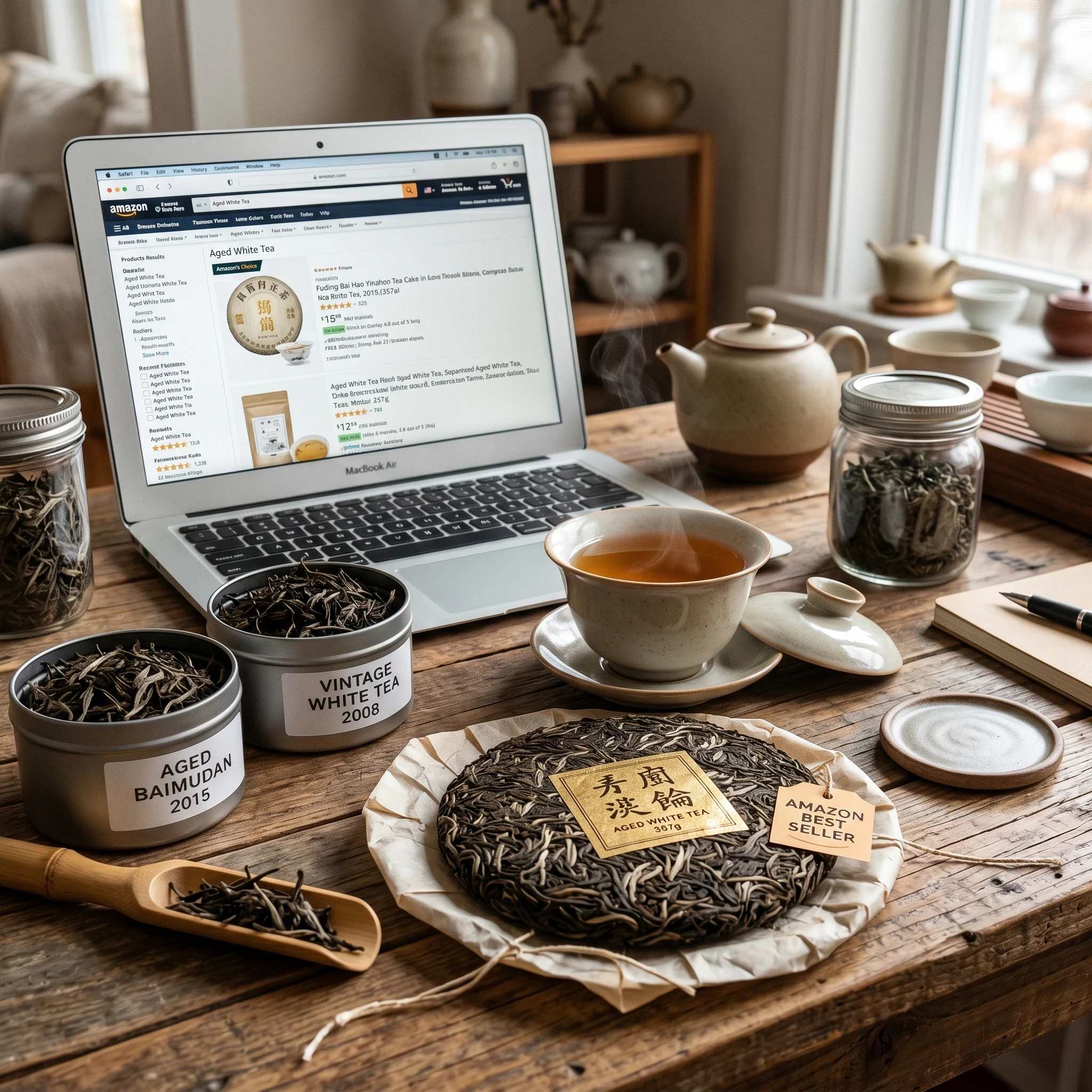
How to Filter Out the Junk Quickly
Amazon has everything, which means it also has a lot of bad tea dressed up in nice packaging. This is where listings get misleading. Here’s how to filter fast.
1. Look for Real Tea Names
Aged white tea isn’t a single product. There are distinct types, and they age differently and taste different. The main ones you’ll encounter:
• Shou Mei: The most common choice for aging. Bold, slightly woody, earthy sweetness. Best starting point for beginners.
• Bai Mu Dan (White Peony): More balanced, with a lighter body than Shou Mei. Floral notes tend to soften and sweeten with age.
• Silver Needle: Delicate and bud-heavy. Less common as an aged tea because the subtlety can get lost. Worth trying once you’ve developed a baseline.
If a listing just says “white tea” with no type specified, that’s a red flag. A seller who knows their product will always name it.
2. Check for a Harvest or Aging Year
“Aged” without a year means nothing. Anyone can call a tea aged. Listings that include a harvest year (2016, 2017, 2019, and similar) are at least making a specific claim that can be verified or questioned. No year usually means no real aging, regardless of what the description says.
3. Origin Matters More Than the Brand
Fuding and Zhenghe in Fujian province are the traditional heartlands of white tea production. Tea from these areas has a long track record and is the benchmark for aged white tea. Yunnan white teas exist and are increasingly common on Amazon, but the character is different: earthier, sometimes darker, with less of the honey-floral quality you’d expect from Fujian. Neither is bad, but they’re not the same thing, and you’ll want to know which one you’re buying. If origin isn’t mentioned at all, skip it.
4. Format Affects Everything
This matters more than most people realize when they’re starting out:
• Cakes: Compressed into a disc, typically 100g to 357g. Best for long-term aging and the most engaging ritual. You break pieces off with a pick, which affects how the leaves open during brewing.
• Loose leaf: Pre-separated leaves, easy to measure, nothing to break apart. The most practical everyday format.
• Balls or individually packed portions: Each unit is one brewing session. Removes all guesswork. Good for first-timers or anyone who doesn’t want to think about ratios.
The aged white tea cake vs loose leaf debate gets overcomplicated online. If you’re just starting, pick one of each and see which you actually reach for.
Common Mistakes When Buying Aged White Tea
A lot of first-time buyers make the same avoidable errors. Most of them happen before anyone has even opened a bag. Worth knowing these upfront.
Trusting the Word “Aged” Without a Harvest Year
This is the single most common issue. “Aged white tea” is a marketing phrase, not a regulated term. Any tea can be labeled aged regardless of how long it’s actually been stored. Always look for a specific year. If a seller won’t commit to one, neither should you.
Ignoring Tea Type and Conflating Silver Needle with Shou Mei
These are very different teas with different aging profiles. Silver Needle is prized for delicacy and freshness when young. Shou Mei has more structural complexity and picks up deeper flavors over time. Buying Silver Needle because it sounds premium, when what you actually want is the earthy richness of aged Shou Mei, is a common mismatch that leads to disappointment.
Paying for Packaging Instead of Tea Quality
Beautifully designed tins, silk pouches, and gift-ready boxes are nice, but they can easily account for a significant portion of what you’re paying. On Amazon especially, packaging quality has almost no correlation to tea quality. If the listing is heavy on lifestyle photos and light on sourcing details, that’s usually a bad sign.
Assuming Price Equals Quality at Every Level
At the lower end, yes, you often get what you pay for. But at the higher end on Amazon, the premium doesn’t always reflect better tea. It often reflects better branding or import costs. A 2016 Shou Mei cake for $15 can be more interesting than a heavily marketed product at three times the price. This is where most people overpay. Read the reviews carefully and look for comments that describe flavor, not just packaging.
Expecting Fresh Tea Flavor from Aged Tea
This sounds obvious, but it catches people out. Fresh white tea is light, floral, slightly grassy. Aged white tea is darker, sweeter, earthier, sometimes woody or slightly herbal. If you brew aged Shou Mei and wonder why it doesn’t taste fresh and delicate, it’s working as intended. The whole point is what time does to it.
Aged White Tea Cakes (Best for the Full Experience)
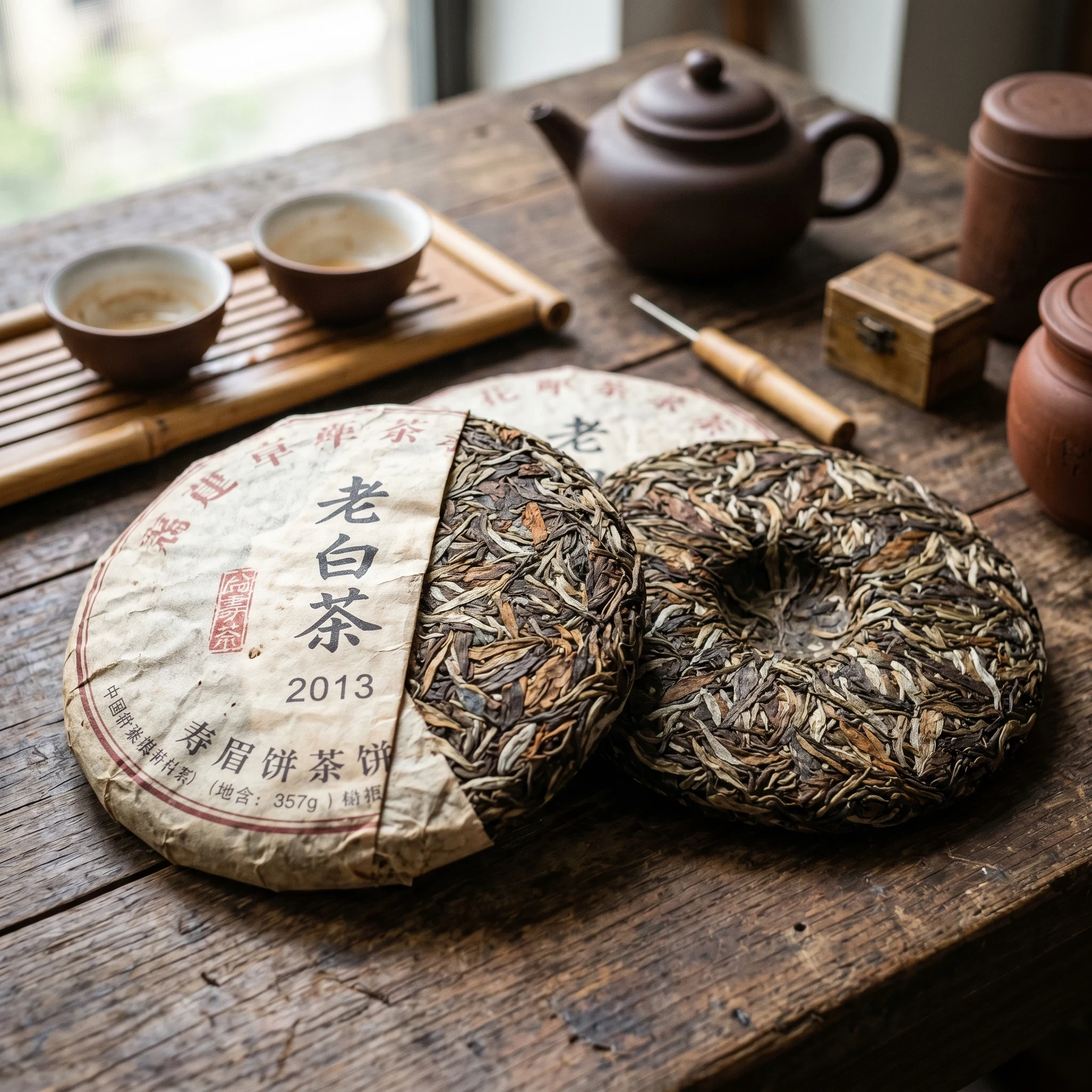
If you want to understand what aged white tea is actually about, start with a cake. Breaking off compressed leaves, watching them unfurl slowly in hot water, getting multiple infusions from the same leaves: this is where the ritual side of tea makes sense. It’s not precious, it’s just more engaging than spooning out loose leaf.
1. 2016 Shou Mei Aged White Tea Cake (100g)
A solid, no-fuss entry point. After nearly a decade, this Shou Mei has moved past the “young and slightly sharp” stage into something rounder and more settled. Expect a darker amber liquor, a mild woody sweetness, and a finish that lingers a bit. Nothing flashy, but genuinely drinkable and honest about what it is.
At this price, don’t expect complexity. But that’s not what this tea is for. It’s a good first aged white tea for beginners: something you can experiment on without feeling precious about it.
Product page: 2016 Shou Mei Aged White Tea Cake
2. ChaWuWarmSun Shou Mei White Tea Cake (100g)
Same tea type, different producer. The slight differences in taste and appearance between this and the listing above are actually useful if you’re trying to train your palate. Brewing two Shou Mei cakes side by side and noting where they diverge teaches you more about tea character than reading about it. Most people skip this kind of comparison and wonder why they can’t articulate what they’re tasting. Don’t skip it.
Product page: ChaWuWarmSun Shou Mei White Tea Cake
3. XIXICHA 2017 Shou Mei Cake (300g)
This is where the format starts to make real economic and practical sense. At 300g, you have a cake you can work through slowly over months. White tea cakes store well if kept away from strong odors and moisture, so there’s no rush. The 2017 harvest means it’s had time to round out without being so old that lighter nuances have completely faded.
One note: don’t start here if you’ve never tried aged white tea before. 300g is a real commitment and you don’t want to be stuck with a large cake of something you haven’t developed a taste for yet. Try one of the smaller options first, then come back to this one.
Product page: XIXICHA 2017 Shou Mei Cake (300g)
Loose Leaf Aged White Tea (Easiest Daily Option)
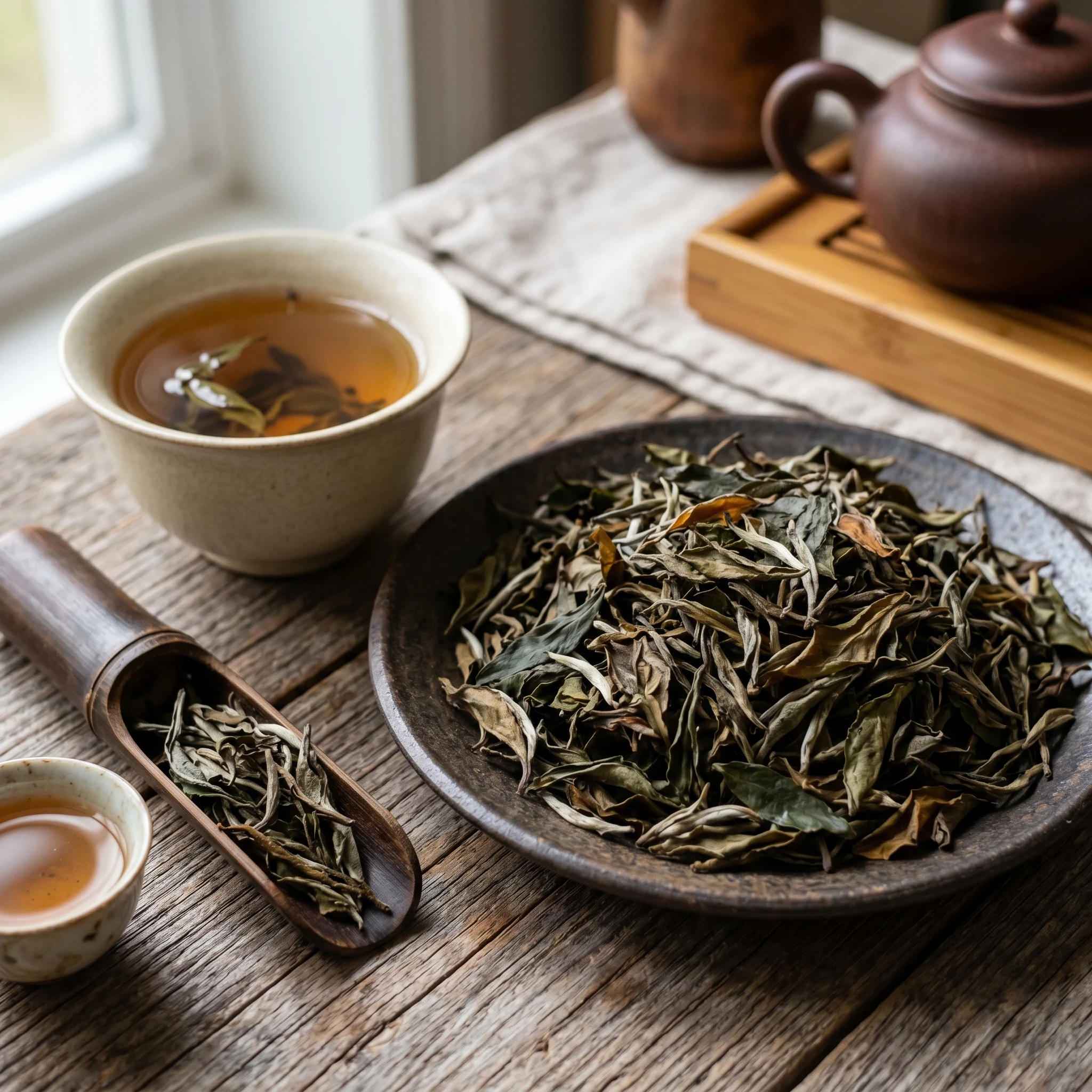
Cakes are satisfying, but not everyone wants to pry apart a compressed disc before their morning cup. Loose leaf aged white tea removes the friction entirely: scoop it out, brew it, done. That’s it. For most people, this is the format they actually reach for day to day, which matters more than any other consideration.
4. Chayan 7-Year Aged Shou Mei (50g)
Honestly, this is where most people should start when buying aged white tea for the first time. Small size, low cost, and the flavor profile is one of the more approachable ones: jujube-like sweetness, mild earthiness, clean finish. It works well Western-style without needing gongfu setup.
If you drink this and find yourself wanting more of the same flavor but deeper, that’s your signal to move toward a cake. If it doesn’t click, at least you spent very little finding that out.
Product page: Chayan 7-Year Aged Shou Mei (50g)
5. Fuzheng Hao 2019 Aged White Tea (300g)
A step up in presentation. The packaging here is noticeably more polished, which makes it work well as a gift or for anyone who values a considered unboxing experience. Worth knowing: 2019 is on the younger end of what most people would call aged. The rougher edges of a fresh white tea have settled, but it hasn’t developed the deeper sweetness and earthy complexity of something from 2015 or 2016. You’re paying partly for presentation here, which isn’t automatically a bad thing depending on the context.
Good if you’re buying for someone else and don’t want to show up with a naked cake wrapped in paper.
Product page: Fuzheng Hao 2019 Aged White Tea (300g)
6. ChaWuWarmSun Individually Packed Shou Mei
Each packet is one session, pre-measured, nothing to think about. No scale, no guessing, no staring at a pile of loose leaf wondering if you’ve used too much. This format is particularly useful if you’re trying gongfu brewing for the first time, because measuring leaves is one of the things beginners consistently get wrong and it throws off everything else.
Also works well for office or travel brewing. Less romantic than breaking off a chunk of a cake, but sometimes that’s the point.
Product page: ChaWuWarmSun Individually Packed Shou Mei
Lower-Effort Formats Worth Trying
These get less attention than cakes or loose leaf, but they’re genuinely underrated, especially for newer tea drinkers who want something approachable.
7. White Tea Dragon Balls
Each ball is a single brewing session, which makes them convenient in the same way as individually packed portions. What makes them more interesting is the visual: drop one into a glass or gaiwan and watch the compressed leaves slowly open as the water works through them. It’s a small thing, but it makes brewing feel more engaging. A good format for introducing someone to tea who’s skeptical about the “whole ritual” aspect.
Product page: White Tea Dragon Balls
8. White Tea Bags (A Softer Entry Point)
Not aged, and worth flagging that clearly. But if you or someone you know is coming from conventional tea bags and the jump to aged white tea cakes feels too abrupt, this is a reasonable bridge. Get comfortable with what white tea tastes like fresh and light, and then the contrast when you eventually try an aged version makes much more sense.
Product page: White Tea Bags
Try It Alongside Fresh White Tea (This Step Actually Matters)
Most guides skip this, but it’s one of the most useful things you can do early on. Aged white tea makes a lot more sense once you’ve tasted what the fresh version is like, because you can hear what time has changed. Without that reference point, you’re just drinking a cup of tea without context.
9. KHS Organic White Tea
Light, clean, mild sweetness. Not exciting, which is exactly the point. You want something unremarkable here so the contrast with the aged version does the work. Don’t spend a lot on this one.
Product page: KHS Organic White Tea
10. VAHDAM Imperial White Tea
Light and floral with a noticeable delicacy. A cup of this next to an aged Shou Mei makes the transformation very clear: one is bright and almost ephemeral, the other is dark, settled, and rich. That contrast is often the moment aged white tea clicks for people.
Product page: VAHDAM Imperial White Tea
11. FullChea Silver Needle
Bud-heavy and very delicate. Good for understanding the raw material at its most refined before aging does its work. If Silver Needle appeals to you in its fresh state, an aged Silver Needle would be an interesting eventual comparison, though it’s a harder find than aged Shou Mei.
Product page: FullChea Silver Needle
How to Brew Aged White Tea
This is where beginners usually go wrong. The most common mistake with aged white tea is treating it the same as green tea and using low water temperatures or very short steeps. Aged white tea can handle heat, and in most cases it needs it. Hotter water draws out the depth and sweetness. Cooler water or under-steeping makes it taste flat and one-dimensional, which is how a lot of people conclude they don’t like it when really they just brewed it wrong.
Basic Parameters
• Water temperature: 90-95 degrees Celsius. Don’t be cautious with the temperature.
• Leaf ratio for Western style: 2-3g per 250ml
• Steep time: 2-3 minutes to start, then re-steep a few times, adding a minute with each round
• Leaf ratio for gongfu: 4-6g per 100-150ml
• Gongfu steep time: Start at around 10 seconds and increase gradually each infusion
Western Style
Scoop the leaves into whatever vessel you’re using, pour hot water, wait 2-3 minutes, decant or remove the infuser. Taste it. If it’s too mild, add more leaf before you do anything else. Most people assume flat tea means bad tea, but with aged white tea it’s almost always a brewing issue, not the tea itself. If it’s astringent or overwhelming, shorten your steep. Aged white tea is fairly forgiving compared to green or oolong.
Re-steeping works well here. Most aged white teas give good flavor through three or four rounds before they start to fade.
Gongfu Style
Higher leaf-to-water ratio, much shorter steeps. The first couple of infusions act as a rinse and a warm-up: pour them off quickly. From the third infusion onward, the tea opens up. The flavor shifts from sharper and more intense in the early steeps to softer and sweeter later in the session. Eight to twelve steeps is normal. Nothing fancy, just patience.
If you’re new to gongfu, the individually packed or dragon ball formats mentioned above help remove the variable of measuring leaves so you can focus on the brewing rhythm instead.
Grandpa Style
Worth mentioning because most people ignore it. Add leaves directly to a large mug or thermos, pour hot water, and drink as you go, topping up whenever the cup gets low. No timing. No infuser. Aged white tea handles this surprisingly well. The flavor mellows as you keep going but stays pleasant, which makes it genuinely practical as a daily drinker in a way most other loose leaf teas aren’t.
Troubleshooting
• Tastes flat or thin: Use more leaf, or increase water temperature. Flat tea from aged white is almost always an underdosing or cool-water issue.
• Too strong or harsh: Shorten the steep, not the leaf amount. Aged white tea should never be harsh; if it is, you’re steeping too long.
• No sweetness developing: Give it a few more infusions. The jujube sweetness and honey notes in good aged Shou Mei often don’t fully emerge until the third or fourth steep.
• Tastes odd or musty in a bad way: Check the sourcing and year. Some cheaper aged teas on Amazon are stored poorly, and you can taste it. The earthy notes of aged tea should be pleasant and settled, not damp or stale.
Final Thoughts
Aged white tea doesn’t require expertise to enjoy, but it does reward a small amount of attention. Pay attention to type, year, and origin when buying. Expect darker flavors and earthy sweetness rather than freshness. Brew it hot.
The product list above covers a range of formats and price points, and all the Amazon links go directly to the listings. Start somewhere inexpensive and simple: one small loose leaf option and one beginner cake is enough. Brew both a few different ways over a couple of weeks and notice what you like. That’s genuinely how you build taste, not by reading more about it.
The goal isn’t to find the best aged white tea on your first purchase. It’s to get enough experience that your second choice is better. That’s a much more realistic target. And honestly, it’s more enjoyable too.
Here’s a little transparency: Our website contains affiliate links. This means if you click and make a purchase, we may receive a small commission. Don’t worry, there’s no extra cost to you. It’s a simple way you can support our mission to bring you quality content.

Chris is the founder of Zen Tea Tools and a passionate explorer of traditional and modern tea brewing. From Gongfu sessions to smart tea technology, he shares practical insights to help others find clarity, calm, and better tea.Learn more about Chris →
Leave a Reply