If you’re searching for the best way to brew tea, things can get confusing quickly. Electric samovars, kettles, and gongfu setups all produce good results, but they work in fundamentally different ways and are suited to different situations. These methods are not interchangeable. Choosing the wrong one for your setup means either unnecessary complexity or a tool that doesn’t deliver what you actually need.
Quick Comparison
Here’s a direct summary before diving into the detail:
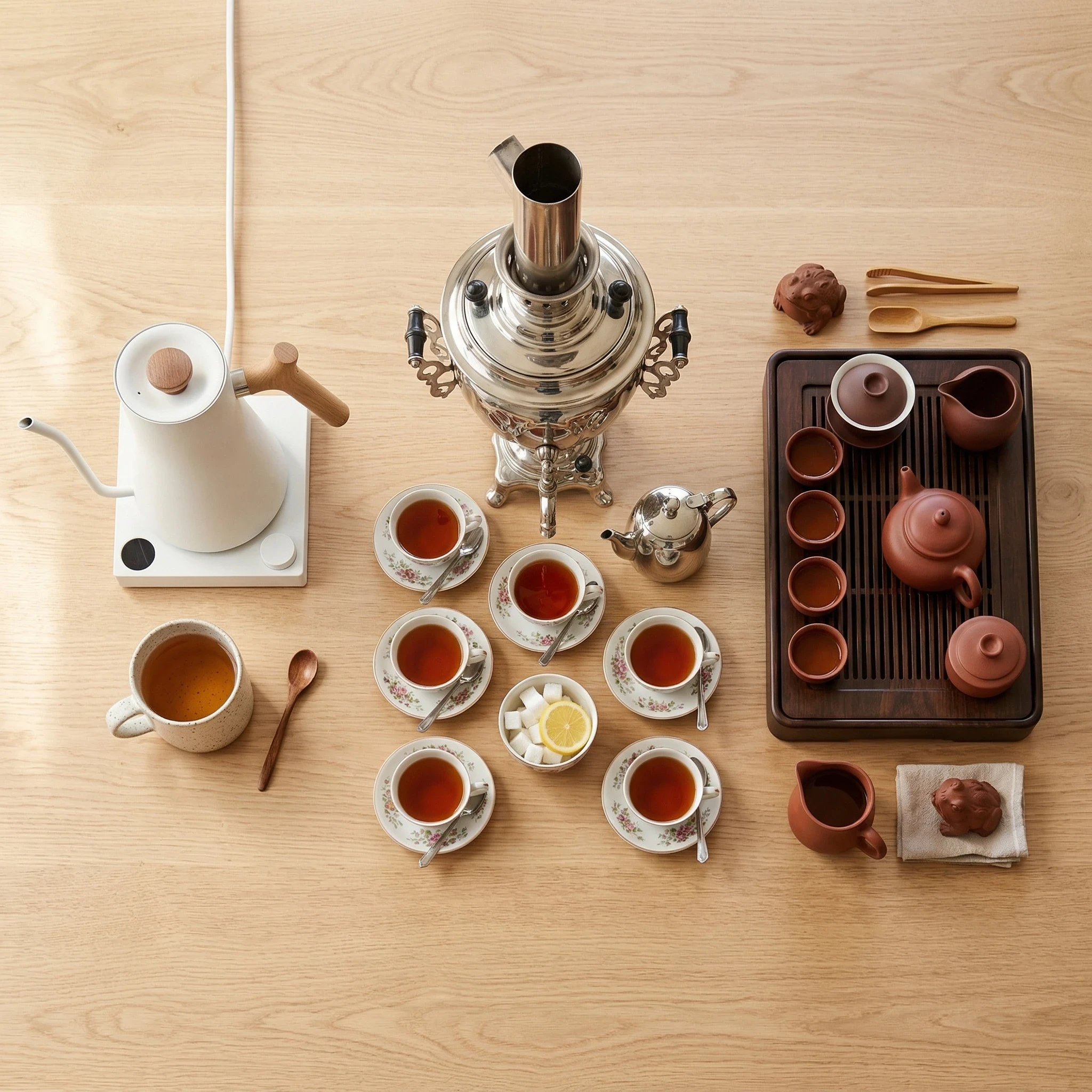
• Samovar: Best for serving multiple people and sustaining long tea sessions without repeated reboiling.
• Kettle: Best for speed, flexibility, and everyday brewing across all tea types.
• Gongfu: Best for flavor control and getting the most out of high-quality loose leaf tea.
What Each Method Actually Does
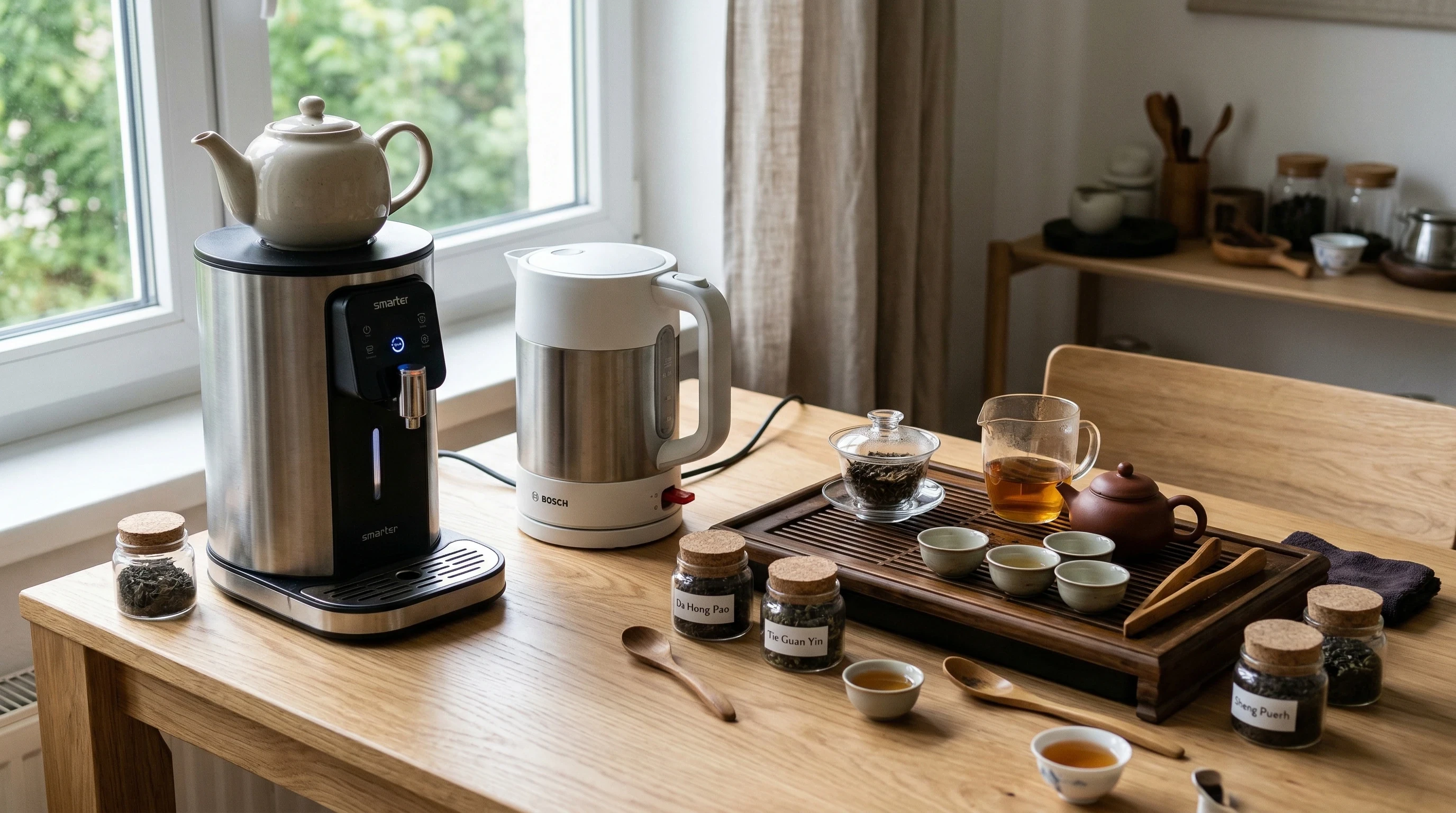
Electric Samovar
An electric samovar functions as a hot water reservoir combined with a brewing station. You brew a strong tea concentrate in a small teapot at the top and keep a large volume of near-boiling water in the heated chamber below. When serving, you pour some concentrate into a cup and top it up with hot water from the main tank, so each person can adjust to their preferred strength.
A samovar is not a general-purpose brewing tool. It is built specifically for volume and sustained service. It works best with full-bodied black teas and is well-suited to long group sessions, whether that’s a family gathering, a weekend afternoon, or any situation where people want multiple cups over several hours. Modern electric models often include variable temperature settings, but the system is designed around one method: concentrated tea diluted to taste.
Kettle (Western Style)
An electric kettle is the most practical all-purpose option for most tea drinkers. You heat water, pour it over loose leaf in a teapot or over a tea bag in a mug, and you’re done. It handles every tea type, including green, black, white, and herbal, with no adjustment to your approach.
It’s fast, easy to clean, and works equally well for one cup or a small pot for two or three people. Variable temperature kettles add precision for more delicate teas, which matters when brewing greens at lower temperatures or bringing black tea to a full boil. For daily use, the kettle sets the standard for convenience.
Gongfu Brewing
Gongfu brewing uses a small teapot or gaiwan with a high ratio of tea leaves to water and a series of very short steeps. Rather than a single long infusion, you draw out the flavor in multiple quick rounds, each one revealing slightly different characteristics in the tea.
Gongfu brewing prioritizes flavor extraction over convenience. It takes more attention and a modest amount of dedicated equipment, including a gaiwan or small teapot, a strainer, and small cups. It is particularly well-suited to oolong, puerh, and high-quality black or green teas, where the complexity of the leaf rewards careful, repeated steeping. The technique gives you direct control over every variable: leaf quantity, water temperature, steep duration, and the number of infusions.
Electric Samovar vs Kettle
These two tools fill genuinely different roles, and the choice comes down to use case rather than preference.
The samovar provides a continuous supply of hot water and maintains the tea concentrate at a stable temperature for hours. It removes the need to reboil between rounds and makes it easy to serve multiple people with different strength preferences. The tradeoff is flexibility: it doesn’t handle delicate teas well, and it’s excessive for a single person brewing one or two cups.
The kettle is faster to set up, easier to adapt between tea types, and better suited to individual use. If you want to brew something different for each person, or switch between tea types in the same session, a kettle gives you that freedom. The limitation appears when you’re serving a larger group repeatedly, since you’ll need to reboil frequently.
If you want daily convenience, use a kettle. If you regularly serve a group and drink mostly black tea, the samovar is the more practical choice.
Kettle vs Gongfu
The kettle wins on speed and simplicity. You add hot water to your tea, wait a few minutes, and pour. There’s no additional equipment involved, and the process works reliably for most everyday teas.
Gongfu requires more steps and more focus, but it returns significantly more from quality leaves. The repeated short infusions allow the tea to develop across the session in a way that a single long steep cannot replicate. It’s the right approach when the tea you’re brewing is worth the extra attention.
Choose a kettle for straightforward daily brewing. Choose gongfu when you’re working with higher-quality tea and want to extract the full range of its flavor.
Samovar vs Gongfu
The samovar and gongfu represent opposite ends of the brewing spectrum. The samovar is designed for volume and ease of service. It produces a consistent result for a crowd with minimal effort, particularly for black tea drinkers who want to keep cups full over a long session.
Gongfu is personal and methodical. You work with smaller quantities and a single type of tea, drawing out its full potential across multiple infusions. It’s the better choice when the quality of the tea itself is the priority.
Use a samovar when serving a group is the primary goal. Use gongfu when flavor is the primary goal.
Which Method Should You Choose?
• You drink tea alone: An electric kettle covers most situations well. If you want to explore high-quality teas more thoroughly, gongfu gives you the tools to do that.
• You host people often: A samovar handles sustained service for a group without the effort of repeated reboiling. It’s a practical choice for regular tea hosts.
• You care about tea flavor above all: Gongfu gives you the most control over extraction and lets you appreciate the full character of better leaves.
• You want low-effort daily brewing: The kettle requires the least setup, is easy to clean, and adapts to any tea type.
• You mostly drink black tea: Both the samovar and the kettle are well-suited. If you drink significant quantities or serve others regularly, the samovar adds convenience that the kettle can’t match.
If your habits don’t fit neatly into one category, it’s worth having more than one method available. A kettle for weekday mornings and a gongfu setup for a slower session are not mutually exclusive, and using both over time will give you a much clearer sense of what you actually want from your tea.
When Each Method Fails
Samovar: Not suitable for green, white, or oolong teas. The sustained high heat and extended steeping time produce harsh, bitter results with delicate leaves. It is also impractical for a single person or anyone brewing occasional individual cups. The volume makes it inefficient for anything other than extended group use.
Kettle: Less consistent for multiple rounds with a group. You’ll need to reboil repeatedly, and maintaining a stable brewing temperature across several infusions takes more effort. It works best when function and speed take priority over precision.
Gongfu: Not practical for busy mornings, large groups, or anyone who can’t give the session their full attention. It requires dedicated equipment, and the process doesn’t compress well. A rushed gongfu session produces worse results than a standard kettle brew.
Final Verdict
There is no single best brewing method. Each one is well-suited to a specific set of conditions and performs poorly outside of them.
Use a kettle if you want a reliable, flexible option for everyday brewing across all tea types. Use a samovar if you drink large quantities of black tea and regularly serve multiple people from a single setup. Use gongfu if you prioritize flavor and are working with teas that reward careful, repeated extraction.
The right method is the one that fits how you actually drink tea. Start with that, and adjust as your needs change.
FAQ
Is a samovar better than a kettle?
Not in general. A samovar is more practical for group serving and long sessions, but it’s too specialized for most single-cup situations. For everyday solo use, the kettle is the more versatile and convenient choice.
Is gongfu brewing worth it?
If you’re interested in getting more from high-quality tea, yes. It requires more equipment and attention than standard brewing, but the improvement in flavor is noticeable, particularly with oolong and puerh.
Which method makes the best tasting tea?
Gongfu produces the most nuanced results with quality leaves. For standard everyday teas, a kettle and teapot deliver consistent results with less effort. The samovar is reliable for black tea but doesn’t offer the same level of control over flavor.
Can you use a samovar for green tea?
It’s not recommended. Samovars maintain water at near-boiling temperature, which is too high for most green teas and will produce a bitter, unpleasant cup. A temperature-controlled kettle is the better choice for greens.
Do I need special equipment for gongfu?
At minimum, a gaiwan or small teapot, a tea strainer, and small cups. This gear is affordable and doesn’t take up much space, but it is a separate setup from standard Western brewing.
What to Read Next
If you want to go deeper into each brewing method, these guides will help you get practical results quickly:
- If you’re interested in precision brewing and getting the most out of high-quality tea, read the Gongfu brewing guide. It explains the setup, ratios, and step-by-step process clearly.
- If you’re looking for a more convenient, modern setup, the guide to the best smart tea brewers breaks down the most useful features and which models are actually worth using.
- If you’re considering a samovar or want to refine your technique, the guide on how to use an electric samovar walks through setup, brewing, and common mistakes in detail.
- If you’ve decided a samovar is the right fit, the guide to the best electric samovars breaks down four models and what makes each one worth considering.

Chris is the founder of Zen Tea Tools and a passionate explorer of traditional and modern tea brewing. From Gongfu sessions to smart tea technology, he shares practical insights to help others find clarity, calm, and better tea.Learn more about Chris →
Leave a Reply