Finding a great aged white tea is genuinely exciting. But if you bring it home and store it without much thought, you risk losing everything that makes it worth aging in the first place: the sweet, layered depth, the clean mouthfeel, the slow complexity that builds with time. Flat flavors, a musty edge, or in the worst cases, mold. I’ve seen all of these happen with cakes I was otherwise really looking forward to, and they’re entirely avoidable. A little attention to where and how you keep your tea goes a long way.
Why Aged White Tea Needs Special Storage
Aged white tea keeps changing after you bring it home. The leaves respond directly to their environment, and storage shapes the direction of that change. Good conditions guide the tea toward sweeter, cleaner, more complex flavors. Poor conditions, even ones that seem minor, can push things the wrong way: dusty off-notes, staleness, or mold. If you’re new to all of this and want more background on the aging process itself, our guide on what aged white tea is and how it develops over time is worth reading before diving into storage specifics.
Once you understand what the tea actually needs, it’s pretty straightforward to get this right. The basics are consistent, and following them pays off every time you open a well-aged cake years down the line.
The Simple Rule: Dry, Dark, Clean, Stable
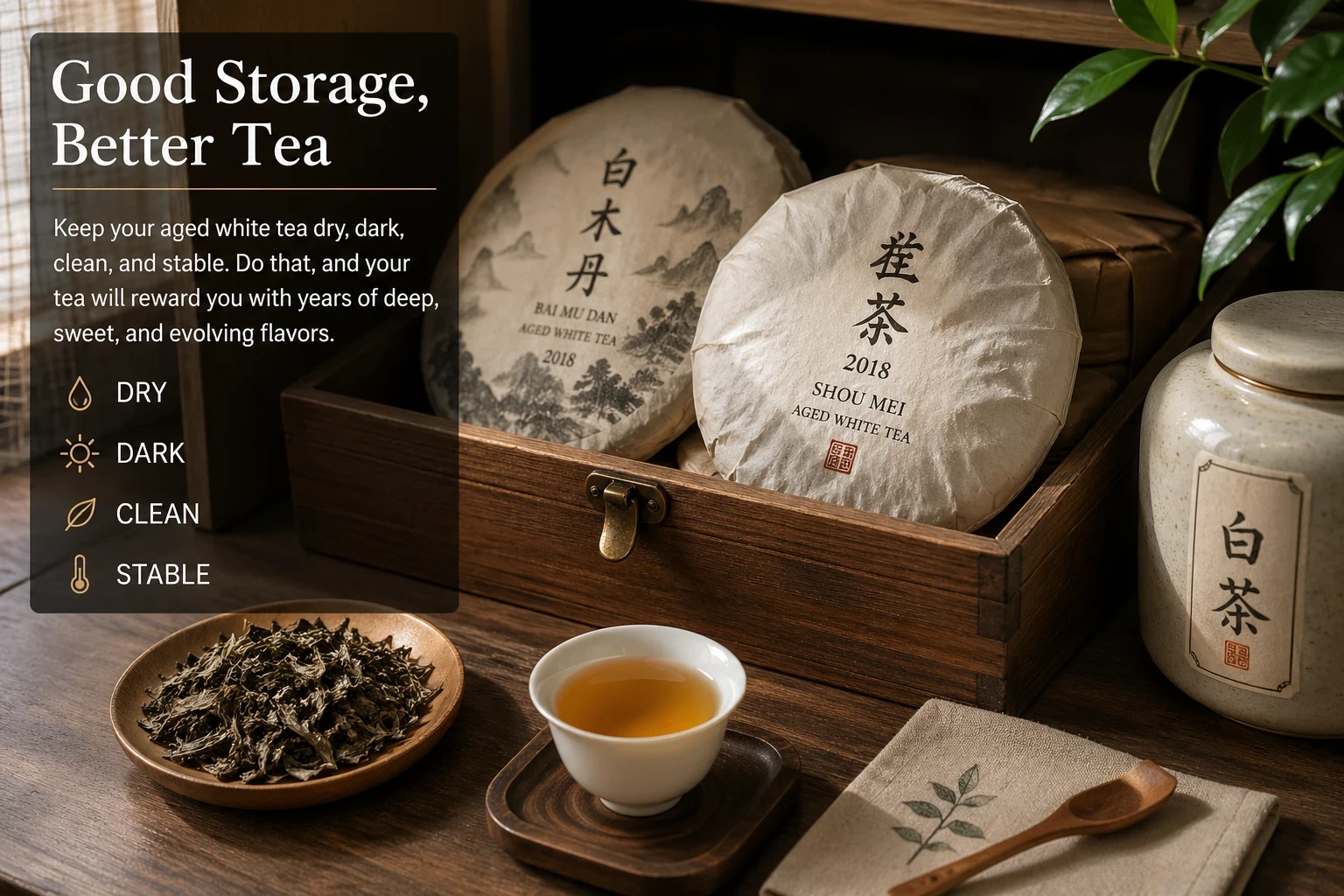
Whenever I’m deciding where to keep a cake or a bag of loose leaf, I run through four basics: dry, dark, clean, and stable. It’s not a rigid checklist so much as a quick gut check. Here’s what each one means in practice for Shou Mei and Bai Mu Dan:
• Dryness: Avoid damp cupboards, wet kitchens, or humid corners. Too much moisture is the quickest route to musty notes or mold. You want a spot with gentle air circulation but not a draft blowing directly at the leaves.
• Darkness: Sunlight breaks down flavor compounds and damages leaf structure over time. Even a brief daily dose adds up. A closed cabinet or drawer is ideal. A cardboard box on a stable shelf works just as well.
• Cleanliness: Tea absorbs ambient odors readily. Spices, cleaning products, perfumes, scented wood, even strong cooking smells will find their way into the leaves if the storage area is not clean and neutral. This is an easy one to overlook until you brew a cake that tastes faintly of cumin or dish soap.
• Stability: Avoid spots that heat up during the day and cool off at night. Big temperature swings disrupt aging and can cause condensation inside packaging, which is exactly the wrong direction.
Following these consistently is what keeps white tea aging cleanly over the long term. It sounds straightforward because it is. The challenge is just staying consistent rather than letting tea end up wherever is convenient.
Humidity and Mold Risk
Humidity is where people tend to either overthink things or not think about them enough. There is no single correct number, and anyone who tells you otherwise is oversimplifying. What matters is understanding the trade-off.
In drier conditions, roughly 40 to 50% relative humidity, aging moves more slowly but the risk of mold or off-notes is very low. This is the safer side to err on, especially when you are starting out or if your storage setup is not very controlled. Higher humidity, in the 55 to 65% range, can accelerate flavor development and produce more complexity faster, but it also amplifies any mistakes. A slightly damaged wrapper, an unexpected warm spell, one humid week: these things matter more at higher humidity levels.
For most home setups, aiming somewhere in the 40 to 60% RH range is practical and reasonable. This is where most people go wrong: they hear that some collectors chase humid aging and assume more is always better. It is not. Mold happens when moisture combines with poor airflow or inconsistent temperatures, and it can take hold faster than you expect. Even a small amount of condensation inside a wrapper is enough to start problems.
Bai Mu Dan tends to show storage issues faster than Shou Mei because of its soft, fluffy leaf structure. You’ll notice browning or mustiness in Bai Mu Dan before you’d see the same in Shou Mei, which has denser leaves and handles minor fluctuations a bit better. I’ve had a cake pick up a slightly damp smell just from being stored near an outside wall during a wet winter, and it was Bai Mu Dan that showed it first. That said, neither is forgiving of genuinely poor conditions over time.
If you live somewhere humid, a small digital hygrometer near your storage area is worth having. If things are creeping above 65%, tighter sealing on individual cakes or a small dehumidifier nearby can help. And if your environment is very dry, just expect that aging takes longer. That is a trade-off worth accepting.
For a broader look at how to approach tea storage in general, the general tea storage guide covers a lot of useful ground. Just keep in mind that aged white tea has specific needs, and some of the general advice may need adjusting for it.
How to Store White Tea Cakes
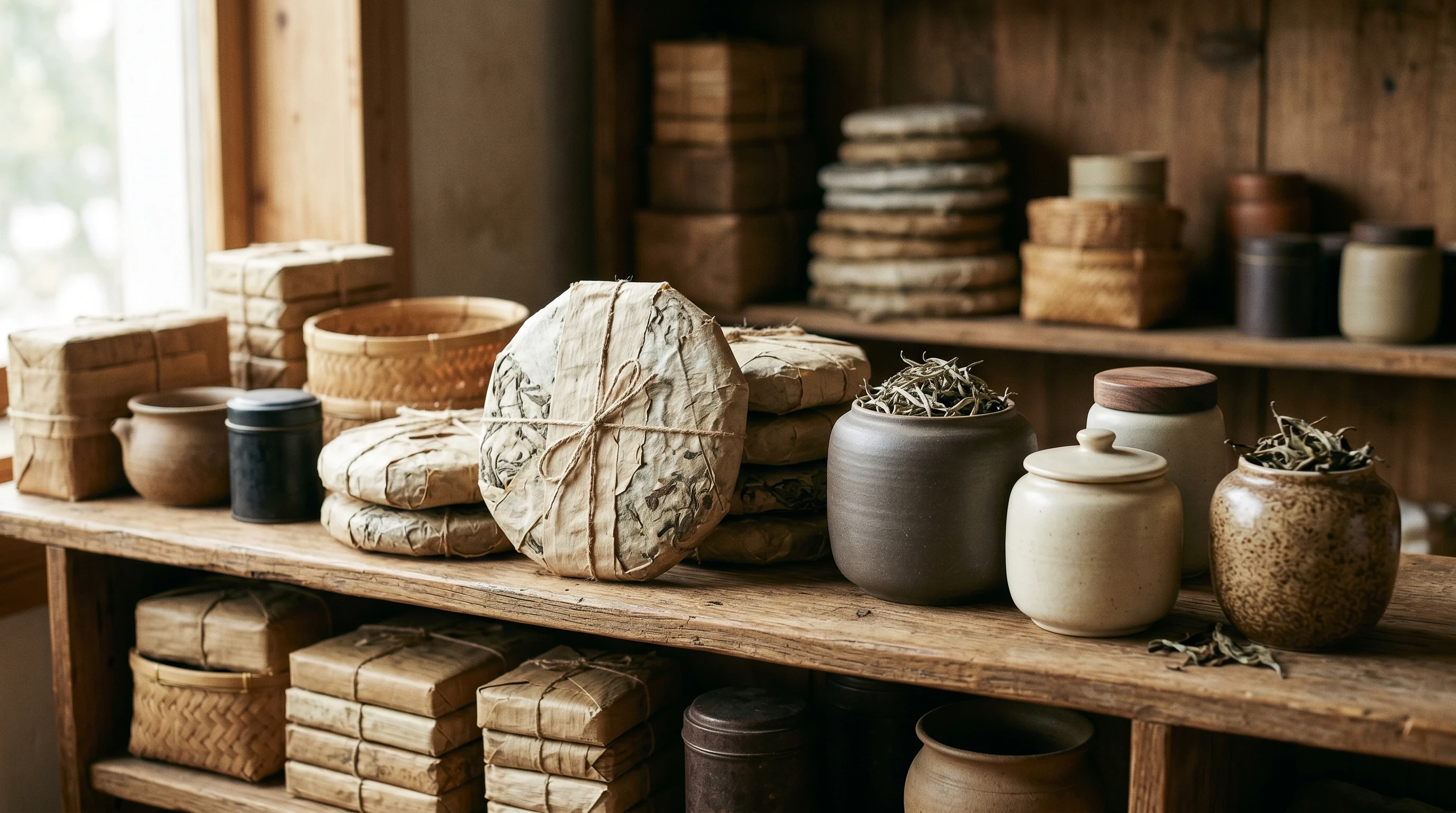
Cake storage is fairly forgiving as long as you keep the basics sorted. The original paper wrappers that cakes come in are actually well-suited to aging. They allow a small amount of airflow while keeping out dust and light. I keep mine in their original wrappers and tuck them into a clean, odor-neutral cardboard box or a ceramic jar with a well-fitting lid. A dedicated tea cabinet that stays closed most of the time works equally well.
Avoid airtight plastic unless you are in a very humid environment and need to actively limit moisture exposure. Even then, treat it as a short-term measure rather than a permanent solution. Cakes need some airflow to develop properly, and sealing them tightly for years tends to flatten the flavor rather than improve it.
Keep white tea cakes away from pu-erh, which has its own aging requirements. They age differently, and the aromas can cross-contaminate over time, which affects both teas. Keep them away from anything with a strong smell more generally. If you use a tin, make sure it is fully odor-neutral inside. Some tins have a faint metallic smell when new that fades with airing out. Give cakes some space inside containers too. Squeezing them into tight spots can compress or crack the leaves, which affects the cake’s structure and how it ages.
Every year or so I do a quick check: open the wrapper, smell the leaves, feel whether the paper is dry. If everything smells clean and sweet and nothing feels even slightly damp, things are on track. Catching a small problem early is much easier than trying to salvage something that has gone wrong over several months.
How to Store Loose Leaf Aged White Tea
Loose leaf is more sensitive than cakes, mainly because of the greater exposed surface area. The leaves should feel dry to the touch, not soft or damp. Any softness or slight tackiness is a warning sign worth acting on right away.
For daily use, a small clean tin or glass jar kept in a cupboard works well. What I’ve found over time is that it helps to separate what you plan to drink in the next week or two from the rest of your supply. Take out a small amount for regular use and keep everything else in sealed pouches or thick mylar bags, stored alongside your cakes. Opening and closing a large bag every day speeds up degradation noticeably, particularly in humid climates.
If you buy loose leaf in bulk, splitting it into smaller portions makes real practical sense. Some portions stay sealed and undisturbed while others get used, and the overall quality holds better across the whole batch. Loose leaf does age, and it can develop faster than pressed cakes, but it needs more protection from moisture and ambient odor than cakes do. Less airflow, tighter seals, and a stable environment matter more with loose leaf than with any pressed form.
Some people like to age both forms side by side as an experiment, comparing how each develops over a year or two. It’s worth doing at least once. Just keep them in separate containers so they develop independently rather than influencing each other.
Best and Worst Storage Places
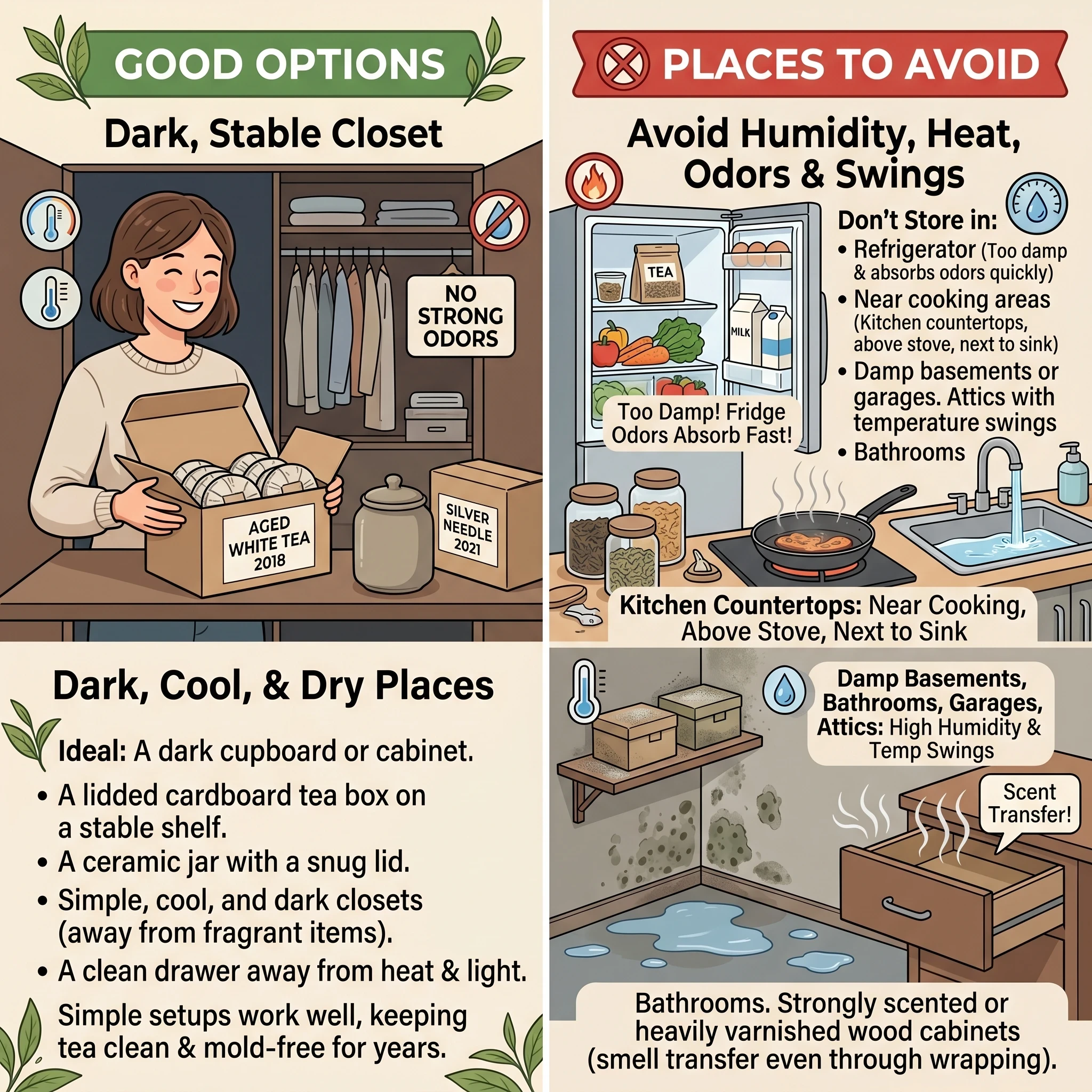
Good options:
A dark cupboard or cabinet, a lidded cardboard tea box on a stable shelf, a ceramic jar with a snug lid, or even a clean drawer away from heat and light. Simple setups work well, especially when starting out. My own collection lives in a cardboard box in a cool, dark closet that doesn’t share space with anything fragrant. Nothing elaborate, but it has kept everything clean and mold-free for years.
Places to avoid:
The refrigerator: too damp, and fridge odors absorb into tea faster than most people expect. Kitchen countertops near cooking areas, above the stove, next to the sink, bathrooms, damp basements, garages, and attics with temperature swings. Also avoid cabinets made from strongly scented or heavily varnished wood, which can transfer smell over time even through paper wrapping.
Signs of Good or Bad Storage
It’s worth doing a quick check on your teas occasionally, even if you haven’t opened them in a while. Here is what to look for:
• Good signs: Clean, natural tea fragrance when you open the wrapper. Leaves feel dry, not soft or tacky. Mouthfeel becomes smoother and more rounded with age. Sweetness and depth increase over time. Floral or honey notes start coming through in the aroma.
• Warning signs: Any visible mold, whether white, green, or fuzzy patches of any color. Sour or musty smell. Leaves clumping or sticking together. A damp, basement-like odor. Flat or harsh flavor when brewed, sometimes accompanied by a slightly sour aftertaste.
If you notice anything unusual, separate that tea from the rest of your collection immediately. Mold spreads, and musty odors transfer between teas kept in the same space. Isolate anything questionable and assess it separately before deciding whether it can be salvaged or needs to go.
Simple Beginner Setup
When I first started taking aged white tea storage seriously, I overcomplicated it. In practice, three things cover most of what you need:
• One clean cardboard box or ceramic jar for cakes, odor-neutral and without any plastic lining or scented interior.
• One small tin or glass jar for whatever loose leaf you plan to drink in the near term, kept airtight for freshness.
• One sealed pouch or thick mylar bag for bulk or reserve loose leaf, stored inside the same box as the cakes.
Label everything with the year of purchase and the tea type. Once you have a few different teas aging at once, the labels matter. A cake you set aside in 2023 brews very differently from one you picked up last month, and knowing which is which changes how you approach each session. This setup is simple and practical, and it scales easily as your collection grows.
Frequently Asked Questions
Can aged white tea go bad?
Yes. Mold, sour smells, or a persistent musty flavor are signs the tea has deteriorated past the point of enjoyment. It is better to discard it than to continue drinking it.
Should aged white tea be stored airtight?
It depends on the form. Cakes in their original paper wrappers do not need a full airtight seal, and in fact benefit from a small amount of airflow during aging. Loose leaf, particularly for longer-term storage, does better in airtight containers, especially in humid conditions or environments with ambient odors.
Can I keep it in the fridge?
No. Refrigerators are damp, cold, and full of food odors that absorb into tea quickly. Aged white tea is much better off at a consistent room temperature with stable conditions.
What humidity is best?
For most home environments, somewhere in the 40 to 60% relative humidity range is a safe and practical target. Drier conditions mean slower aging but lower risk. If humidity consistently exceeds 65 to 70%, the risk of mold increases enough to be worth addressing with tighter sealing or a small dehumidifier.
Can Shou Mei and Bai Mu Dan be stored together?
Generally yes, provided conditions are clean and dry. Keep them in their own separate wrappers or pouches rather than combining them in the same container, so each ages on its own terms without cross-influence.
Can I keep aged white tea with pu-erh?
Better not to. Pu-erh and aged white tea have different humidity needs, and their aromas can cross-contaminate during storage, which affects the flavor development of both. Keep them in separate storage areas.
Is cake or loose leaf better for aging?
Both age well, just differently. Cakes develop complexity more slowly and tend to be more forgiving of minor storage imperfections. Loose leaf mellows and sweetens faster but is more sensitive to storage conditions. The right choice depends on how quickly you want to drink it and how carefully you can manage the environment.
Wrapping Up
Storage is not the most exciting part of aged white tea, but it is the part that determines whether all the time and money you have put into a collection actually pays off. Give your leaves a steady, odor-free place to sit, and you’ll notice the difference year by year in the cup. Neglect that, and even a well-sourced cake can end up tasting like a disappointment. If you are still building out your collection, our aged white tea buying guide has practical advice on choosing aged white tea as a beginner without overspending or getting burned by poor-quality cakes. And when you are ready to brew, our guide on how to brew aged white tea gongfu style will help you get the most out of every session.

Chris is the founder of Zen Tea Tools and a passionate explorer of traditional and modern tea brewing. From Gongfu sessions to smart tea technology, he shares practical insights to help others find clarity, calm, and better tea.Learn more about Chris →
Leave a Reply