After comparing different brewing methods and styles, one thing becomes clear: the best tea brewer depends less on the tool itself and more on how you actually drink tea. This tea brewer comparison guide is built around that idea. Whether you are pouring your first cup of loose leaf or looking to refine a brewing routine you have had for years, understanding how to choose a tea brewer comes down to a few practical questions about your lifestyle, your favorite teas, and how much involvement you want in the process.
The choices range widely: basket infusers, infuser mugs, glass teapots, electric tea makers, gaiwans, kyusus, French press style brewers, travel bottles, and full Gongfu setups. Each serves a real purpose, and none is universally the best. What follows is a practical guide to navigating those options with confidence.
What Is a Tea Brewer?
A tea brewer is any tool used to steep tea leaves in hot water and separate them from the liquid before drinking. This covers everything from a simple mesh basket that sits in your mug to electric appliances that heat, steep, and time the process automatically, to the refined clay or porcelain vessels used in traditional Chinese and Japanese tea culture.
For loose leaf tea in particular, a brewer does more than just filter out the leaves. A well-chosen brewer gives the leaves room to open and expand, helps you maintain the right temperature and steeping time, and can genuinely elevate the flavor of a quality tea.
Why the Right Tea Brewer Matters
It is a fair question: does the brewer really make a difference? In practice, yes, and for a few specific reasons.
• Flavor: Loose leaf tea releases different compounds depending on water flow, steep time, and the space available to the leaves. A cramped infuser can mute the more delicate notes in green or oolong teas, while a roomy brewing chamber allows their full character to develop.
• Leaf expansion: Many teas, particularly rolled oolongs and large-leaf white teas, need room to unfurl as they steep. A small, tight infuser restricts this and often results in a weaker, uneven cup.
• Steeping control: With a teapot or large infuser, it is easy to remove the leaves or pour off the entire brew at the right moment, avoiding bitterness from over-steeping.
• Temperature: Different teas call for different water temperatures. Green teas generally brew best around 70-80°C / 158-176°F; many oolongs suit 85-95°C / 185-203°F depending on the style; black teas and most pu-erh teas brew best close to boiling, around 90-100°C / 194-212°F. Some electric brewers and temperature-control kettles make hitting those targets precise and repeatable.
• Convenience: A brewer that fits your routine gets used consistently. If you are frequently on the move, a spill-proof travel bottle matters more than a beautiful glass teapot.
• Cleaning: A brewer that is genuinely easy to clean is one you will keep using. Tight mesh filters and hard-to-reach components accumulate tannin residue quickly and can affect flavor over time.
• Consistency: If you want your tea to taste the same way every morning without much variation, electric and smart brewers remove most of the guesswork.
Main Types of Tea Brewers
Here is a practical overview of the main brewer types, including their strengths, limitations, and best uses.
Basket Infusers
Mesh or perforated baskets that sit inside a mug or teapot. They are among the most practical options for everyday brewing, giving tea leaves enough room to expand and producing a clean cup. Stainless steel versions are durable and flavor-neutral. Silicone or low-grade plastic versions can occasionally affect taste, so quality matters here. Basket infusers work well for most loose leaf teas and suit both home and office use.
Infuser Mugs
Mugs with built-in infuser baskets, usually stainless steel or ceramic. These are a solid choice for single-cup brewing with minimal cleanup. The brewing chamber can sometimes be on the smaller side for bulkier teas like large-leaf whites, but for most everyday drinkers, they work reliably and keep things simple.
Glass Teapots
Glass teapots with removable infuser baskets are a popular choice for home brewing. They allow you to watch the color and leaf movement as the tea steeps, which is genuinely useful for gauging strength. They work well for solo sessions and are easy to share when brewing for two or three people.
Electric Tea Makers
Plug-in devices that heat water and steep tea automatically, often with timer and temperature presets. They are well-suited to busy mornings when you want a reliable cup without much hands-on attention. The Breville One-Touch Tea Maker is a well-regarded example of a true automatic tea maker in this category. For black teas and many herbals, these machines perform consistently well.
Temperature-Control Kettles
Electric gooseneck kettles with precise temperature settings, such as the COSORI electric gooseneck kettle, are not tea makers in the full sense but pair extremely well with any manual brewer. They take the guesswork out of water temperature, which makes a real difference when brewing temperature-sensitive teas like greens or lighter oolongs. For those who prefer the hands-on process but want better precision, a quality temperature-control kettle is often the most useful purchase.
Smart Tea Brewers
Smart tea brewers expand on the electric tea maker concept with programmable profiles, sometimes app connectivity, and automatic infuser lift functions to prevent over-steeping. They suit people who drink multiple tea types and want consistent results each time. A full overview of the current market can be found in our smart tea brewer guide on ZenTeaTools.
Gaiwan
A lidded cup used widely in Chinese tea culture, the gaiwan is central to Gongfu brewing: short, repeated steeps that gradually reveal different layers of a tea’s character. It is particularly well-suited to oolongs and some green teas. There is a learning curve, and the lack of a handle means some care is needed when pouring. For those interested in exploring tea more seriously, it is one of the most rewarding tools to learn.
Kyusu
A traditional Japanese side-handled teapot, typically fitted with a fine internal mesh. Kyusus are well-suited to Japanese green teas such as sencha and gyokuro, where precise pouring and fine filtration matter. They are not the only way to brew Japanese greens, but they are a satisfying and well-adapted tool for that purpose.
French Press Style Brewers
Modeled on the coffee press design, these brewers use a plunger to push leaves down rather than a separate infuser. They are practical for larger batches and handle black teas and herbals well. The mesh filter is coarser than many dedicated tea infusers, so very fine or small-leaf teas can sometimes pass through. Not the ideal choice for delicate greens or whites, but solid for robust teas.
Travel Tea Bottles
Double-walled bottles with integrated strainers, designed for tea on the move. The better ones keep tea warm for several hours and are genuinely spill-proof. They are a practical solution for commuters, desk workers, or anyone who wants quality tea away from home without carrying separate equipment.
Gongfu Setups
A full Gongfu setup typically includes a gaiwan or small teapot, a sharing pitcher, a fine strainer, aroma cups, and sometimes a tea tray. The method centers on short, repeated steeps that draw out layered complexity in oolongs, aged teas, and pu-erh. It is as much a practice as a brewing method. For more on the approach, see our Gongfu brewing guide.
Electric vs Manual Tea Brewers
Choosing between electric and manual brewing is one of the more common decisions for new tea drinkers. Here is a straightforward comparison.
• Convenience: Electric tea makers handle temperature, timing, and often the steeping itself. Manual brewing requires more attention but can be relaxing and satisfying in its own right.
• Control: Manual brewing, especially paired with a temperature-control kettle, gives you complete flexibility over each parameter. Electric brewers offer precision within preset settings, which works well for consistent results.
• Cost: Manual brewers typically range from around $10-40. Electric tea makers start around $50 and can reach $200 or more for feature-rich models.
• Cleaning: Manual brewers are generally easier to clean with fewer parts. Electric machines with pumps, heating chambers, or water tanks require more care and periodic descaling.
• Durability: A well-made manual brewer can last many years with minimal maintenance. Electric machines are more complex and may require occasional descaling or part replacement.
• Flavor: For green teas, oolongs, or teas brewed in multiple short infusions, the manual approach often gives more nuanced control. Electric brewers tend to excel with black teas and situations where you want hands-off consistency.
How to Choose a Tea Brewer: A Practical Framework
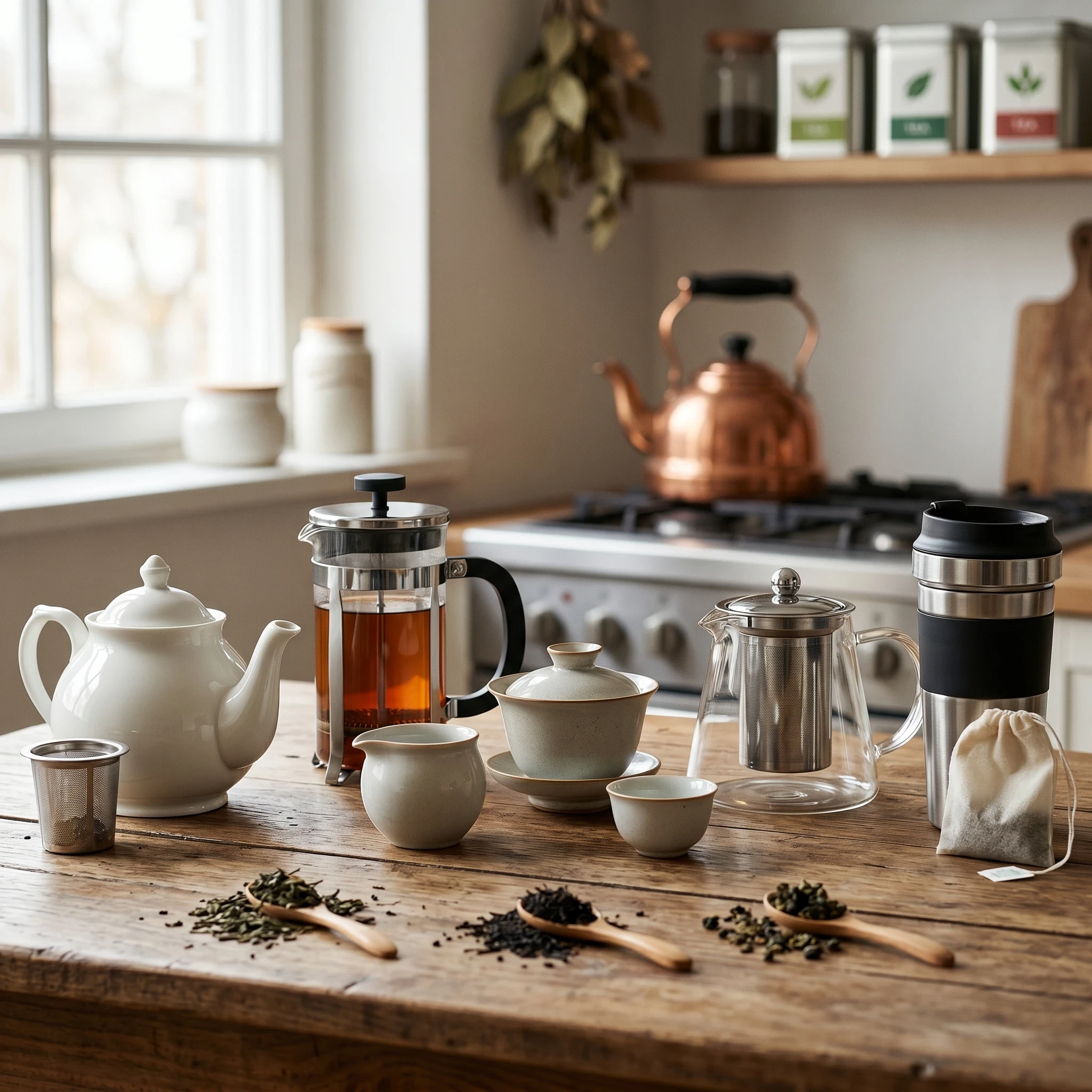
There is no single best tea brewer for loose leaf tea, but there is usually a best option for your particular situation. Working through these questions helps narrow it down.
How much tea do you drink at once?
A single-cup drinker does well with an infuser mug or a small basket infuser dropped into a favorite mug. Those brewing for two or more people benefit from a glass or ceramic teapot in the 500ml or larger range. For exploring tea through multiple short infusions, a gaiwan or Gongfu-style setup is worth considering.
Do you drink tea at home or on the go?
Home-only drinkers have more options, including more delicate glass teapots and electric appliances. For commuting or travel, a well-insulated travel bottle with a reliable strainer is the more practical choice.
Do you use loose leaf tea, tea bags, or both?
Most brewers handle both, but loose leaf tea genuinely benefits from a larger brewing chamber where the leaves have room to work. Tea bags can go in almost anything, but if you are curious about the quality and flavor difference, our guide to switching to loose leaf tea covers the key reasons to make the change.
What types of tea do you enjoy?
This matters more than many people expect. Green teas and lighter oolongs need cooler water and careful timing. Black teas and herbals are more forgiving and work in almost any brewer. Gyokuro and sencha benefit from a kyusu’s fine filtration and pouring control. Tieguanyin oolong and aged white tea open up beautifully in a glass pot or gaiwan with Gongfu-style steeping. More specific guidance can be found in our Tieguanyin brewing guide and aged white tea brewing guide.
Do you value the process or the result?
Gaiwans and Gongfu setups suit people who find something genuinely enjoyable in a slower, more attentive approach to making tea. Electric and smart brewers are designed for those who want a reliable cup with minimal involvement. Both are valid depending on what you are looking for.
How much does cleaning matter to you?
A brewer with a wide opening, a removable infuser basket, and dishwasher-safe parts will get used far more consistently than one that is awkward to clean. This consideration is easy to overlook when choosing but becomes obvious quickly in daily use.
What is your budget?
Simple basket infusers and infuser mugs can be found for $10-20 and perform reliably. Glass teapots typically fall in the $20-50 range. Electric tea makers and quality temperature-control kettles start around $50 and go up from there. Starting with something simple and upgrading later as your preferences become clearer is usually a sound approach.
Do you need portability?
Some brewers are designed for stationary use. Travel bottles, compact infusers, and collapsible mugs are built to go where you go. If portability is a regular need, it should weigh heavily in the decision.
Best Tea Brewer for Loose Leaf Tea
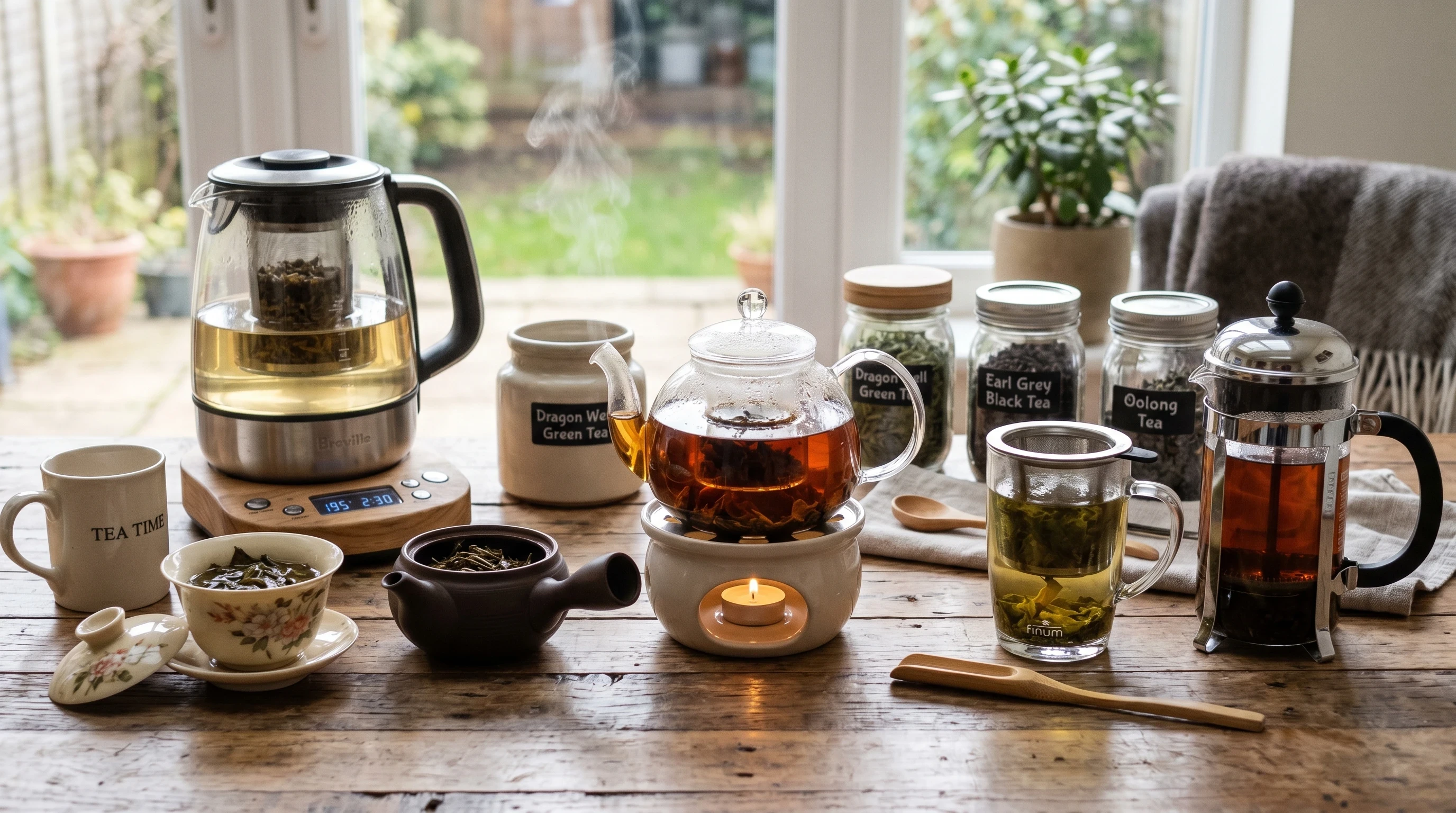
Loose leaf tea has three specific requirements that a good brewer should meet: space for the leaves to expand fully, fine enough filtration to keep small particles out of the cup, and enough steeping control to avoid bitterness from over-extraction. Getting all three right makes a noticeable difference to flavor and consistency.
A large basket infuser (at least two to three inches wide) is the most practical entry point. It fits most mugs and teapots, holds enough leaf for a full infusion, and is straightforward to clean. For solo or shared brewing at home, a glass infuser teapot gives the leaves even more room and lets you watch the color develop as the tea steeps. For oolongs, aged white teas, and other teas suited to repeated short infusions, a gaiwan or glass pot used Gongfu-style draws out the most complexity. For Japanese greens such as sencha or gyokuro, a kyusu with its fine internal mesh is particularly well-adapted to the task.
Whatever vessel you choose, pairing it with a temperature-control kettle makes a meaningful difference when brewing temperature-sensitive teas. Small ball infusers are generally not a good fit for whole-leaf teas: the restricted space limits how much the leaves can open, which results in weaker, less even flavor regardless of leaf quality.
Best Tea Brewer for Beginners
Getting started with loose leaf tea does not require specialized equipment. The goal at the beginning is a brewer that is simple to use, easy to clean, and forgiving enough to produce a good cup without requiring precise technique. Three options stand out as reliable starting points.
A large basket infuser is the most flexible choice. It fits almost any mug or small teapot, works well with the full range of tea types, and costs very little. An infuser mug with a built-in basket is a step up in convenience for single-cup drinkers: you add the leaves, pour the water, and lift out the basket when the tea is ready. For those who want to brew for two people or simply prefer a more satisfying ritual from the start, a small glass infuser teapot is a natural next step. Watching the leaves open and the color deepen as the tea steeps is genuinely enjoyable, and the process is still straightforward.
All three of these options work without any learning curve, instruction videos, or special techniques. Start here, develop a sense of what you enjoy, and let that guide any future decisions about more specialized equipment.
Best Features to Look For in a Tea Brewer
When comparing tea brewers, these are the features that consistently make the most difference in day-to-day use.
• Large brewing chamber: Gives leaves room to expand fully, which directly affects flavor and aroma.
• Fine mesh or quality filter: Stainless steel mesh is durable, flavor-neutral, and effective. It should be fine enough to hold back small leaf particles, especially important for greens and whites.
• Temperature control: Precise temperature settings make a real difference for temperature-sensitive teas: green teas around 70-80°C / 158-176°F, many oolongs at 85-95°C / 185-203°F, and black teas or pu-erh close to boiling at 90-100°C / 194-212°F. A temperature-control kettle such as the Brewista Artisan can be particularly useful if you want this level of precision while still brewing manually.
• Timer or auto-lift function: Useful in electric or smart brewers for preventing over-steeping, particularly for greens and oolongs.
• Appropriate capacity: Match the size to your habits. A 300ml infuser mug for solo drinkers; a 600-900ml teapot for sharing.
• Easy cleaning: Removable, wide baskets and dishwasher-safe components make regular cleaning practical rather than a chore.
• Safe materials: Borosilicate glass, food-grade stainless steel, and high-fired ceramics are all reliable, flavor-neutral choices. If using plastic, confirm it is BPA-free and rated for boiling water.
• Durability: Solid handles, thick walls, and quality materials translate directly to a longer-lasting brewer.
• Replacement parts availability: Many reputable brands sell replacement mesh inserts, lids, and handles. This is worth checking before committing to a more expensive brewer.
What Is a Smart Tea Brewer?
Smart tea brewers represent the more automated end of the market. Beyond basic electric heating, they typically include programmable temperature settings for specific tea types, countdown timers with automatic infuser lifting to prevent over-steeping, and in some models, app connectivity for scheduling brews or saving custom profiles.
They are a practical choice for people who drink a variety of teas and want consistent results without remembering the parameters for each one. If you mainly drink one or two tea types and prefer a more hands-on approach, a quality temperature-control kettle paired with a manual brewer often serves just as well at a lower cost. For a full breakdown of what is currently available, see our smart tea brewer guide.
Tea Brewer Maintenance Tips
Keeping your brewer clean is one of the most straightforward ways to protect tea flavor and extend the life of the equipment.
• Rinse after every use: Remove the leaves and rinse both the infuser and the vessel in hot water immediately after brewing. This prevents tannin buildup and flavor carryover.
• Weekly deeper clean: Wash with mild dish soap or a baking soda paste to address any staining or residual scent. With clay or unglazed ceramics, rinse thoroughly as these materials can absorb flavors.
• Descale electric brewers regularly: Mineral deposits from hard water accumulate in heating elements over time. A diluted white vinegar solution or a dedicated descaler every few weeks keeps the machine running cleanly. Always follow the manufacturer’s cleaning instructions, particularly for descaling heating elements or water chambers.
• Address stains early: For glass and stainless steel, a baking soda paste or denture-cleaning tablet dissolved in water handles most tea staining without harsh chemicals.
• Dry thoroughly before storage: Wood or bamboo components in particular should be fully dry before storing to prevent mold. Other materials benefit from air drying as well.
• Replace filter mesh when needed: Many brands sell replacement mesh inserts. A worn or clogged filter affects both clarity and taste, and replacing it is straightforward with most well-made brewers.
Common Mistakes to Avoid
• Choosing based on appearance alone: A beautifully crafted pot that pours badly or is difficult to clean will eventually stop being used. Functionality should inform the decision alongside aesthetics.
• Selecting a brewer that is too small: Restricted brewing chambers produce weaker, uneven flavor. When in doubt, size up.
• Neglecting regular cleaning: Tannin buildup in filters and vessel walls compounds over time and can noticeably affect the taste of even high-quality tea.
• Over-investing at the start: Starting with a good basket infuser or infuser mug is entirely reasonable. Preferences often shift once you have more experience, making it worth waiting before committing to more expensive equipment.
• Using small ball infusers for whole-leaf tea: The restricted space limits leaf expansion and generally produces weaker results. For most loose leaf teas, a basket-style infuser is a more effective choice.
• Mismatching brewer to tea type: Certain teas genuinely perform better in the right vessel. A gaiwan or wide glass pot suits oolongs and aged teas; a kyusu is well-matched to many Japanese greens. These pairings are not arbitrary.
Final Verdict: Choosing the Right Brewer for You
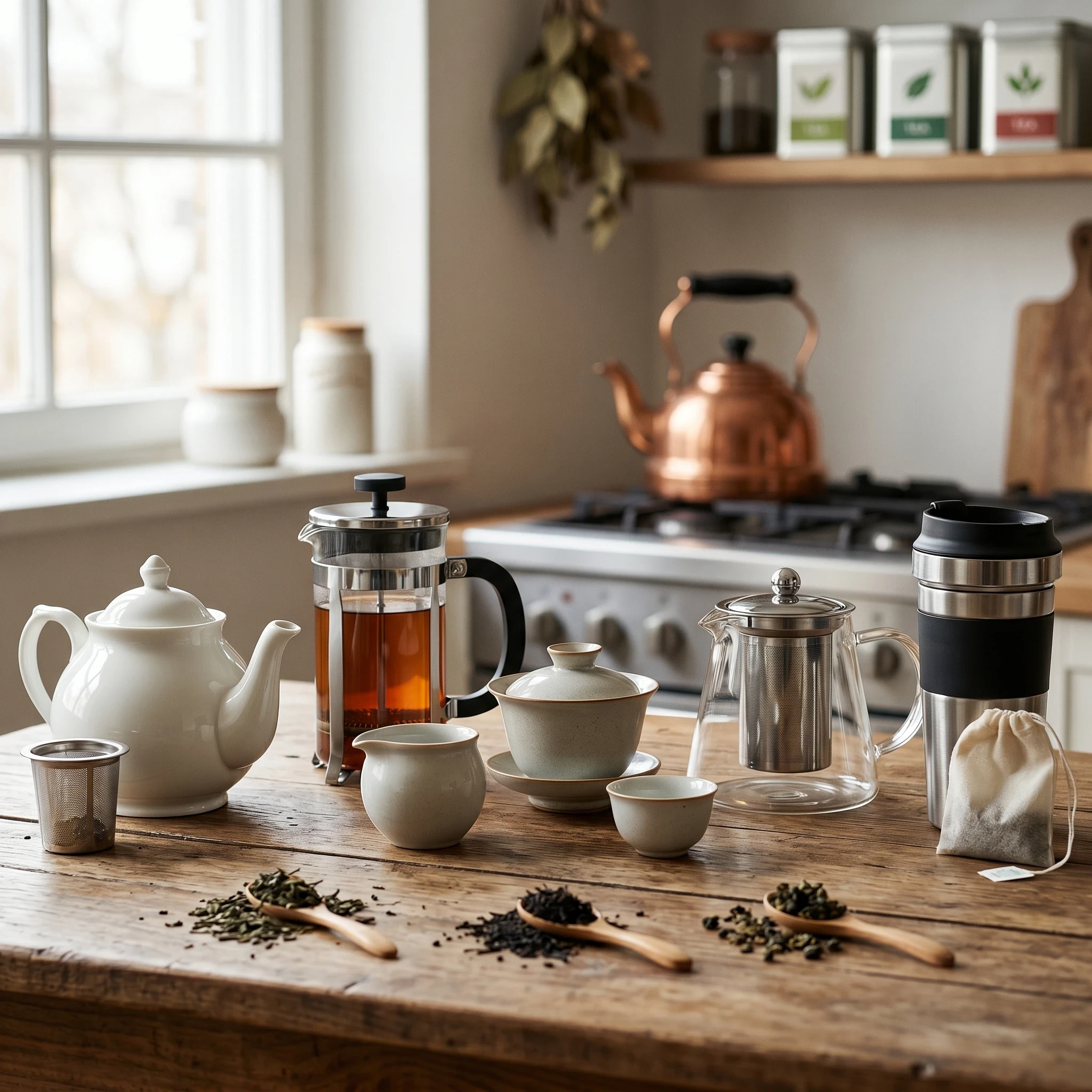
Here is a practical summary for selecting a tea brewer based on your situation.
• Best for most beginners: A large basket infuser or glass infuser teapot. Inexpensive, easy to use, forgiving with most tea types, and simple to clean. A reliable starting point for anyone moving into loose leaf tea.
• Best for convenience: An electric tea maker such as the Breville One-Touch Tea Maker. Handles water heating and steeping in one appliance with minimal involvement required.
• Best for temperature precision with manual brewing: A quality temperature-control kettle such as the COSORI electric gooseneck kettle, paired with a basket infuser or glass teapot. Good precision without giving up hands-on control.
• Best for deeper tea exploration: A gaiwan or Gongfu setup. Suited to oolongs, pu-erh, and high-grade teas where multiple short infusions reveal the most complexity. There is a learning curve, but it is a rewarding one.
• Best for Japanese green teas: A kyusu. Its fine mesh and pouring style are well-adapted to teas like sencha and gyokuro, though other brewers can also produce excellent results with the right technique.
• Best for tea away from home: A double-walled travel tea bottle with a reliable integrated strainer. Look for one with good insulation and a design that is genuinely spill-proof for daily use.
Most tea drinkers naturally acquire a small collection of brewers over time as their preferences develop. There is nothing wrong with starting simple and building from there. The most important thing is choosing a brewer that fits the way you actually drink tea, not the most impressive tool available. Get that right, and the rest tends to follow.
For more detailed guidance on specific brewing methods, tea types, and equipment, explore the full range of brewing guides and product reviews available across ZenTeaTools.com.

Chris is the founder of Zen Tea Tools and a passionate explorer of traditional and modern tea brewing. From Gongfu sessions to smart tea technology, he shares practical insights to help others find clarity, calm, and better tea.Learn more about Chris →
Leave a Reply