Wuyi Rock Oolong is one of those teas that punishes lazy brewing. Toss some leaves in a mug, pour hot water, and walk away for five minutes, and you’ll probably end up with something bitter and one-dimensional. That’s not the tea’s fault. It’s a brewing problem, and it’s fixable.
Western-style brewing actually works really well for Wuyi Rock Oolong, as long as you pay attention to a few things. Temperature and timing matter far more than having the perfect teapot or an elaborate setup. This guide covers the adjustments that actually make a difference when you’re getting harsh or bitter cups. No fancy equipment required, just a bit of intention with the basics.
What Makes Wuyi Rock Oolong Different from Other Oolongs
Before getting into the brewing specifics, it helps to understand why Wuyi Yancha brewing requires a different approach than most oolongs.
Roast and Oxidation
Wuyi oolongs sit in the 40 to 70 percent oxidation range, which puts them well into darker territory compared to the greener, floral oolongs most people start with. After oxidation, these teas go through a roasting process, typically medium to heavy, that builds in layers of caramel, chocolate, and smoky depth. That roast is part of what makes yancha so satisfying, but it also means the leaves carry a lot of extractable flavor. Push them too hard and you’ll taste it.
Twisted Leaf Structure
The leaves are tightly twisted and take time to open fully. In a Western brew, this means the first minute or two can seem mild, and then the flavor ramps up quickly once the leaves start unfurling. This is why oversteeping is the real danger with Wuyi Rock Oolong. The flavor doesn’t arrive gradually. It builds, and then it tips into bitterness faster than you might expect.
Why It Handles Heat Well
Unlike green teas or lightly oxidized oolongs, Wuyi Rock Oolong actually wants hot water. The heavy roast and dense leaf structure mean the tea needs real heat to open up properly. Dropping your temperature too low is one of the most common mistakes, and it creates a chain reaction that usually ends in bitterness (more on that below).
Best Temperature for Western Brewing Wuyi Rock Oolong
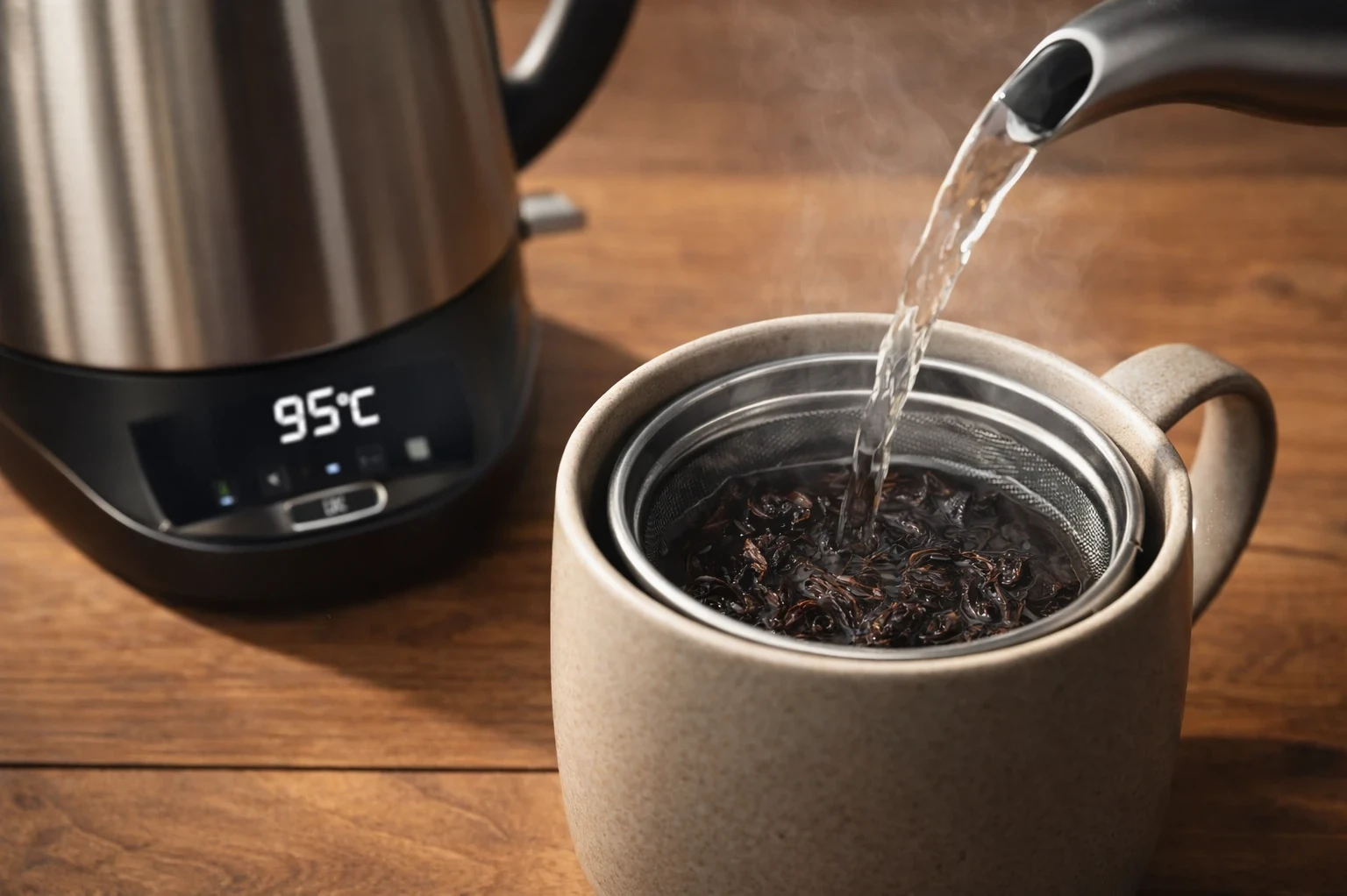
Temperature is the single biggest factor in getting a clean, balanced cup. The ideal rock oolong temperature for Western-style brewing sits between 90 to 100°C (194 to 212°F). That’s hotter than most people expect, especially if they’re coming from green tea or lighter oolongs.
When to Use Full Boiling Water
For heavier roasted Wuyi Rock Oolongs, which includes most Da Hong Pao, Rou Gui, and well-roasted Shui Xian, go ahead and use water right at a rolling boil, 100°C (212°F). These teas can handle it. The heat pulls out the full mineral backbone and roasted sweetness without creating harshness. In fact, using water that’s too cool on a heavily roasted yancha tends to produce a flat, muddy cup that’s missing the best parts.
When to Back Off Slightly
If your Wuyi oolong is on the lighter side of the roast spectrum, or if you notice strong fruit or floral notes on the dry leaf, pulling back to around 90 to 95°C (194 to 203°F) helps preserve those more delicate top notes. You’ll still get the mineral character, but the fruit and fragrance stay more vivid. This is a small adjustment, just letting the kettle sit for 20 to 30 seconds after boiling, but it can make a noticeable difference with lighter roasts.
Why Cool Water Causes Bitterness
This is counterintuitive, but water that’s too cool is one of the main reasons people end up with bitter Wuyi tea. Here’s what happens: the tea tastes weak because the water isn’t hot enough to extract properly, so you compensate by steeping longer. That extended steep time pulls out astringent, bitter compounds that overwhelm the good stuff. The fix isn’t more time. It’s hotter water.
A variable-temperature kettle makes this easier to manage consistently. Being able to dial in 95°C (203°F) or hold at a full boil takes the guesswork out. If you brew tea regularly, it’s one of those tools that quietly improves every session. I’ve tested several options and covered my picks in the best tea kettles for gongfu brewing guide, and the same recommendations apply here.
Water quality is worth mentioning here too. Filtered or spring water with low to moderate mineral content lets the tea’s own minerality come through cleanly. Hard tap water or heavily chlorinated water will compete with those flavors and often adds a flatness that no amount of temperature tweaking can fix.
Leaf-to-Water Ratio for Western Brewing
For Western-style brewing, use 3 to 5 grams of leaf per 250 ml (about 8 oz) of water. This is less leaf than you’d use for gongfu, which makes sense since you’re steeping for minutes instead of seconds.
Why More Leaf and Shorter Steeps Often Works Better
There’s a common instinct to use less leaf and steep longer to get a strong cup. With Wuyi Rock Oolong, this usually backfires. A longer steep doesn’t just make the tea stronger. It changes what gets extracted, pulling out more bitterness and astringency along with the flavors you want.
A better approach is to use the higher end of the leaf range, around 4 to 5 grams, and keep steeping times on the shorter side. You’ll get a full-bodied cup with the roast and mineral character front and center, without the harsh edge that comes from overextraction. If the tea is still too light, add a touch more leaf rather than adding time. That keeps the flavor profile cleaner.
A simple digital scale helps here. Wuyi Rock Oolong leaves are dense and vary in size, so eyeballing can be unreliable. Once you’ve found your preferred ratio, a scale lets you hit it consistently every time.
Step-by-Step Western Brewing Method
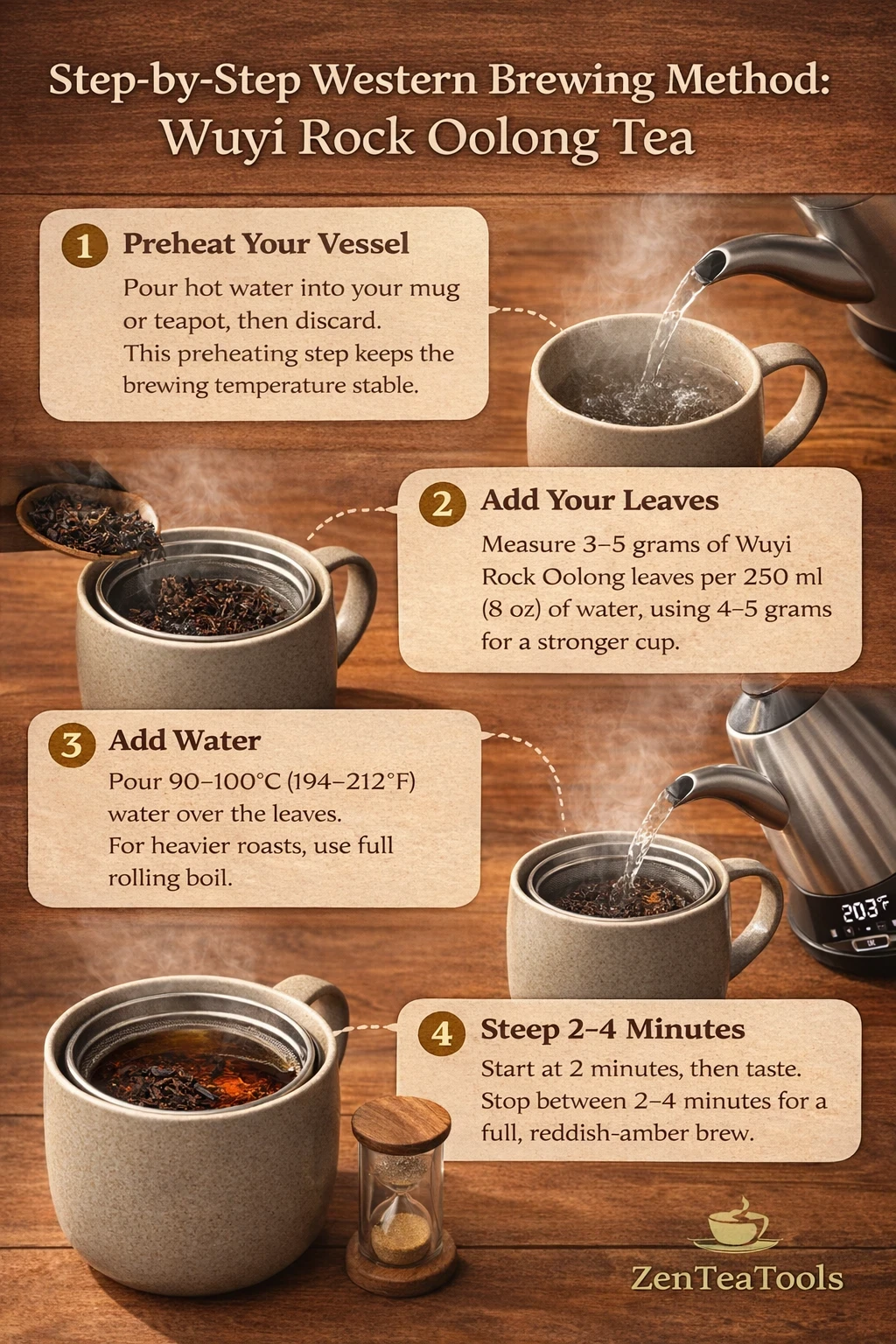
This method is straightforward and doesn’t require any specialized equipment. A teapot, a large mug with an infuser, or even a simple basket strainer all work.
Preheat Your Vessel
Pour some freshly boiled water into your teapot or mug, swirl it around, and pour it out. This isn’t just ceremony. It keeps the brewing temperature stable from the moment the water hits the leaves. Skipping this step means your water temperature drops as soon as it enters a cold vessel, and with Wuyi Rock Oolong, that matters.
Add Your Leaves
Measure out 3 to 5 grams of leaf per 250 ml (8 oz) of water. Spread the leaves across the bottom of your vessel or infuser. If you’re using a basket infuser, make sure it’s roomy enough for the leaves to expand. Wuyi leaves swell considerably as they open up, and cramming them into a tight ball infuser restricts water flow and leads to uneven extraction.
Do You Need to Rinse the Leaves?
In gongfu brewing, a quick rinse is standard practice. For Western style, it’s not necessary. The longer steep time gives the leaves plenty of opportunity to open and release their flavors without a rinse. If you prefer to rinse out of habit, a brief pour-and-discard won’t hurt anything, but it won’t meaningfully change your cup either. Save the extra step for gongfu sessions where it matters more.
Add Water
Pour water at 90 to 100°C (194 to 212°F) directly over the leaves. For heavier roasts, go with a full rolling boil. For lighter, more fragrant varieties, let the water cool for about 20 to 30 seconds after boiling. Fill to your desired volume and cover the vessel if you can. Keeping the heat in matters with these teas.
Steep for 2 to 4 Minutes
Start at the shorter end, around 2 minutes, and taste. What you’re looking for is a reddish-amber liquor with a silky, full-bodied mouthfeel that carries roasted sweetness and a clean mineral finish. If the texture feels thin and watery at 2 minutes, the leaves haven’t opened enough yet. Let it go another 30 seconds and taste again.
The sweet spot for most Wuyi Rock Oolongs brewed Western style lands between 2.5 and 3.5 minutes. By the 4-minute mark, you should have a bold, satisfying cup. Beyond that, bitterness starts creeping in with most teas. It’s better to taste early and let it continue than to set a timer for 5 minutes and hope for the best.
When you first pour, notice the aroma coming off the cup. A good Wuyi brew will give you a warm, toasted fragrance, sometimes with a caramel or stone-fruit sweetness layered underneath. If the aroma is sharp or acrid, the steep went too long or the water was off.
Adjusting for Strength
If the first cup is too mild, try adding slightly more leaf next time rather than steeping longer. If it’s too strong or bitter, reduce leaf or pull the steep back by 30 seconds. Small changes make a real difference with yancha.
Second Steep
Most Wuyi Rock Oolongs will support a solid second infusion in Western style. Add about a minute to your original steep time for the second round. The flavor profile shifts a bit. The roast softens, and you’ll often pick up more sweetness and a smoother finish. A third steep is possible with higher quality leaves, though the flavor will be lighter and more mellow.
Don’t expect the dramatic evolution you’d get from gongfu-style multiple infusions. Western brewing gives you one or two really good cups from each batch of leaves, and that’s a perfectly fine trade-off for the simplicity.
Why Is My Wuyi Rock Oolong Bitter?
Bitterness is the most common complaint with Wuyi Rock Oolong, and in almost every case, it comes down to one of these issues.
Oversteeping
This is the number one cause. Wuyi Rock Oolong releases flavor quickly once the leaves start to open, and the line between bold and bitter is narrower than you might think. Even an extra minute can shift a balanced cup into harsh territory. Start tasting at 2 minutes and remove the leaves as soon as the flavor is where you want it.
Too Much Leaf
Using more leaf than your water volume calls for concentrates the brew fast. If you’re using 6 or 7 grams in 250 ml and steeping for 3 to 4 minutes, the result is going to be overwhelming. Stick to 3 to 5 grams for Western brewing and adjust from there.
Water Too Cool
As covered above, lukewarm water leads to underextraction, which leads to longer steeping, which leads to bitterness. It’s a cycle. Using water in the 90 to 100°C (194 to 212°F) range extracts the right compounds efficiently so you can keep steep times short.
Low-Quality Tea
Not all Wuyi Rock Oolong is created equal. Cheaper or stale yancha often has a harsh, flat bitterness that doesn’t improve no matter how carefully you brew. Good quality Wuyi oolong should taste smooth and layered even when you push the steep a little. If you’re doing everything right and the tea still tastes rough, the leaves themselves might be the issue.
Poor Water Quality
Hard water, chlorinated tap water, or heavily mineralized bottled water will dull or distort the tea’s natural flavors. A simple filter pitcher or spring water makes a real difference. You want water that’s clean and neutral enough to let the tea’s own mineral character come through.
Minerality vs. Bitterness
One thing worth noting: Wuyi Rock Oolong has a natural drying, mineral sensation in the aftertaste. This is the “rock rhyme” or yan yun that people talk about. It’s a pleasant, almost cooling quality that lingers on the palate. This is not bitterness, though it can feel that way if you’re not expecting it.
The difference is physical. True bitterness from oversteeping grabs the back of the tongue and stays there, sharp and unresolved. Good minerality spreads across the whole mouth, dries it gently, and then finishes clean with a returning sweetness. If your tea dries your mouth slightly but resolves into something pleasant, that’s the signature of real yancha doing what it’s supposed to do. If it grips and doesn’t let go, something’s off in your brewing or your tea.
Common Western Brewing Mistakes
Treating It Like Green Tea
Wuyi Rock Oolong is not a delicate tea. Using 80 to 85°C (176 to 185°F) water, as you might for a Japanese green, underextracts the leaves and strips out the best flavors. These teas need heat. Don’t be afraid of near-boiling water.
Steeping for 5 to 6 Minutes
Some oolongs can handle a long steep. Wuyi yancha generally cannot, at least not without turning bitter. Keep your first infusion between 2 and 4 minutes and taste before committing to a longer time.
Under-Leafing
Using too little tea produces a thin, watery cup that lacks the body and mineral depth yancha is known for. If you’re finding your brew bland and uninteresting, try increasing the leaf amount before you increase the time.
Ignoring Roast Level
A heavily roasted Wuyi oolong and a lightly roasted one need different treatment. Darker roasts want full boiling water and can handle slightly longer steeps. Lighter roasts benefit from a few degrees cooler and a slightly shorter extraction. Paying attention to this one variable makes a noticeable improvement across different yancha varieties.
Not Minding Water Quality
This keeps coming up because it matters. Chlorinated or mineral-heavy water competes with the tea’s natural profile. A basic filter pitcher is an easy fix that improves every cup.
When to Switch to Gongfu Style
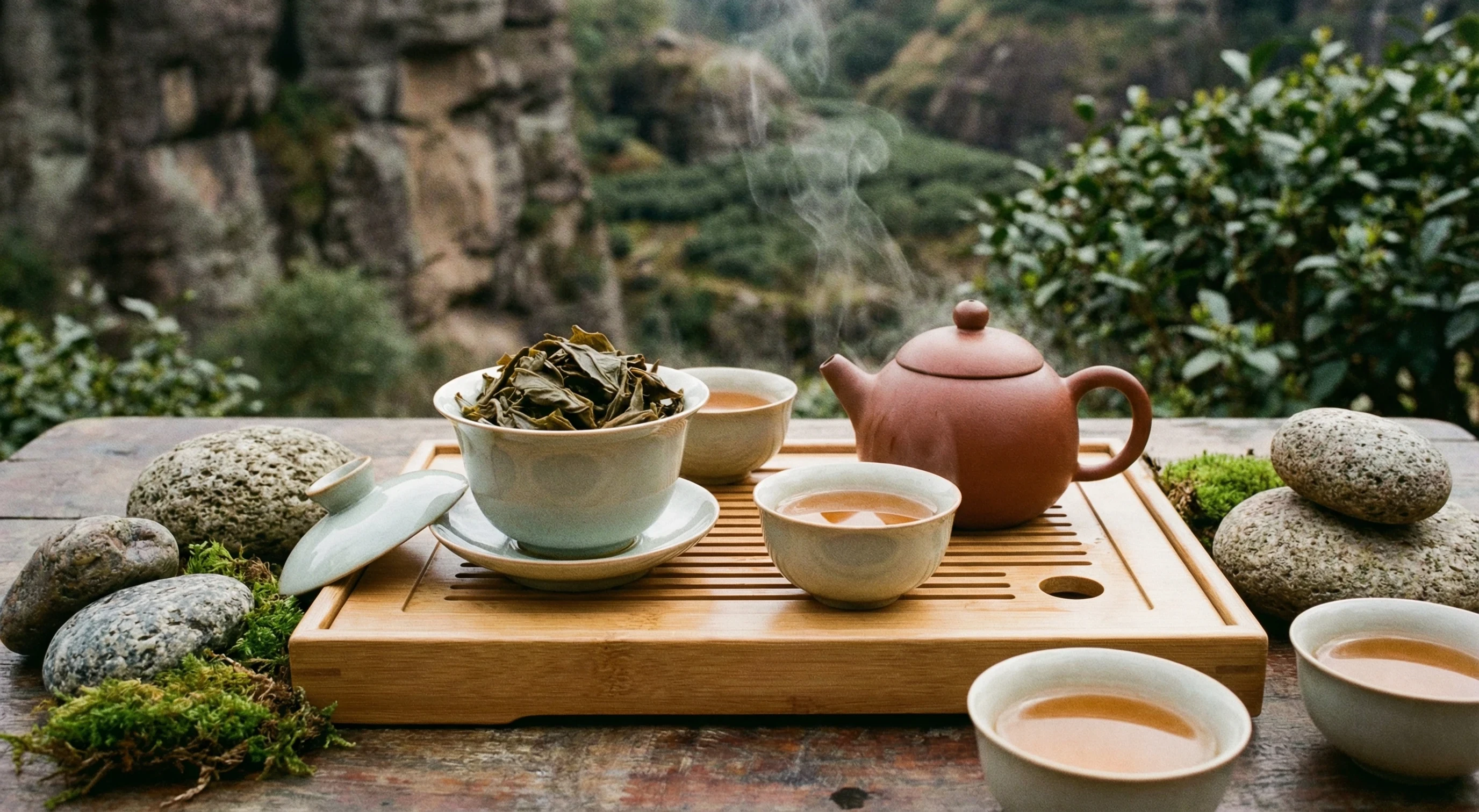
Western brewing is excellent for convenience and gives you a clear, honest read on a Wuyi Rock Oolong’s character. It’s great for mornings when you want one strong, satisfying cup without fuss.
That said, if you want to experience how the flavor evolves across 6 to 10 infusions, with the roast softening, sweetness building, and mineral notes shifting from steep to steep, gongfu style is where that happens. The higher leaf ratio and rapid infusions create a different kind of session entirely, one that rewards patience and attention.
If you want to explore that approach, see my full guide to brewing Wuyi Yancha gongfu style.
Both methods have their place. Western brewing isn’t a lesser version of gongfu. It’s a different tool for a different moment.
Final Brewing Tips
Use near-boiling water for most Wuyi Rock Oolongs. Don’t default to lower temperatures.
Keep steep times short and taste early. You can always steep longer, but you can’t undo bitterness.
Adjust your water temperature based on roast level. Hotter for heavy roasts, a touch cooler for lighter ones.
Use filtered or spring water. It makes more difference than most people expect.
Weigh your leaves. A small scale removes guesswork and helps you repeat the cups you like.
Don’t be afraid of bold flavor. Yancha is supposed to be intense. Work with that instead of fighting it.
Wrapping Up
Wuyi Rock Oolong is one of the more rewarding teas to brew once you understand what it needs. The combination of high heat, controlled timing, and decent water gets you most of the way to a great cup. If bitterness has been a problem, the fix is almost always simpler than you think: hotter water, shorter steeps, and the right amount of leaf.
Start with the guidelines here and adjust based on what you taste. Every batch of yancha is a little different, and part of the enjoyment is dialing in what works for the specific tea in front of you. Once you’ve got the basics down, the mineral depth and roasted sweetness of a well-brewed Wuyi Rock Oolong speaks for itself.
If you don’t currently have Wuyi Rock Oolong on hand, starting with a dependable Da Hong Pao like this NASLAPH Wuyi Rock Oolong can give you a consistent baseline to practice Western brewing before moving into higher-end yancha. It’s approachable, well-roasted, and easier to control than some ultra-light specialty batches.
Here’s a little transparency: Our website contains affiliate links. This means if you click and make a purchase, we may receive a small commission. Don’t worry, there’s no extra cost to you. It’s a simple way you can support our mission to bring you quality content.

Chris is the founder of Zen Tea Tools and a passionate explorer of traditional and modern tea brewing. From Gongfu sessions to smart tea technology, he shares practical insights to help others find clarity, calm, and better tea.Learn more about Chris →
Leave a Reply