Bonavita’s 1L Digital Variable Temperature Gooseneck Electric Kettle isn’t just another countertop appliance. If you’ve found your way here, you’ve probably been frustrated before by inconsistent results across multiple tea sessions.
I’m right there with you—one degree too hot, and a delicate green gets flat or bitter, while a few degrees too cool and your favorite oolong just comes out thin. Consistency in tea isn’t about having a perfect kitchen; it comes down to actually dialing in and repeating what works.
That’s where the Bonavita digital variable temperature kettle really stands out. This review puts control and repeatability at the center, not convenience or good looks.
Getting water temperature right is super important for serious tea brewing. Black teas aren’t too picky, but try making Longjing or Silver Needle with water that’s too hot, and you’ll see that tight astringent kick. With herbal teas, too cool and the flavor barely extracts. A generic “boil and hope” strategy doesn’t work.
Brewing is both an art and a science—consistent and accurate water temperature is the bridge between the two. It lets your daily tea ritual move from random results to a rewarding, reliable moment you look forward to, cup after cup.
This kind of precision is exactly what makes or breaks your brewing practice, and why many tea lovers get picky about their kettle.
If your goal is to really understand and control your brewing, especially when you want every session to taste just like your last good one, it’s worth checking out how much of a difference real-time temperature control and digital feedback can make. So, here’s how this digital kettle performs as a precision brewing tool, not just a regular kitchen gadget.
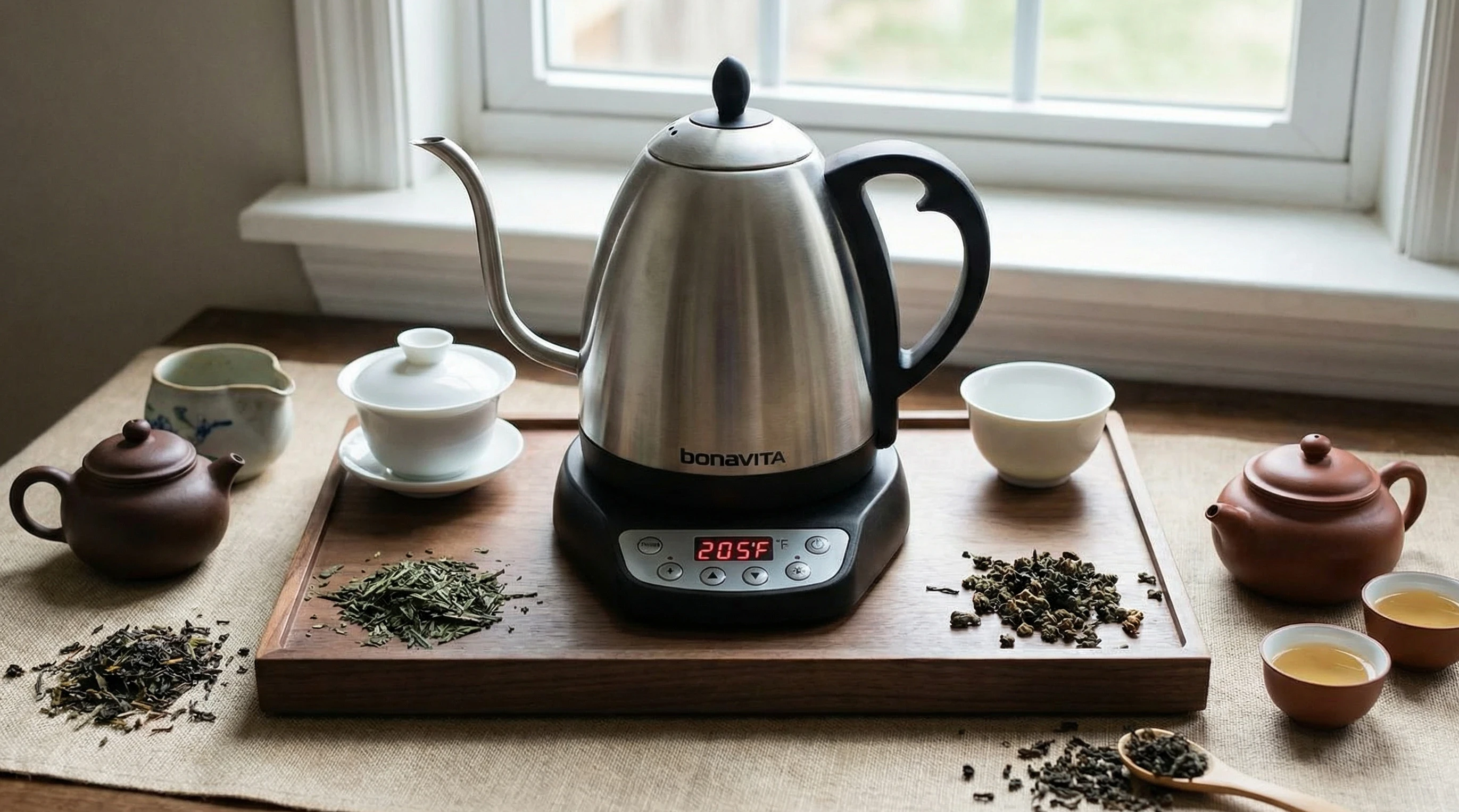
Why Variable Temperature Matters for Tea
Every tea style needs its own approach, and water temperature is at the core of that. With greens like sencha or gyokuro, a few degrees above 175°F (79°C) and you’ll notice harshness right away.
If you’re working with oolongs, especially the more aromatic, lightly oxidized type, something in the 185–200°F (85–93°C) range can unlock the floral notes without wrecking the delicate finish. Even some black teas—especially Chinese or Darjeeling types—respond best to water that’s just off the boil or carefully set at 205°F (96°C).
Once you start paying attention, you realize that “boil and pour” nearly always leaves something on the table. By thoughtfully matching tea type and water temperature, you can make every cup shine a bit brighter.
Presets on many kettles are okay for beginners, but more advanced teas and specific harvests sometimes need a degree or two tweak here and there.
I’ve tasted the difference just from adjusting water a few notches, especially with green teas harvested early in the season or lightly roasted oolongs where aromatics shift fast. Presets are usually rounded: 175, 185, 200°F (79, 85, 93°C).
With a real digital variable temperature electric kettle for tea, you can set 178°F (81°C) for that first steep, then bump it to 183°F (84°C) for a later infusion. This control isn’t only about being precise for the sake of it—if you’re chasing repeatable deliciousness, the kettle’s adjustability gives you an edge.
This attention to detail can turn an average cup into something you look forward to every day, giving each session its own personality while maintaining high standards.
Overview: What This Bonavita Kettle Is Designed to Do
This Bonavita gooseneck kettle for tea is built from the start to help you zero in on brewing parameters and replicate them every time. Unlike models that only offer a handful of preset buttons, the Bonavita gives you digital control in single-degree increments from 140°F to 212°F (60°C to 100°C). There’s a real-time LED display that shows you exactly what’s happening inside, so you’re not left guessing.
With a 1-liter body, it’s the right size for single-session brews or back-to-back infusions, especially if you’re running multiple rounds in a single tea session. The stainless steel build feels solid, and the gooseneck spout is clearly designed for accuracy, both in speed and in placement.
The “hold” function can keep your selected temperature steady for up to an hour, which is super handy when you want to compare steeps, let tea “open up,” or just do a full cupping session without racing the clock.
The focus here isn’t on decorative finishes or matching kitchen hardware. The kettle is a brewing instrument for people who want to unlock more from their loose leaf.
If you refuse to leave your brewing results to chance, you’ll appreciate what this model is aiming for. It truly supports methodical tea drinkers who like to document their recipes and perfect their routine over time.
Digital Temperature Control Explained
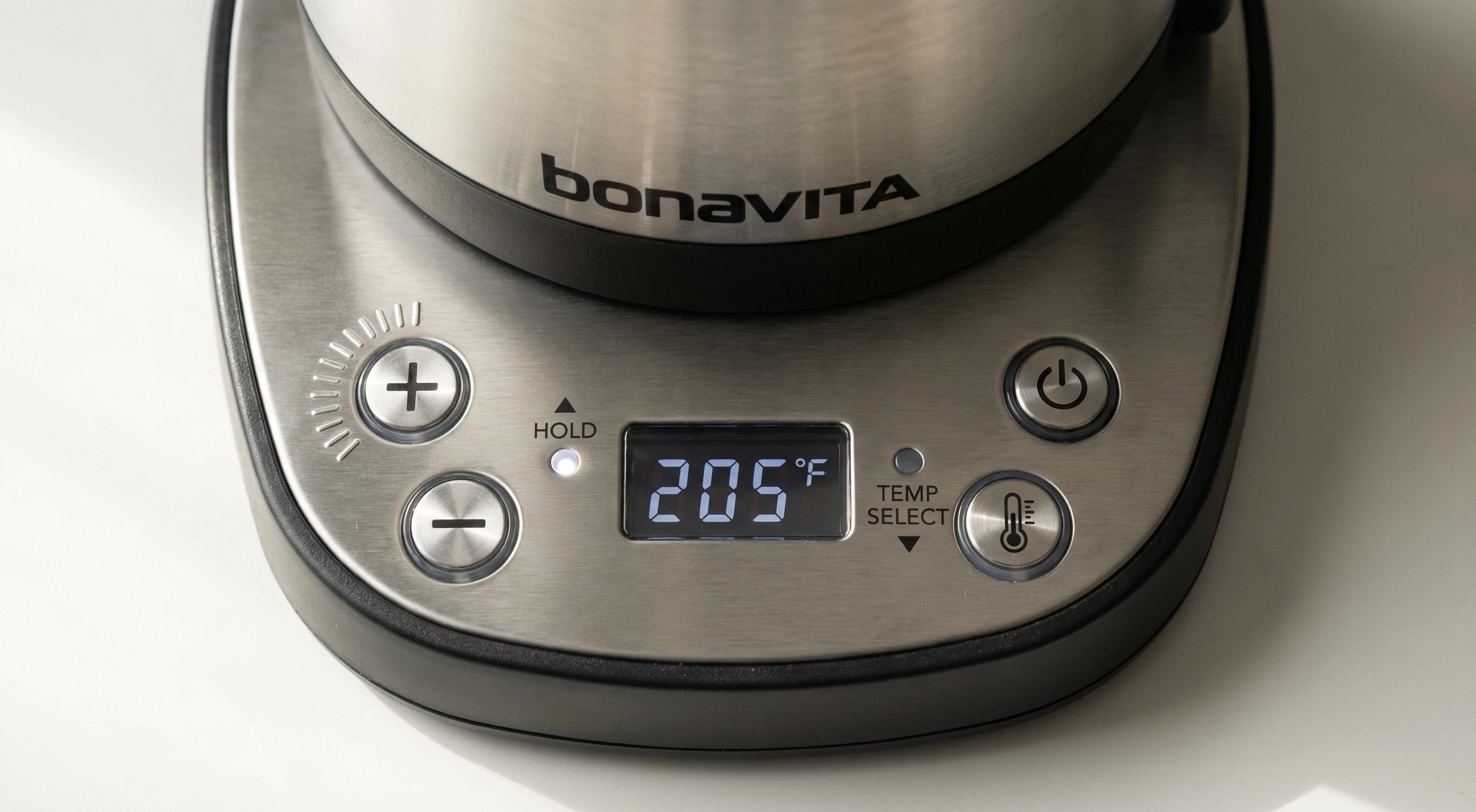
With the digital controls, you can dial in a specific temperature anywhere from 140°F to 212°F (60°C to 100°C), moving up or down by single-degree increments. On the surface, that might sound like overkill, but in practice, this level of precision becomes super useful when you want to troubleshoot or consistently hit the sweet spot for a certain tea.
Sometimes the magic happens in those two or three degrees between “almost right” and “amazing.”
To set the temperature on the Bonavita kettle, you use the plus and minus buttons right on the base. The LED readout shows you both your selected target and the current water temperature as it climbs toward that number.
If you decide the temperature isn’t quite right—maybe you realize the first steep was a little dull—you can click the buttons and adjust up or down instantly. There’s no waiting for a whole cycle to restart from scratch. I find this flexibility especially handy when switching between different teas in the same session or running back-to-back tastings where I want tight control over variables.
Single-degree control isn’t just a marketing stat, either. For example, when learning to brew higher-elevation Taiwanese oolongs, you might discover that they pop more at 195°F (91°C) than at 200°F (93°C) for early infusions.
With this kettle, you can test, track, and lock in your ideal temps. This makes it possible to experiment in small but noticeable ways, valuable for anyone who likes to tinker, learn, and see actual improvements in flavor and mouthfeel across steepings.
The ability to tweak and document even tiny changes is what lets you step up your homemade tea consistently.
Hold Function and Brewing Workflow
The kettle’s hold function is what sets it apart from manual models. Once your water reaches the set point, you can tap the “Hold” button. The kettle will then cycle on and off to keep the water within a couple degrees of your target for up to 60 minutes.
This is a real asset for extended tea sessions, especially in gongfu brewing or when preparing several infusions of a single tea. You never need to scramble to reheat water before it cools.
During a proper gongfu session, you may have 6–12 quick steeps over half an hour or more. The last thing you want is for your water to cool down or spike up haphazardly. With the Bonavita, you’re not in a rush. Pour, cover, taste, and leave the next batch of water holding at exactly the same degree for the next steep.
When running side-by-side taste tests (say, two green teas at 175°F / 79°C, or a dancong oolong at 205°F / 96°C), this function means you can be consistent between cups. No more racing to catch water right as it’s coming off the boil.
The result is tighter control and better feedback from your teas. This brings a sense of calm and predictability to even your most ambitious tea experiments.
Pour Control and Gooseneck Precision
The Bonavita’s gooseneck spout lets you pour slowly, steadily, and right where you want. I pay a lot of attention to this aspect, since a gooseneck isn’t just for show—it actually changes how water meets the leaves.
When filling a small gaiwan or tiny clay teapot, you need to direct the stream gently, without splashing leaves against the lid or overfilling by accident.
A steady stream is different from a controlled one. Some kettles can only do “all or nothing,” but the Bonavita lets you pour as little or as much as you like, keeping flow even and reducing the risk of channeling during a pour-over or a precise wash of tea.
I often aim for slow, spiraled pours with high-end oolongs or a well-placed direct stream for delicate greens. When brewing black teas Western-style, you still benefit from being able to control pour speed, especially as you adjust how quickly you saturate the leaves.
The Bonavita’s spout is shaped for these finer moves, and, after some practice, you get a repeatable rhythm that helps reduce variation from one session to the next. Even the act of pouring becomes a repeatable part of your ritual, letting your technique improve as you gain confidence.
Heating Performance and Consistency
Heating speed on the Bonavita is pretty solid for a 1L kettle with real temperature feedback. It reliably heats room temp water to 200°F (93°C) in about 5–6 minutes, which compares well with other control-oriented electric kettles.
What really matters, though, is how accurately it arrives at your target temperature—no wild overshoots, and no laggy stabilization.
When reheating water for later infusions, temperature stability is more important than raw speed. I’ve run back-to-back sessions and notice that the Bonavita holds steady across multiple boils, without big swings from the setpoint.
For people who like to do several “test rounds” with the same tea (especially when dialing in new teas each season), I find that this stability takes a lot of stress out of the process.
You don’t need to babysit the kettle or check and re-check the temperature with an external thermometer—the digital display and hold function keep things consistent session-to-session.
Knowing your water will stay within a hair of your target lets you focus on enjoying and analyzing the results, instead of troubleshooting equipment mid-brew.
Using This Kettle for Different Tea Styles
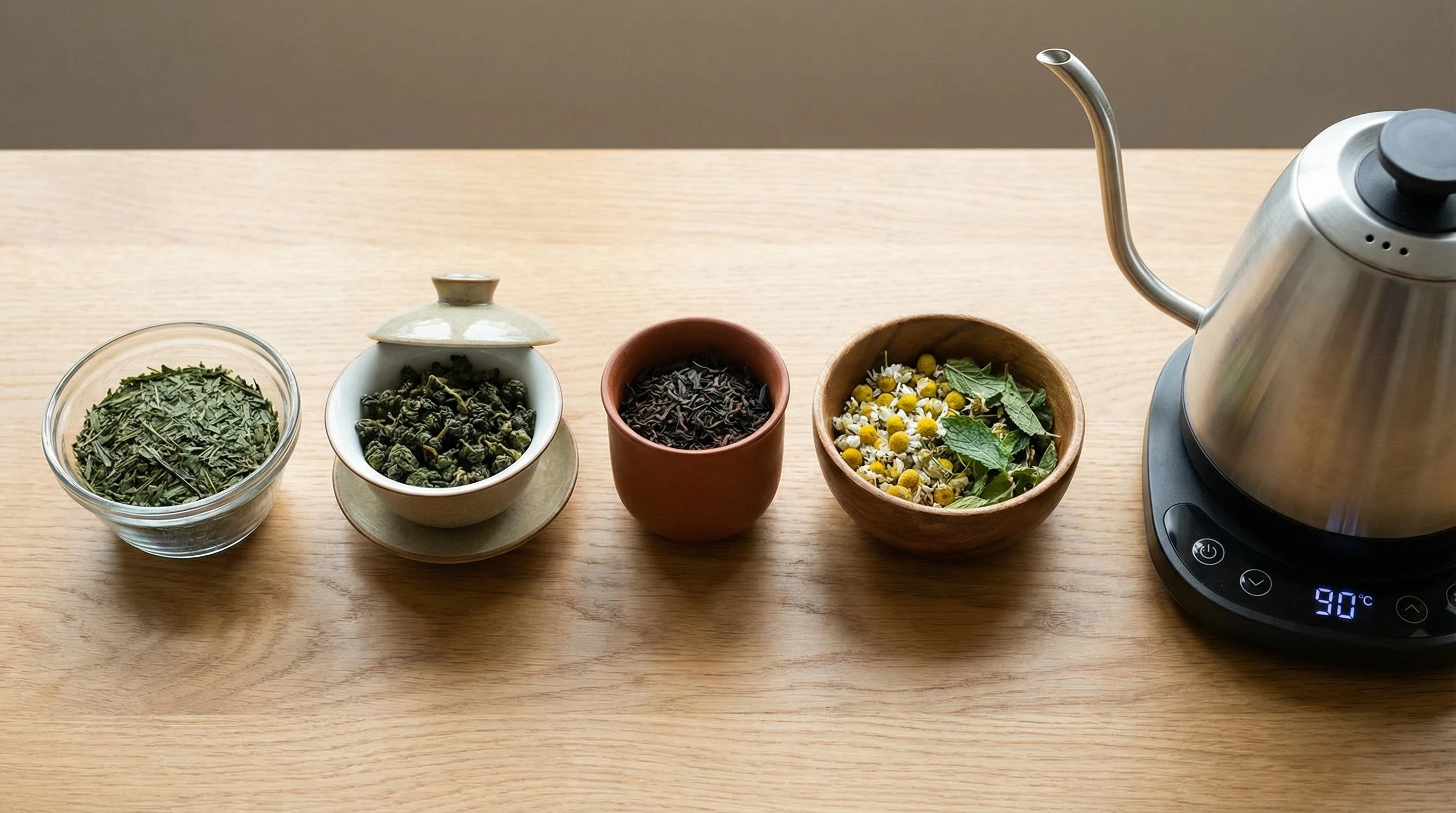
Green Tea
Greens are probably the trickiest tea type for water temperature control. Japanese green teas like gyokuro and sencha perform best around 140°F to 175°F (60°C to 79°C). It’s really easy to go too hot if you’re using a boiler or traditional stovetop kettle.
With the Bonavita, you can set these precise temperatures and easily hold them for multiple steeps. This repeatability means you can get familiar with which temperature brings out sweetness or mouthfeel instead of always risking bitterness.
After a few sessions, you’ll spot subtle changes, helping you lock in your perfect brews and enjoy consistent flavor profiles from bag to bag.
Oolong Tea
Oolongs vary quite a bit—green oolongs sometimes brew best around 185°F (85°C), while heavily roasted types need water closer to 205°F (96°C). Since the Bonavita’s range is so broad, you can experiment to find each oolong’s “happy place.”
Being able to nudge the temperature up a couple degrees for later infusions also helps extract full flavor without introducing harshness. I get a lot of mileage out of the hold function during longer oolong sessions when I’m testing different infusion times or volumes.
The level of control brings out the most refined character each oolong has to offer.
Black Tea
Black teas aren’t quite as picky about water temp, but a careful setup still makes a difference—especially with lighter types like Darjeeling or some Chinese hongcha.
I usually start these around 200°F (93°C) and sometimes avoid a full rolling boil for the first infusion. With the Bonavita, I’m able to try batches at 200°F (93°C), 208°F (98°C), and then at a rolling boil to find what highlights the best aromatics and structure for that batch.
This offers a great way to explore how temperature steers astringency, maltiness, and aroma in your favorite leaves.
Herbal and Tisanes
Herbal teas often benefit from boiling or near-boiling water, but some more delicate herbs, like chamomile or mint, can get scorched if you’re not careful. I notice a smoother cup using water in the 190–200°F (88–93°C) range, especially for longer steeps.
The flexibility to select and hold even rare or specific temperatures makes this kettle a solid fit when experimenting across a mix of blends.
Whether you’re crafting the perfect chamomile nightcap or a bright, mint-forward afternoon blend, you have the exact control you need.
Learning Curve and Daily Reality
I’ll be straight with you—if you want a kettle that you fill, flip, and forget, this isn’t really aimed at that style.
The Bonavita digital variable temperature kettle rewards attention. You’ll want to actually check your water temp, dial in degrees between sessions, and get a feel for flow rate.
The controls are easy, but using this as a repeatable brewing tool means bringing an intent mindset: selecting a temp, timing the heat-up, watching hold timings, and controlling every pour. It isn’t the right fit for brewing tea for a big group, casual parties, or folks who just want a cup of something hot without fuss.
For solo tea sessions, regular gongfu routines, or anyone looking to “debug” their favorite teas and get more predictable results, the Bonavita shines.
After a week or two of real-world use, it gets easier to move from one session to the next—especially if you’re logging your brew temps and times. It’s the sort of upgrade where your learning compounds, not just a gadget that collects dust when you’re not making tea for guests.
If you enjoy taking notes or tracking your process, you can fine-tune your methods in ways that let you grow as a home tea enthusiast.
Who This Kettle Is Ideal For
The Bonavita 1L Digital Variable Temperature Kettle is a solid pick for people who want to get deeper into controlled tea brewing. If you’re an enthusiast paying attention to every detail, brewing gongfu style, or someone who regularly experiments with new teas, you’ll really notice the value.
The degree-by-degree adjustment, hold functionality, and gooseneck precision let you test, record, and improve your tea sessions in a way that lesser kettles don’t really support.
If you enjoy side-by-side tastings, want your dragonwell or iron goddess to taste just as good next week as it did last session, or just have a scientific curiosity about what your teas can do, this kettle gives you the tools you need.
It’s definitely not overkill if you care about process—especially if you’re sharing notes with other tea drinkers or like to compare new harvests each year. You get to approach tea like an experiment, each brew session moving you closer to your ideal cup.
Who Might Prefer a Simpler Bonavita Model
Honestly, if you just want hot water ASAP for a bagged black tea or a quick herbal cup, all this precision won’t help much.
Folks looking for zero learning curve or a “just hit start” experience are usually happier with a model like the Bonavita Cosmopolitan gooseneck kettle. That one skips digital controls and goes for a straightforward approach.
If you’re brewing for a household or group that doesn’t sweat the details, presets or a non-variable temp kettle will probably feel faster and less demanding.
Sometimes simplicity beats precision, and not every kitchen needs a scientific setup. Try one with fewer buttons if you only make Western-style tea or just want something fast and basic. Don’t feel pressured to level up unless your own tastebuds are clamoring for tighter control.
Comparison With Other Precision Kettles
Plenty of other variable temperature electric kettles for tea exist, but they all take slightly different approaches.
Brewista’s Artisan line is known for strong digital controls and similar degree-by-degree adjustability. The feel of the handle and the exact way presets work are a little different, and I find the Bonavita just a bit more straightforward for single-user sessions.
The Fellow Stagg EKG is a popular pick, especially among pour-over coffee folks and tech-minded users. It has a heavier feel and a sleeker look, but the Bonavita’s feedback loop (with LED display plus simple buttons) is easy to understand right out of the box.
The Stagg pours a bit slower, which might be a pro or con depending on your pour style. I find the Bonavita’s balance between practical controls and user feedback to be more my speed when focusing only on tea.
Each model has its loyalists, but if you’re truly focused on dialing in your tea, the Bonavita’s balance of control and ease stands out.
Long-Term Use and Reliability
I’ve been putting my Bonavita through daily and weekly sessions, and I’ve found the controls hold up without any issues. The buttons respond quickly and don’t get gunky or laggy over time.
The temperature probe seems to stay accurate—my external thermometer matches up pretty well, even after a lot of heavy use.
The stainless steel body is easy to clean and doesn’t transfer flavors or build up much scale if you do a quick rinse now and then. With regular use, it keeps up the same pace months down the line, supporting the kind of trust you want in a “real tool” instead of just another gadget.
This dependability is part of why many dedicated tea drinkers keep coming back to Bonavita for each new adventure in tea.
Pros
- Fine-grained, exact temperature control you can dial up or down as you need
- Hold function actually stays stable for longer brewing sessions
- Pouring control really supports side-by-side tastings and small-batch brewing
- Predictable behavior every session—easy to track and repeat results
- Build quality stands up to heavy, regular use
Cons
- Requires more attention than a simple “boil and pour” model
- A bit much for those who don’t need or want to adjust temps often
- Not suited to large groups or guest-friendly kitchen setups
- Single-liter size might be too small for some batch brewing styles
Final Verdict
If you care about control, accurate feedback, and want your tea sessions to deliver consistent results each time, the Bonavita digital variable temperature kettle is worth a serious look.
It really is built for tea geeks, serious solo brewers, and anyone looking to improve their process through hands-on experimentation and repeatability. It’s more of a brewing instrument than a casual hot water maker, and it’s an investment that pays off most for folks who actually want to tinker and track their progress over time.
With the Bonavita in your toolkit, your learning over dozens or even hundreds of sessions will unlock the best your leaf can offer, session after session.
Frequently Asked Questions (Digital Model)
Is variable temperature really useful for tea?
Definitely, especially if you’re brewing loose leaf greens, oolongs, or want to experiment with different profiles. Settable temperatures help you hone in on the best flavor for each style, and allow you to avoid brewing mistakes that lead to bitterness or muted aromas.
How precise is the temperature control?
The Bonavita allows for 1-degree increments, and the display matches my separate thermometer within a degree or two. For everyday use, this is more than accurate enough for consistent, repeatable results.
Is this kettle good for gongfu tea?
Yes. The hold function and pouring control work well when running multiple short infusions, and you don’t have to worry about temperature drift during a session. It’s a favorite for small teapot or gaiwan brewers.
Is it worth it over preset-only kettles?
If you care about testing, learning, and coming back to a favorite tea with confidence that your water will be just right, the answer is yes. Preset-only kettles can be limiting once you want to branch out or experiment with less common styles, harvests, or brewing techniques.
Does the kettle beep or make noise?
It gives a soft beep when reaching set temperature but isn’t intrusive. You can always check the visual display to confirm status if you prefer a silent workflow.
Your Tea, Your Tools: Choosing What Fits
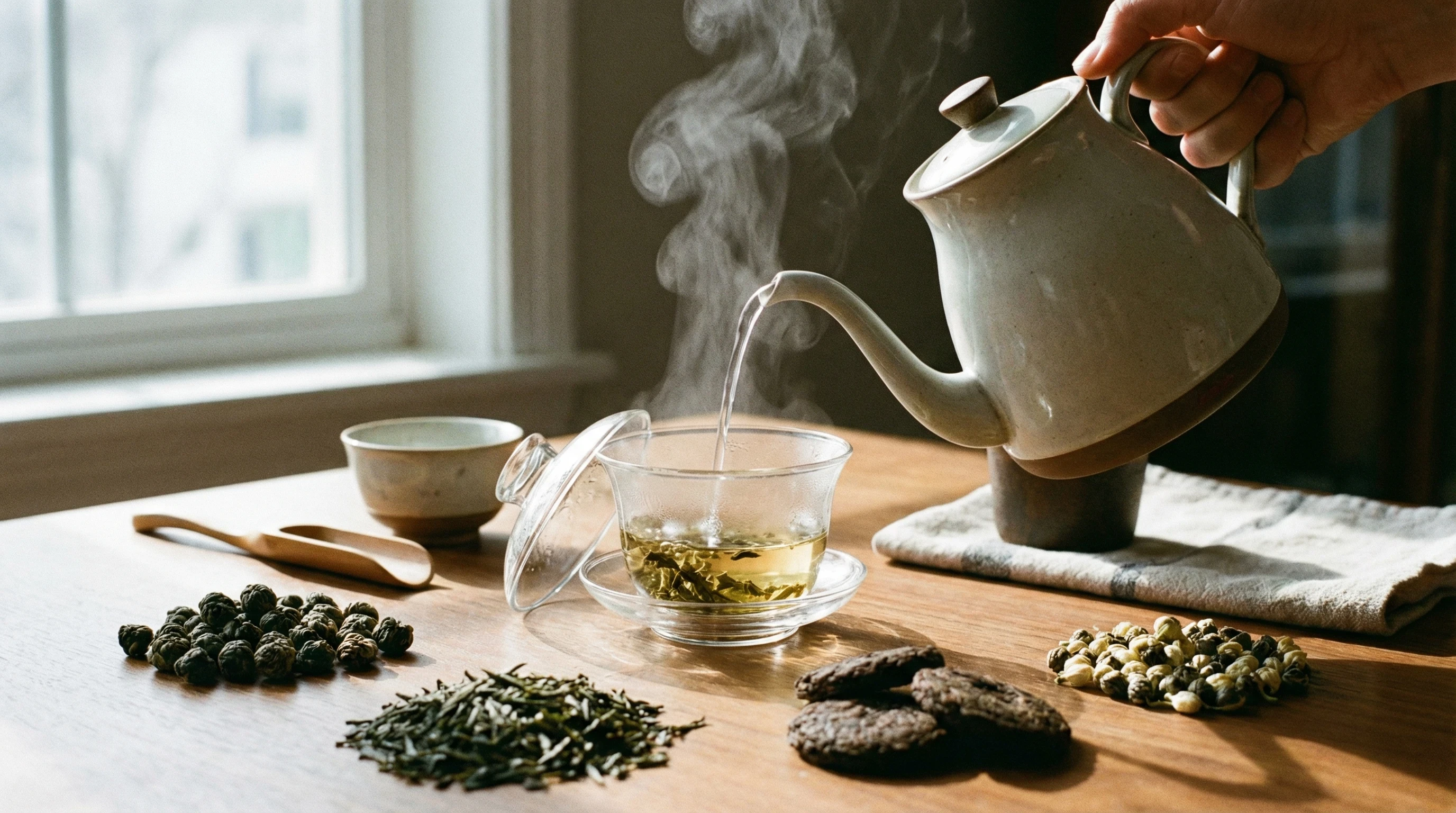
If your goal is to get more consistent, repeatable tea sessions or experiment confidently with your leaf, a variable temperature electric kettle for tea like the Bonavita is a great choice.
For households or anyone wanting a “set it and forget it” kettle, a simpler model might actually suit you better.
If you’re on the fence, try to imagine what style of brewing you actually want to develop—and choose a kettle that fits your process, not just your countertop. There’s no rush to upgrade unless you find yourself wishing you could tweak, test, and really dial in your favorite teas session after session.
Bottom line: get the kettle that makes your adventure in tea more rewarding, one cup at a time.
Here’s a little transparency: Our website contains affiliate links. This means if you click and make a purchase, we may receive a small commission. Don’t worry, there’s no extra cost to you. It’s a simple way you can support our mission to bring you quality content.
Bonavita 1.0L Digital Variable Temperature Gooseneck Electric Kettle
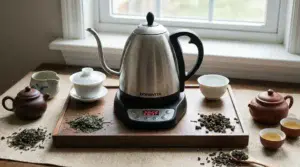
A short factual product description (not your whole intro). Example: 1.0L gooseneck electric kettle with digital variable temperature control and hold function, designed for precise pouring and repeatable brewing.
Product Brand: Bonavita
Product In-Stock: InStock
4.6

Chris is the founder of Zen Tea Tools and a passionate explorer of traditional and modern tea brewing. From Gongfu sessions to smart tea technology, he shares practical insights to help others find clarity, calm, and better tea.Learn more about Chris →
Leave a Reply