Brewing Wuyi Yancha gongfu style can genuinely transform how you experience rock oolongs. If you’ve ever been disappointed by a flat or bitter cup from these cliff teas, the brewing method is almost certainly the reason. Yancha doesn’t reward rushing or fancy tools. It rewards patience and a bit of practice. With the right approach, you can unlock every layer of mineral, roast, and sweetness these leaves have to offer.
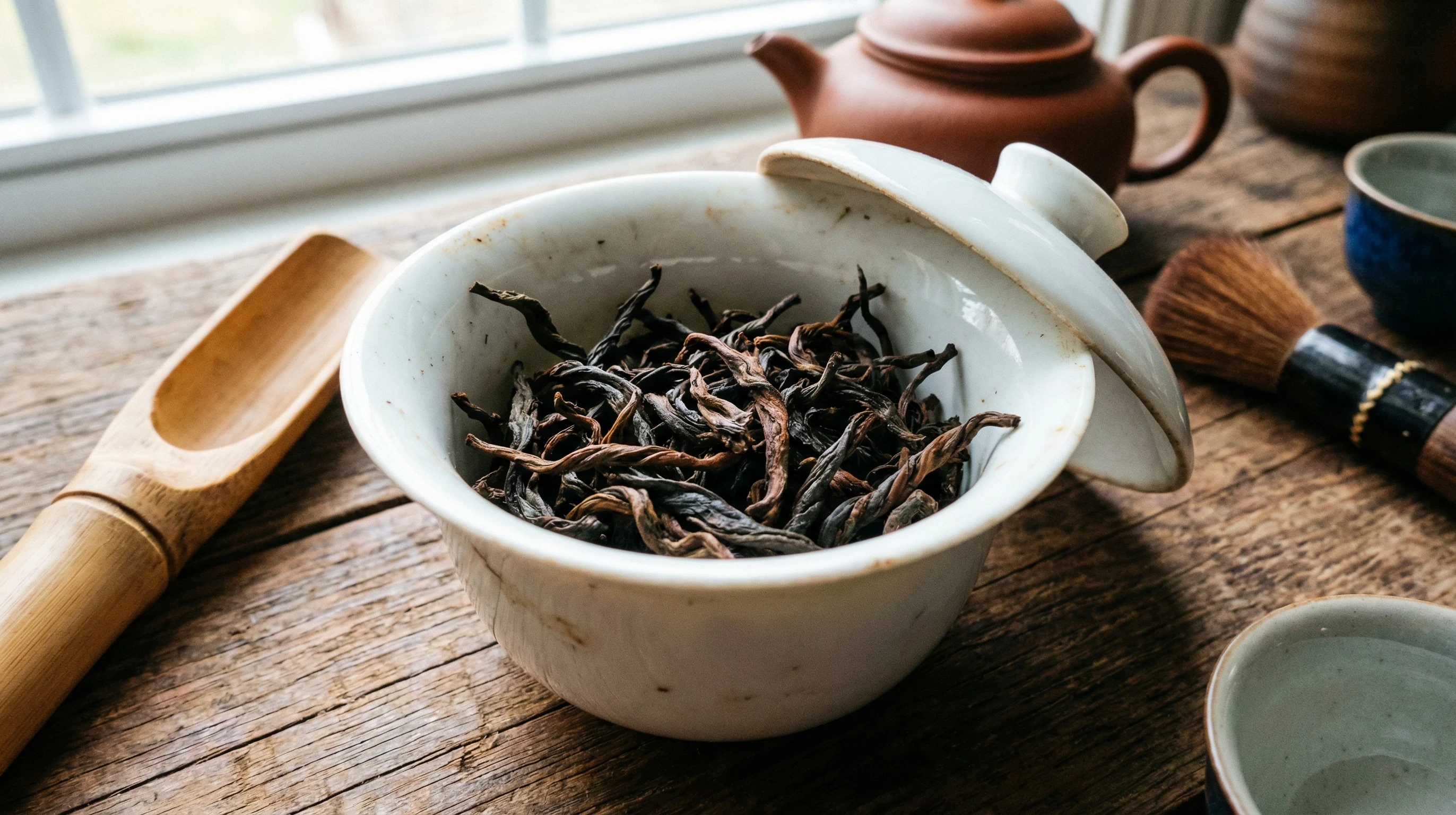
Do This Tonight (A Simple Yancha Gongfu Setup)
If you just want a solid first session without overthinking it, start here:
- Vessel: 100–150 ml gaiwan or small teapot
- Leaf: About 7 g per 100 ml
- Water: 96–100°C (205–212°F)
- Rinse: 1 second, then discard
- Infusions: 5s, 7s, 9s, then add 3–5 seconds each round
That’s enough to get a rich, balanced Yancha session right away. Once you’ve brewed it a few times, you can adjust leaf, temperature, or timing to suit your taste. But if you follow this once or twice, you’ll already understand more than most people who’ve tried rock oolong.
Why Wuyi Yancha Needs Gongfu Style Brewing
Wuyi Yancha delivers a different experience from greener oolongs and everyday teas. The flavor comes from the cliffsides themselves, heavier roasting, and leaves that unfold slowly over many infusions. Most teas can be brewed either Western or gongfu style, but with Yancha, the careful, multiple-infusion method makes a real difference.
There’s a reason gongfu is the main approach in Yancha’s home region. The tight, twisted leaves open gradually. Toss them in a large mug and steep for several minutes, and the roasty, mineral flavors release all at once, often turning astringent. With short, controlled infusions, you taste how each layer builds, from roasty and bold, to honeyed and sweet, to the mineral finish that lingers. This approach rewards attention to timing and temperature, and it doesn’t require expensive gear.
With Wuyi Yancha, the fine details add up. The smaller brewing vessel, the higher tea-to-water ratio, and the intentional quick infusions all work together to give you a cup where flavors evolve without any single note overwhelming the others.
What Makes Wuyi Yancha a Unique Tea to Brew
Yancha comes from the rocky Wuyi Mountains, which give the tea a serious mineral backbone. The term “yan yun” (rock rhyme) describes that sensation: an echo on your palate after each sip that makes you want to reach for the cup again.
These teas are roasted from medium to heavy, not green or light like Taiwanese high mountain oolongs. The roasting brings out bold top notes, from chocolatey to nutty to floral, built upon a savory foundation. The leaves are always tight and twisted. They need time and heat to open up. Underbrewed, you get weak aroma. Overbrewed, you get harshness and bitterness that masks the minerality.
Yancha gongfu style arranges steady, increasing infusions. You start short and gentle, ramp up as the leaves begin to open, and catch all those evolving flavors. Instead of a single, blunt experience, you reveal the tea’s complexity one shot at a time.
Gongfu Brewing Basics for Wuyi Yancha
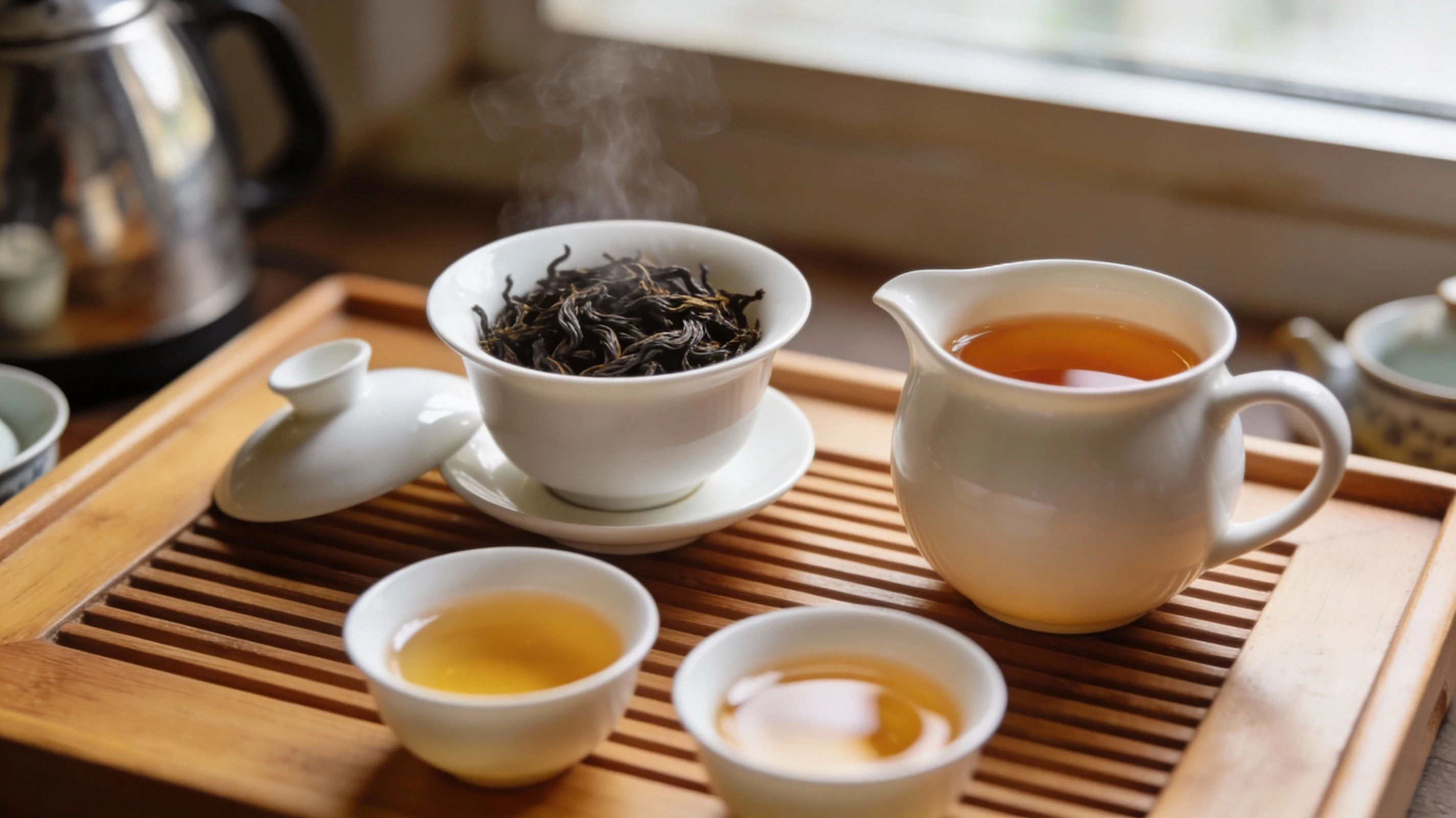
Despite how serious it might look at first, Yancha gongfu brewing comes down to three simple ideas:
Small vessel. You want a brewing vessel (like a gaiwan or teapot) about 100 to 150 ml in size. A smaller vessel gives you more control and lets you use less water per session.
High tea to water ratio. Use more leaf than Western style, usually starting at about 6 to 8 grams per 100 ml. This helps bring out body and depth without needing long steep times.
Short, multiple infusions. Instead of one long brew, infuse for 5 to 15 seconds at first and extend the time gradually with each steep. This lets flavors layer and keeps bitterness in check.
That’s really it. Forget about complicated backstories or gear obsessions. All you’re doing is giving the leaf what it needs to open up, slowly and gently.
If you’re new to Yancha, don’t overthink it. Focus on three things: enough leaf to fill the bottom of your vessel, water hot enough that steam rises immediately, and quick pours on your first few infusions. Get those right, and you’re already most of the way there. Everything else is refinement. Even a basic gaiwan and an electric kettle will get you a genuinely good session. The tea itself will teach you the rest over time.
Step 1: Choose the Right Brewing Vessel
For Yancha gongfu style, the goal is control and heat retention. The first question people have is whether to use a gaiwan or a small teapot. Both work well, but there are some things worth considering.
Gaiwan: Classic, easy to clean, and neutral. Porcelain or glazed ceramic won’t interfere with the tea’s flavor, so you get the real character each time. It’s a little easier to control pouring speed, and you see the leaves clearly, which helps you check how they’re unfolding.
Small teapot: Yixing clay or similar can add a subtle roundness, and the heat retention is excellent. Clay teapots are less forgiving for beginners and can retain flavors from previous brews, so you’ll want to dedicate one to roasted oolongs if you go this route.
For beginners, I recommend a simple porcelain gaiwan or glazed teapot about 100 to 150 ml. The material matters less than having the right volume for fast, even infusions. Later, you can experiment with unglazed clay to see if you like what it adds. Just don’t feel like you’re missing out with plain porcelain. Focus on comfort and control as you build your technique.
Step 2: Measure Out the Right Amount of Tea
Yancha is sensitive to leaf quantity. Too little, and the infusions taste thin and weak, missing that signature mouthfeel and aroma. Too much, and you’ll get a rough, heavy cup with lingering bitterness. A good starting point is 6 to 8 grams for every 100 ml of vessel size (about two spoonfuls, though a scale gives more consistency).
High roast Yancha can handle the higher end, while lighter roast or aged stuff might do better closer to 6 grams. I usually load my gaiwan so the dry leaves cover most of the bottom, not stacked up but spread out. If the leaves clump above the rim, it’s probably too much. If you see a lot of porcelain between leaf clusters, it’s likely not enough.
Don’t worry if your first session isn’t perfect. Adjust up or down and see how your next batch feels. Over time, you get a sense for what works. Keeping a journal and jotting down notes sharpens your understanding more than anything else.
Step 3: Water Quality and Brewing Temperature
Rock oolong brewing depends on high heat and clean water. Yancha loves water just under boiling to get the leaves to open and express their full aroma.
Temperature: 96°C to 100°C (205°F to 212°F) is the sweet spot for almost all Yancha. A few delicate or older teas let you go a little lower (around 92°C, 197°F), but cooler water makes fragrances and structure vanish, leaving you with a bland cup.
Water quality: Use filtered water or spring water if possible. No need to obsess, just avoid harsh tap flavors. Soft, low-mineral water works best. Cloudy or heavily chlorinated water kills aroma, so if your tap isn’t great, filter it first.
I fill my kettle and bring it to a rolling boil, then pour directly into my brewing vessel after a brief pause. With each infusion, I reheat the water so it never dips below 92°C. Yancha leaves need this punch to fully release their strength and fragrance.
Being patient with water temperature keeps your session consistent, and you’ll get more satisfying results across all your infusions.
Step 4: Rinsing the Leaves
The rinse isn’t about cleaning so much as waking up the leaves. Here’s what I do:
Pour boiling water over your measured leaves in the gaiwan or pot and cover. Immediately pour off the water after 1 to 2 seconds. Don’t let the leaves soak.
Lift the lid or cup and take a gentle sniff of the wet leaves. You’ll get your first idea of what’s inside, usually a rush of roasted or floral aroma. If it smells flat or overly smoky, take note for the next session.
I only do one rinse. If the leaves seem dusty or you’re getting a stale aroma, a second quick rinse works. For fresh, high-quality Yancha, you can skip the double rinse and move on to brewing. The aroma rising at this stage hints at the flavors to come. Enjoy it and anticipate what’s next.
The rinse is quick and simple:
- Pour boiling water, cover.
- Dump after 1–2 seconds.
- Smell the wet leaves and lid.
Step 5: First Infusion Timing
This is where many beginners go wrong. For the first infusion, I pour water over the leaves and cover for just 5 to 10 seconds (sometimes even less if the leaves look really tender). Pour off everything quickly and taste. Aim to empty the gaiwan in about 2 to 3 seconds once the timer is up.
If the flavor comes across light, sweet, and a little floral or nutty but not flat, you’re in the zone. If it’s too weak, nudge up next time by a second or two. If it’s harsh or astringent, shorten the time or lower your water temperature slightly (especially with aged or light-roast styles).
You usually shouldn’t get bitterness on the first infusion. What you want is body and the start of that “yan yun” mineral sensation. Every session teaches you something. Use each one to learn how your leaf responds. No two batches are exactly the same, so stay flexible as you adjust timing for freshness, roast level, or leaf size.
Step 6: Building Flavor Across Infusions
The heart of gongfu tea brewing Wuyi Yancha is building flavor across several short infusions, gradually extending the time as the leaves soften. Here’s the general flow I follow:
Infusions 1 to 3: 5 to 12 seconds each, using nearly boiling water. You should get the boldest roast aroma and deepest color.
Infusions 4 to 6: Ramp up the timing by 3 to 5 seconds each round as the aroma shifts and the leaves unfurl. The roast flavor will start to drift into a smooth, mineral-rich core, with subtle sweetness blossoming.
Infusions 7 and beyond: Start extending even more, tasting after 15 to 30 seconds as the tea lightens. If you keep going, longer soaks can bring out gentle floral or herbal notes as the roast fades. Most good Yancha teas last 6 to 12 infusions, depending on variety and leaf quality.
The best way to learn is gentle experimentation. If the liquor suddenly turns darker and rougher, shorten the next infusion even if the schedule says to add time. Avoid chasing the memory of the first cup with increasingly longer times. You’ll draw out bitterness instead of subtle flavor. Once the leaves go quiet and the liquor looks thin and pale, you’ve usually reached the last round.
If you want to dig into the full character of your Yancha, try making small notes after each steep, noticing how the taste shifts and how you feel. Each session is a chance to track down something new in the leaves.
Step 7: Adjusting for Different Yancha Types
Not all Wuyi rock oolongs behave the same in the pot. Here are ways I tweak my routine:
For Heavier Roast Yancha
These (like Shui Xian or classic Da Hong Pao) can take a little more leaf and higher water temperature, but shorter first infusions. Roasted teas open slower and have more stamina. Watch for overextraction. If you taste woodiness or burnt notes, shorten the time or use a little less leaf.
For Lighter Roast or More Floral Yancha
Lighter roast varieties (like some Rou Gui and rare Qilan) are more delicate and can go bitter if you treat them like the heavier ones. Start with slightly less leaf, trim the brew time by 2 to 3 seconds on early infusions, and keep the kettle at the lower end (around 95°C, 203°F).
For Older / Aged Yancha
Aged rock oolong has smooth, mellowed-out roast but builds subtle sweet and herbal notes. Use less leaf and gentler infusions. Higher temps are good, but long soaks aren’t. Drink slowly and notice how the flavor softens each round. Aged Yancha often shows off a subtle, calming sweet note worth seeking out.
Common Mistakes in Yancha Gongfu Brewing
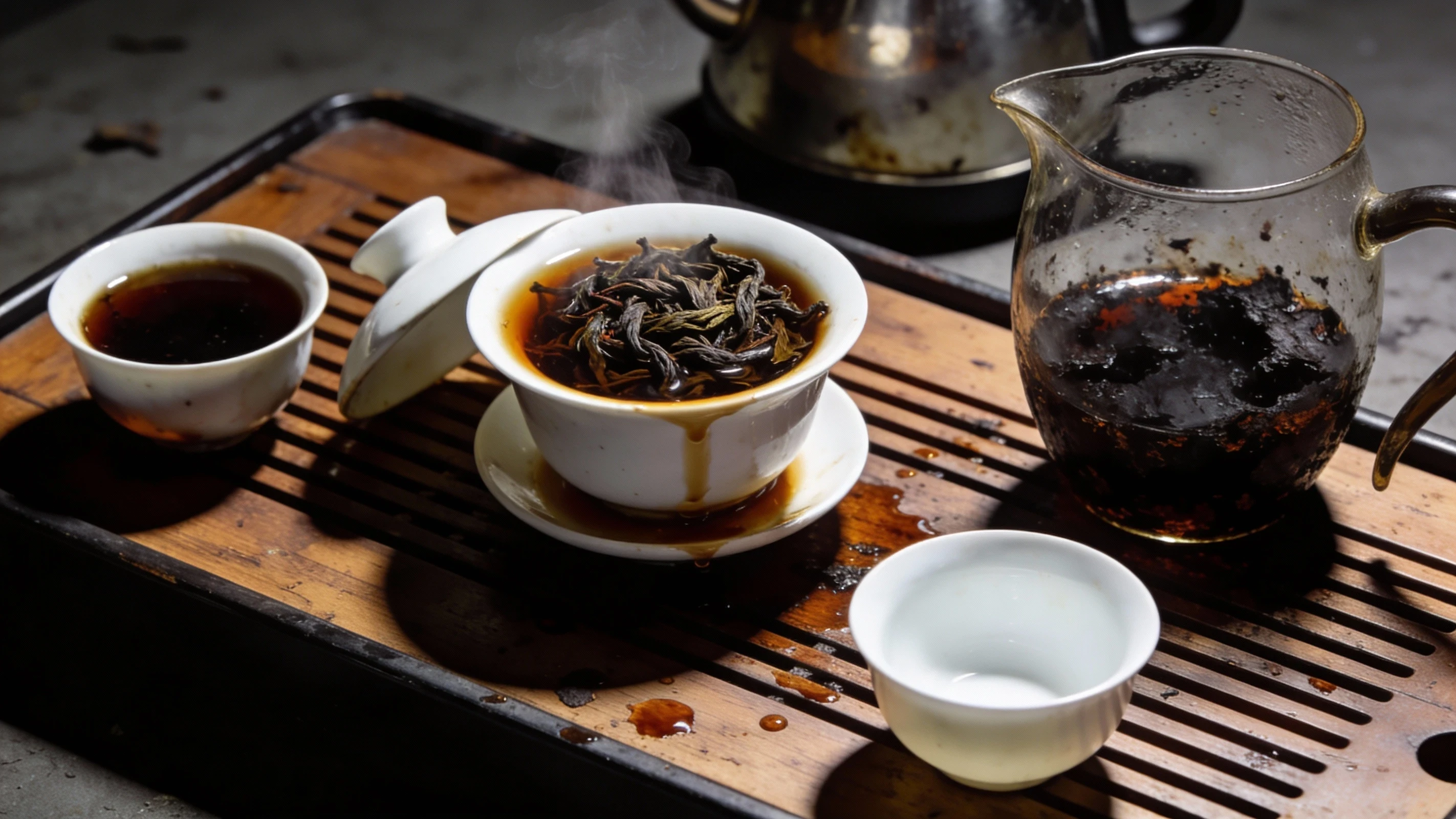
Using too little tea: Leads to flat, personality-free cups that taste nothing like Yancha should. Don’t be afraid to use enough leaf to bring out texture and aroma.
Water not hot enough: People worry about burning the tea, but Yancha needs high heat to wake up. Anything below 90°C (194°F), and you’re missing out on what makes this tea special.
Long infusions too early: This hits you with bitterness and roast overload. The first few infusions should be quick. Longer times are for later rounds, once the leaf has softened.
Blaming the tea instead of the process: Even great teas taste dull when not brewed with confidence. Adjust, learn from each batch, and you’ll get much better results than jumping from tea to tea looking for a miracle brew.
How You Know Your Yancha Brewing Is On Point
Mouthfeel: True Yancha, when brewed well, feels silky and a bit weighty. It coats your mouth, smooth rather than rough, and leaves a slick texture.
Sensation in the throat: The tea slides down, and you feel a gentle warmth or mineral echo. It doesn’t dry you out or burn.
Aftertaste: You’ll notice a long, lingering finish. Roasty at first, then sweet and clean, sometimes with a breath of floral or stone fruit. It gets stronger as you exhale.
Steady, focused energy: You feel good, alert, maybe a little uplifted, but not jittery or wiped out. Harsh brews, by contrast, leave a scratchy or uncomfortable feeling.
If you get all this, your brewing is coming together, regardless of whether you use the fanciest teapot around.
More Tips for Next-Level Yancha
For those looking to deepen their rock oolong experience, here are a few additional suggestions:
Take notes: Jotting down how each session goes helps you track your own preferences. Flavor, aroma, and even the feeling in your chest or head are all part of the experience.
Keep an eye on the leaves: Watching how tightly the leaves unfurl can tell you a lot about timing. Sniff the lid between brews to notice subtle aroma changes.
Mix up your teaware: Try brewing the same leaf in both porcelain and clay, or with and without a fairness pitcher, to notice differences.
Pair with simple snacks: Lightly flavored crackers or fruit can clear your palate between rounds and make subtle notes in the tea pop.
These extra steps aren’t required, but they can make the experience personal and rich. Keep it relaxed and curious.
Final Thoughts: Let the Tea Show You the Way
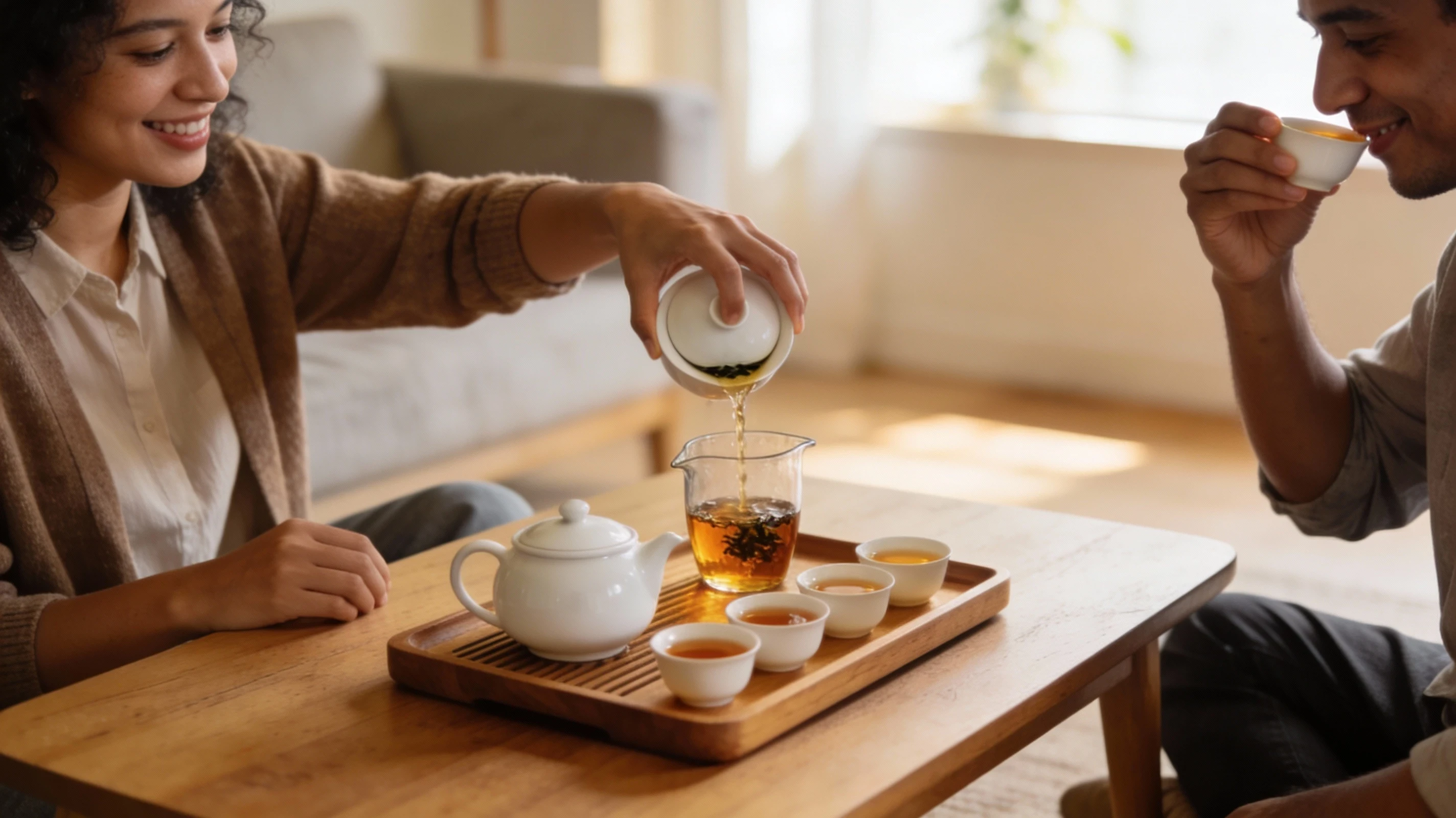
Yancha is a tough teacher and a patient friend. The best way to get better isn’t finding more gear, but giving the leaves your attention, session after session. Take notes about what works and what doesn’t. The more you brew the same batch, the more it opens up.
It’s easy to get distracted by talk of teapots, kettle shapes, and collecting, but the tea tells you most of what you need to know each time you taste. Slow down and let each cup guide your sense of timing, temperature, and proportion. Every round is a new chance to learn.
Ultimately, Wuyi Yancha is about presence and staying curious. Jump into this world, let small changes build up over dozens of sessions, and watch as each cup grows more rewarding. The cliffs of Wuyi have a lot to teach, one careful pour at a time.
If you’d like to deepen your technique beyond Yancha and understand how gongfu brewing works across different tea styles, you might find this helpful: my complete guide to gongfu tea brewing. It covers the fundamentals in more detail and shows how the same principles apply to everything from pu’er to oolong, without overcomplicating the process.
Here’s a little transparency: Our website contains affiliate links. This means if you click and make a purchase, we may receive a small commission. Don’t worry, there’s no extra cost to you. It’s a simple way you can support our mission to bring you quality content.

Chris is the founder of Zen Tea Tools and a passionate explorer of traditional and modern tea brewing. From Gongfu sessions to smart tea technology, he shares practical insights to help others find clarity, calm, and better tea.Learn more about Chris →
Leave a Reply