If you love oolong and want a cup that fills the room with mouthwatering aromatics while keeping serious depth in the flavor, Dan Cong oolong is worth trying. But there’s a catch: brewing Dan Cong Western style tends to flatten what makes it special. That’s why I love making Dan Cong Gongfu style. It’s how the real magic happens.
I brewed my first Dan Cong too hot, with too little leaf, and let my infusions drag on far too long. The result was pure mouth-puckering bitterness. I’ve learned that a little care with the right technique turns Dan Cong from finicky to fantastic. I’m here to help you skip the rookie pitfalls and get a brew that’s bursting with juicy aroma, silky texture, and sweet aftertaste every single time.
Why Brew Dan Cong Oolong Gongfu Style?
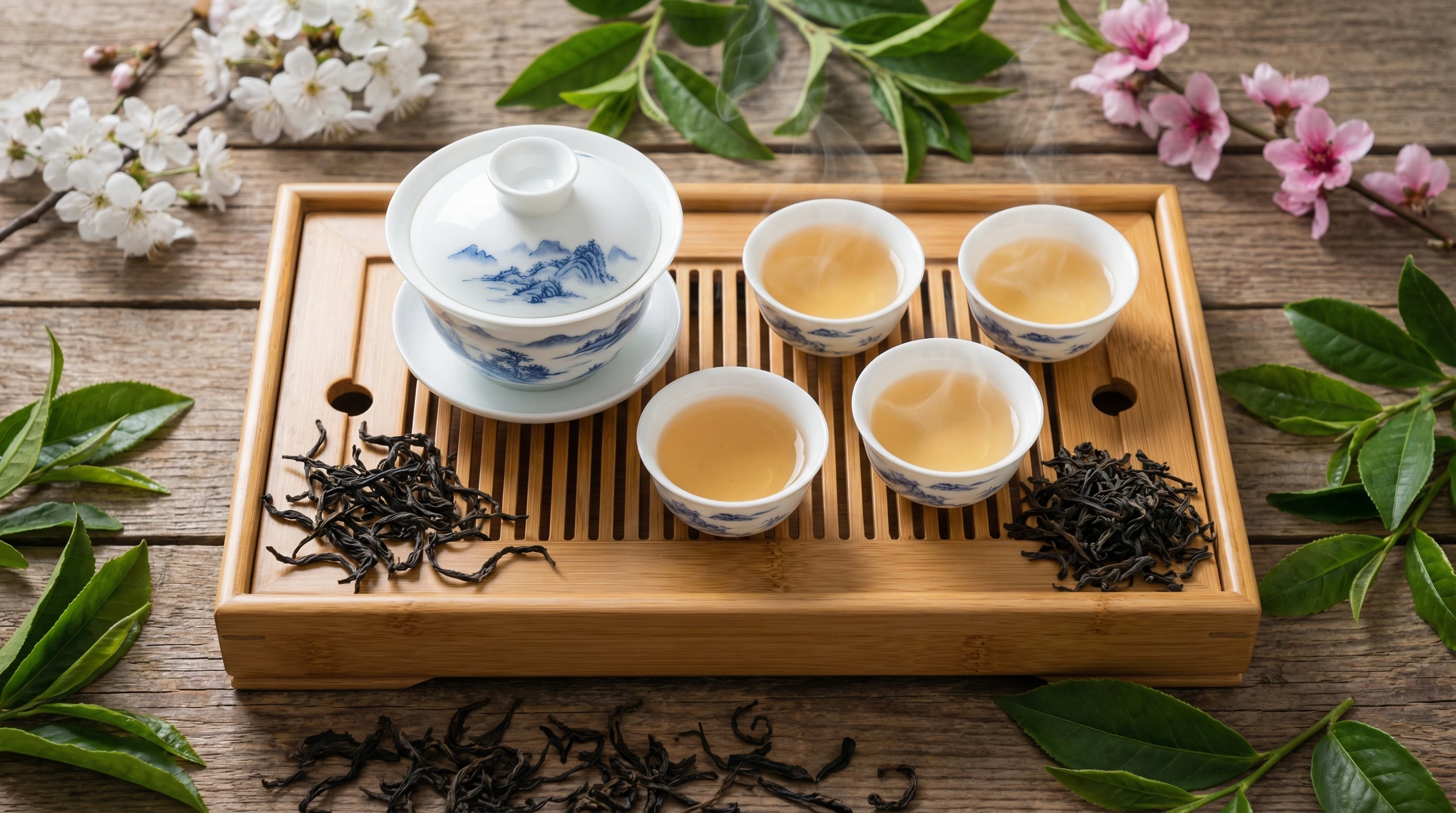
Dan Cong is in a whole different league from typical oolong. If you’ve ever had Tieguanyin or rolled Wuyi, you might expect subtle floral or nutty notes. Dan Cong, though, has intense aromatics. Think full-blown fresh orchid, ripe peach, honey, toasted almond, zesty citrus, or even wisteria. The kicker is these crazy layers drift and change with each steep. Brew it Western style and you’ll get a single, washed out note and dull leaf. Use Gongfu and it’s suddenly alive, opening up infusion by infusion, with richer mouthfeel, more aroma, and a sweeter lingering finish.
One thing I like about brewing Dan Cong Gongfu style is having better control. You can tinker with leaf amount, tweak water temperature, and adjust each steep by just a few seconds to catch the exact texture and taste you’re after. Doing it Gongfu also helps you avoid brewing mistakes that can turn Dan Cong into a bitter, thin, or just plain boring cup. This guide is here to help you make the most of your Dan Cong leaves, letting you skip the guesswork or wasted tea while getting right to the good stuff.
What Is Dan Cong Oolong?
Dan Cong oolong comes from the Phoenix Mountains (Fenghuang Shan) in Guangdong province, China. This area is famous for rocky hillsides, misty peaks, and ancient tea groves. The words “Dan Cong” translate to “single bush” style. That doesn’t mean every Dan Cong tea is from a single plant, but it points to an older style of harvesting, where each batch was made from one mother tree and its offshoots. These days, Dan Cong refers more to the Phoenix oolongs that show off wild natural aromas.
Dan Cong teas are legendary for having strong, clear aroma profiles without added flavoring. I’ve sniffed a dry leaf of Milan Xiang Dan Cong and thought I’d cracked open a jar of fruit jam. Each variety leans toward its own signature fragrance: some floral like orchid or lilac, some honeyed or even almond like. Purists get a little obsessed with where exactly the leaves are grown, but honestly, leaf quality matters more than fancy mountains or ancient tree claims. Look for whole, big leaves with flexible stems and a robust aroma. These brew up best in Gongfu and are what you want for a memorable session.
Dan Cong Oolong Flavor Profiles (and Why Precision Brewing Pays Off)
There are several aromatic “types” of Dan Cong. I often see Milan Xiang (honey orchid), Yu Lan Xiang (magnolia), Xin Ren Xiang (almond), and Zhi Lan Xiang (orchid) making the rounds at the best tea shops. These aren’t just subtle hints. They’re so distinct that just warming the dry leaf in your gaiwan can fill your kitchen with perfume-like aroma. This changes even more as you steep and taste: the first few infusions explode with aromatics and brightness, then mellow out into deeper sweetness, light minerality, and long, tingling aftertaste.
I found out early that getting the best flavors out of Dan Cong means paying attention to water temperature and leaf-to-water ratio. I sometimes get away with slightly underleafing rolled oolongs, but with Dan Cong, that move almost always gives me something thin and boring.
On the other hand, too hot water for too long makes everything harsh. The right technique hits the sweet spot—a thick, juicy body with pure floral or honey notes and absolutely no bitterness. Mess up the temperature or go overboard on time and you’ll notice a sudden crash in aroma, astringency, or weird sour notes that linger. Dialing in your routine makes all the difference between a vivid cup and a disappointing one.
Gongfu Gear for Dan Cong: What Actually Matters
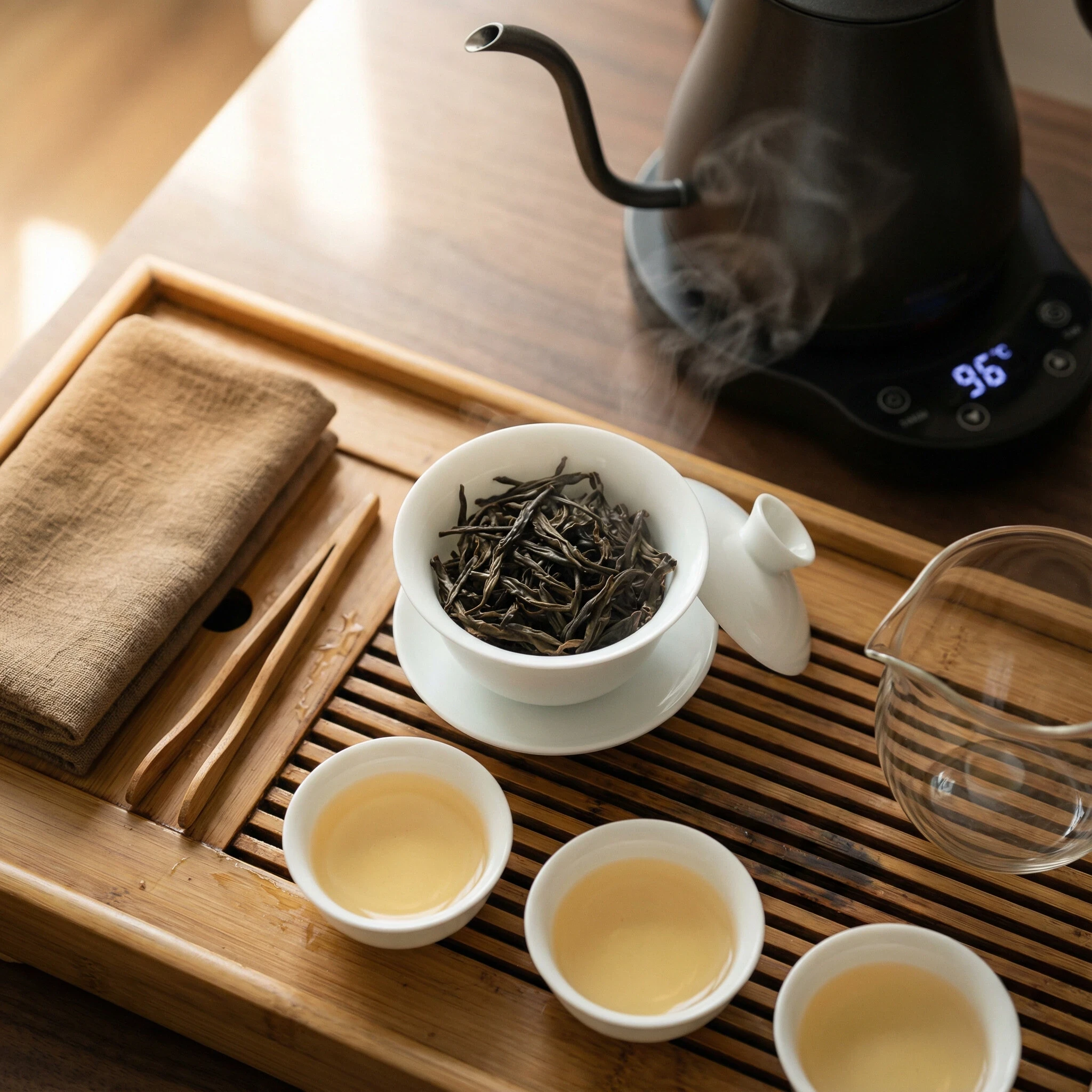
You don’t need a fancy setup to nail Dan Cong oolong brewing Gongfu style, but the right gear can make it easier and more fun. I usually reach for a white porcelain gaiwan, sometimes a small glazed teapot—nothing bigger than 120 ml. Smaller is better for control, since Dan Cong infuses fast.
Porcelain makes it easier to enjoy the real aroma, without any outside flavors leaking in from clay. If you’ve got some experience and a nice, high-fired clay teapot that you’ve dedicated to Dan Cong, more power to you. For beginners, though, porcelain is definitely the way to go and helps you really get a feel for the true Dan Cong character.
Stick to the 90–120 ml range for your brewing vessel. That’ll let you taste multiple infusions without the tea turning cold, and keep the ratio of leaf to water tight. Your kettle is the other important piece. Stable temperature is really important, because Dan Cong likes hotter water than most other oolongs.
Electric temperature control kettles are super handy for this, and will make your consistency much better. A variable temp kettle is one of my favorite investments for brewing Dan Cong and other Gongfu teas—you can hit the perfect temp every time, not just guess.
Dan Cong Gongfu Brewing Parameters (Your Baseline)
Here’s the ballpark for how to brew Dan Cong oolong Gongfu style:
- Use 5–7 grams of leaf per 100 ml water.
- Heat water to 95–100°C (203–212°F). Go higher if you’ve got really robust, high-quality leaf.
- I usually give the leaves a quick 2–5 second rinse with hot water. This “wakes up” the tea, washes off any dust, and instantly shows off that wild Dan Cong aroma.
- Your first real infusion should be very short: 5–8 seconds. Dan Cong extracts fast. Longer and it gets bitter.
This isn’t a concrete rulebook. Once you know what you like, try bumping up leaf or dropping a degree or two for lighter brew. It’s all about using this as your launching pad, not a fixed formula. The goal: maintain a punchy aroma, syrupy mouthfeel, and sweetness, without drifting into bitterness. Adjust to your own taste as you go. Experience teaches you more than any guide could.
Step-by-Step: How to Brew Dan Cong Gongfu Style
- Preheat your teaware: Pour boiling water into your gaiwan or teapot and cups, swirl, then discard. This makes your brewing vessel hug the Dan Cong aroma, not chill it out.
- Add your dry leaves: Pop your measured leaves right into your hot gaiwan or teapot. Close the lid, wait a few seconds, then crack it open and inhale. The warm, sweet floral hit is unreal and sets the tone for an amazing session.
- Rinse the leaves: Pour in hot water just to cover and immediately pour it off—don’t drink this. Your kitchen will now smell like spring in Guangdong, the aroma will fill the room and wake up your senses.
- First infusion: Pour water straight off the boil, cover, and count to five or eight. Pour all the liquid out quickly. The liquor should be light gold, not orange or brown. Sip and notice: is it sweet, floral, lush? Or is something off?
- Next infusions: Keep each infusion short. Bump up the time by 2–5 seconds per steep. Listen to the tea. If aroma is fading and flavor is mellowing, you can stretch each steep. If things get sour or dry, shorten up or try cooler water.
- Enjoy the ride: Dan Cong loves attention. Smell the lid (the “gaiwan nose”), the wet leaf, and sip slowly. I love watching flavors evolve. The best ones leave your throat cooled and your tongue tingling, each cup bringing something new and exciting.
Infusion Progression—What to Expect As You Brew
The first couple of steeps almost always give a blast of heady aroma: gardenia, mango, mature orchid, or honeyed nuts. They’re usually lighter in body but wild in the nose. The next 3–5 rounds settle into a sweeter, thicker texture, and the floral or fruit notes get deeper and richer. This is where I usually get that signature Dan Cong syrupy mouthfeel, a kind of slick, sweet gloss that lingers after each sip.
Later steeps (if your leaf is good) transition into a subtle mineral note, more gentle sweetness, and sometimes a peppery or herbal finish. By infusions 8 or 10, I often get a faint, cool aftertaste that sits on the sides of the tongue. Each cup shows off a different aspect—it’s one of the reasons Dan Cong is so beloved among tea fans.
A good Dan Cong easily delivers 8–12 infusions before giving up the ghost. You can tell it’s done when the color fades, the aroma disappears, and the flavor thins out, even if you press the last steeps longer. If you keep getting interesting aromas and taste after eight steeps, you scored fresh, lively leaf. The longer your leaves last, the higher their quality—so pay attention to staying power as a sign of great tea.
Dan Cong Brewing Mistakes I Learned the Hard Way
- Too little leaf: Dan Cong is bold, but underdosing the leaf gives you weak, flat soup and no aroma. Don’t be shy with the leaf, or you’ll miss the real show.
- Water that’s not hot enough: Cooler water means less aroma in your cup. Dan Cong needs almost boiling temps to shine, otherwise you lose the punchy fragrance and luscious texture.
- Oversteeping the early infusions: Anything past 10 seconds in the first round tends to go bitter or dry. Err on the side of too short; you can always add a few seconds later.
- Treating Dan Cong just like rolled or roasted oolongs (Tieguanyin or Wuyi): They need different timing and water, so adjust accordingly.
- Blaming bitterness or astringency on the tea, not technique: Most bitterness is user error, not a flaw in the leaf. Try adjusting temp, timing, and leaf before giving up on your Dan Cong.
Getting these basics right can transform your experience. If you run into trouble, tweak your ratio, temp, or timing. Dan Cong will forgive you quickly with a few adjustments, and trying again will make you a better brewer. If you want a quick fix, start with shorter times and warmer water—you’ll often fix 90% of common problems in one round.
Adjusting for Different Dan Cong Styles
Some Dan Congs are greenish and floral, others are roasted and nutty. I use higher temps and slightly longer infusions for medium roast styles like Ba Xian. For the greener styles (more floral), I keep things shorter and occasionally drop to 93°C (199°F) if the first brews get sharp.
If you want extra lift in aroma, boost leaf amount by a gram or two per 100 ml, but don’t lower your water temperature too much or you’ll lose the signature notes. Adjusting Dan Cong brewing is less about the clock and more about watching how the tea develops and trusting your own senses every time. Notice the aroma, mouthfeel, and finish, and mix up your variables to tease out the best cup for you.
Water Quality and Dan Cong Tea
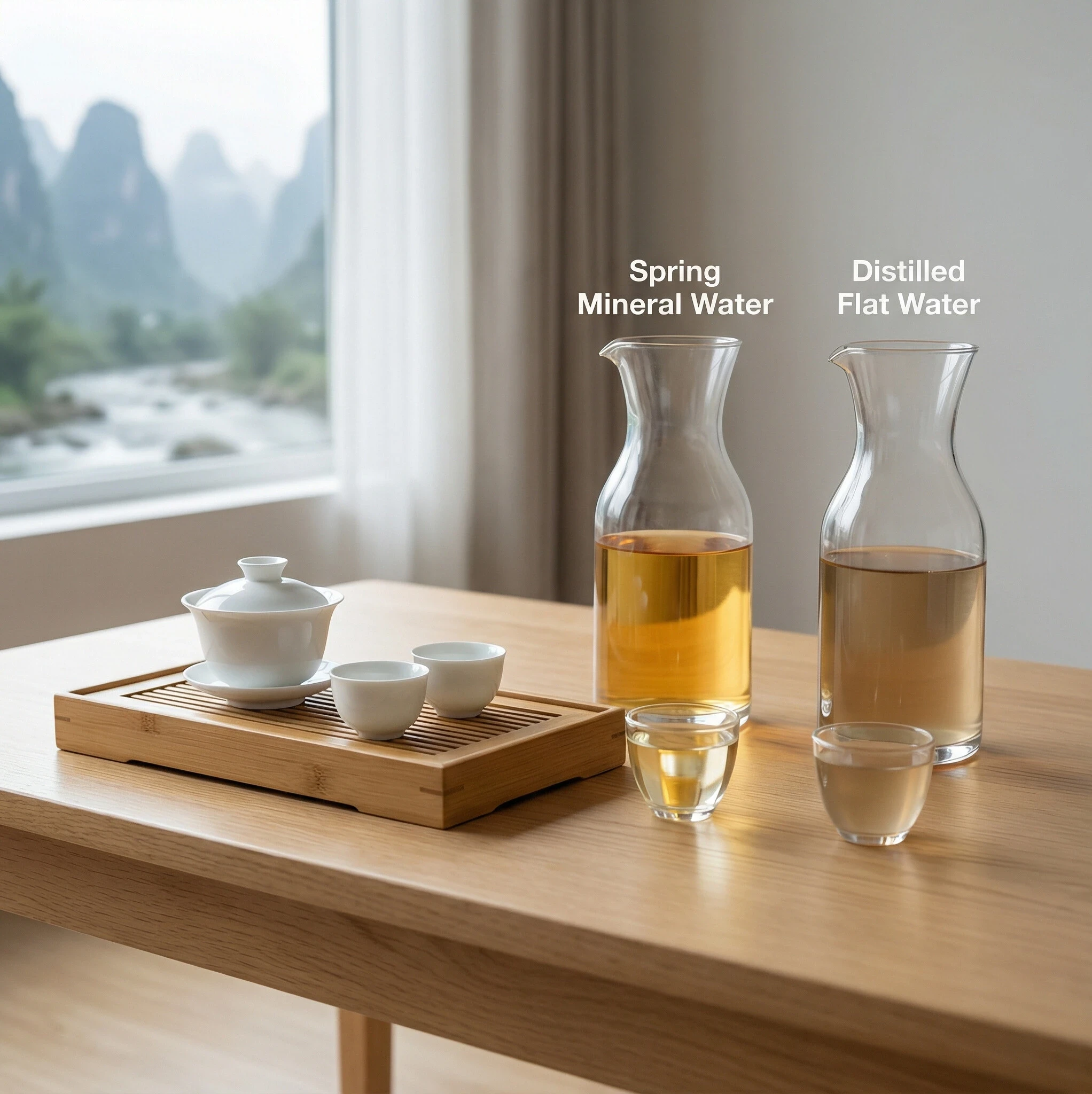
If your Dan Cong seems weak, hollow, or a bit flat, the culprit is often the water. Super pure, distilled, or “dead” water can kill the aroma and mouthfeel. I get the best results with filtered water that still has some mineral content, not the bottled stuff that strips out everything. If your tap water tastes good on its own and isn’t super hard, you can likely use it.
Fancier Gongfu folks love using spring water for max aroma, but I’ve brewed really amazing Dan Cong with just average filtered water. The main point: don’t overthink the chemistry. Just try to avoid totally flat or super chlorinated water and you’ll be set for tasty results. A little mineral content goes a long way to bring out Dan Cong’s best features, so if you can, do a few side-by-side brews with different waters and track down your favorite.
Dan Cong Gongfu vs Western Brewing: Key Differences
Gongfu brewing brings out Dan Cong’s real complexity and lets you control every step: multiple short infusions, direct-to-cup pouring, and active aroma exploration. Western brewing dumps it all in one long steep, which means the perfume fades and you’re left with muddled flavors. Try both ways and you’ll notice the Gongfu difference right away. The tea simply feels more alive, evolving with every pour.
Still, if you’re traveling or at work, Western style is quick and still way better than skipping Dan Cong entirely. Some folks use travel Gongfu sets or mini flasks, which is a fun compromise if you’re not near your usual teaware. Even without all the gear, you can let Dan Cong surprise you with a simple mug or French press.
Frequently Asked Questions
Is Dan Cong hard to brew?
It’s not hard, but it is picky. Stick to the basics and taste as you go. If you mess up, you can always adjust on the next round. Let your senses guide you more than a timer, and with a little patience, you’ll catch the right balance.
Can beginners brew Dan Cong Gongfu?
Absolutely. Just grab a small gaiwan, follow the guide above, and don’t worry about being perfect. Most people get the hang of it after a few rounds and enjoy the experience as much as the taste.
Why does my Dan Cong taste bitter?
This is nearly always because the water temperature was too high or the infusions were too long in the early rounds. Drop your steeping time and taste again. If you still get astringency, make sure your water isn’t boiling for too long before hitting the leaf.
How long should Dan Cong rest after opening?
With top quality teas, I like to let them breathe for a day (keep them sealed and out of light) so any trapped heat or moisture levels out. After that, store as airtight as possible.
Can I resteep Dan Cong later the same day?
For sure! Just keep the wet leaves covered and out of the sun. Most Dan Cong is still really flavorful hours later, especially if your first rounds were brief. You might find even richer texture and finish in later steeps if you take a break and come back.
Why Brewing Dan Cong Gongfu Style Pays Off
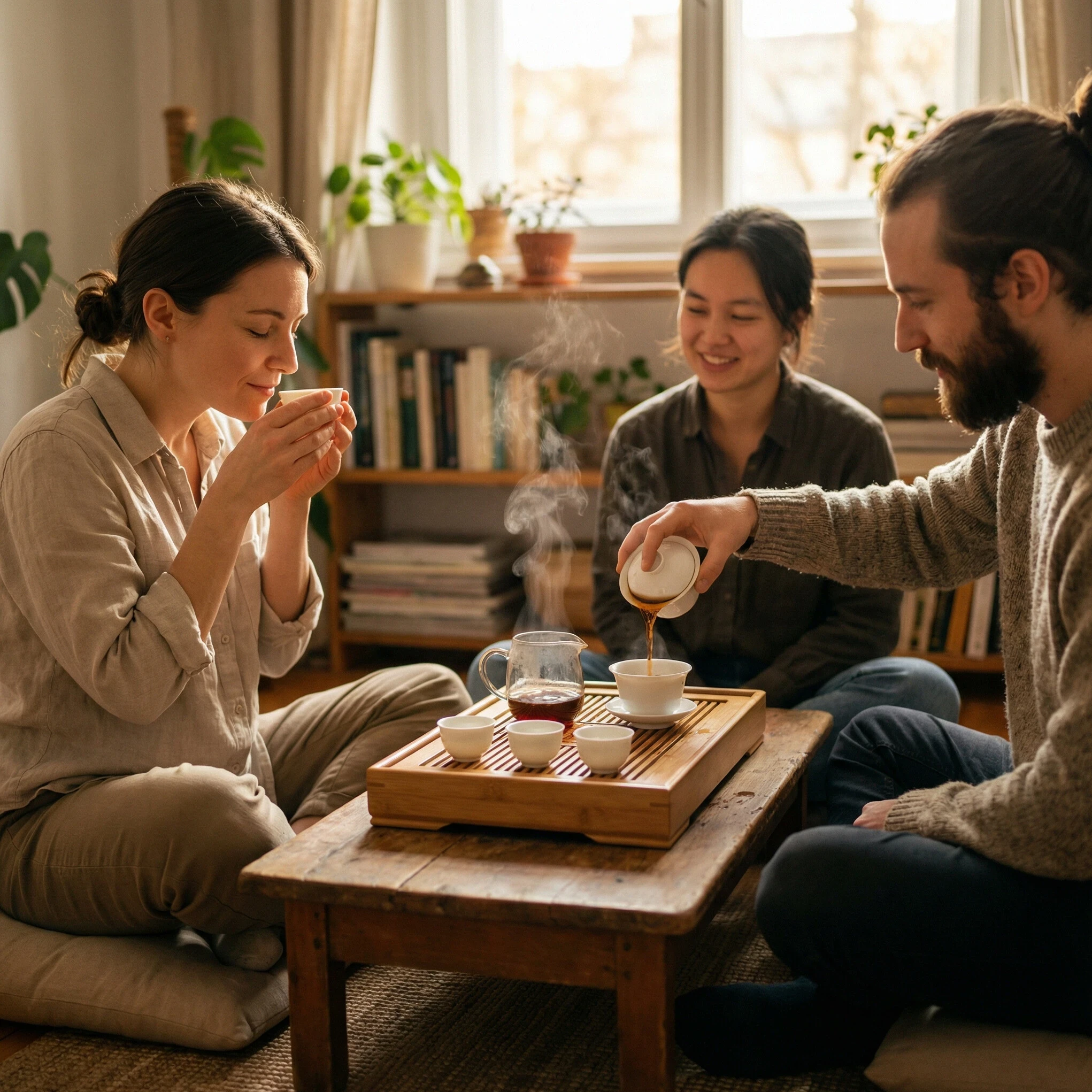
Dan Cong rewards slow attention. Brewing Gongfu isn’t just about getting more tea out of your leaves, it’s about making a session into a hands-on ritual. You’ll smell, taste, and feel each layer as it emerges. The more you notice, and the more you play around, the better your brews will get.
Trust your nose and tongue and tweak the basics. Once you’re hooked, you might want to check out other Gongfu brewing guides or invest in purpose built teaware. This is a tea that absolutely loves the spotlight, and with a little practice, you’ll be brewing Gongfu Dan Cong with total confidence and zero bitterness. Let yourself get into the flow and enjoy every step—your best Dan Cong is always just a cup away.
Here’s a little transparency: Our website contains affiliate links. This means if you click and make a purchase, we may receive a small commission. Don’t worry, there’s no extra cost to you. It’s a simple way you can support our mission to bring you quality content.

Chris is the founder of Zen Tea Tools and a passionate explorer of traditional and modern tea brewing. From Gongfu sessions to smart tea technology, he shares practical insights to help others find clarity, calm, and better tea.Learn more about Chris →
Leave a Reply