Automated brewing hands temperature, timing and sometimes water flow to a machine. Manual brewing keeps all of them in your hands. Each one suits some variables, some teas and some drinkers better than the other, so this article gives a verdict per variable and a rule for choosing. For results from side-by-side brews, see our hands-on comparison.
What counts as automated and what counts as manual?
The terms get used loosely, so here is how this article uses them.
- Fully automated: A device that heats water to a set temperature, steeps the leaf for a set time and dispenses or drains the tea without you doing anything in between. Many are controlled from an app or a preset menu.
- Partly automated: A device that controls one variable, usually temperature, and leaves the rest to you. A variable-temperature kettle is the common example.
- Manual: A kettle or pot, a vessel such as a teapot, gaiwan or infuser, and your own eyes, nose and timer.
Most people end up somewhere in the middle. The question is which variables you want a machine to own.
What does automation do better?
Automation does best at the variables where the result depends on repeating the same number every time.
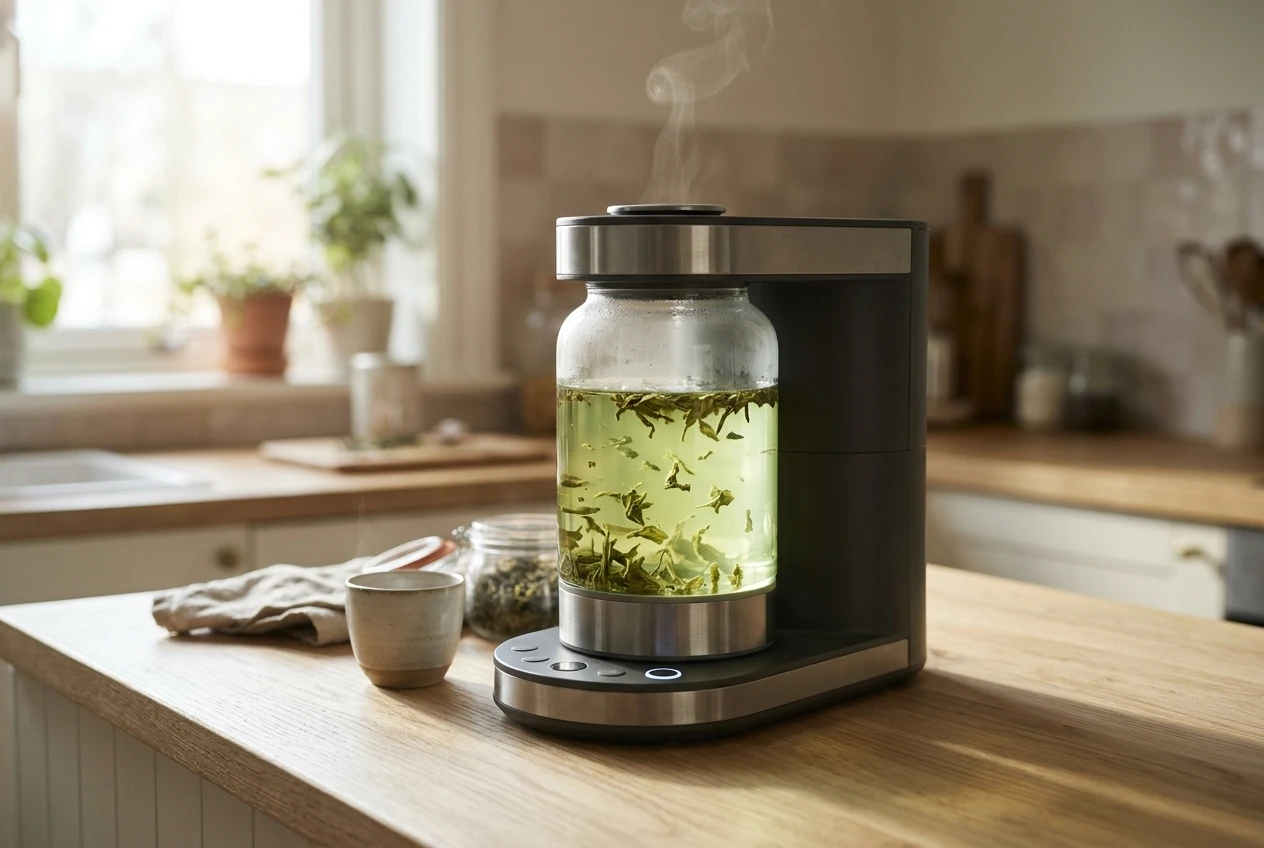
- Temperature: Machine wins. A heating element held at a set point gives the same water temperature every brew. By hand, the water cools as it moves from kettle to pot to cup, and the amount it cools depends on the room, the vessel and how long you wait. Delicate green and white teas are the most sensitive to this, because water that is too hot pulls out bitterness.
- Timing: Machine wins. A device does not get distracted. A steep that runs 30 seconds long can turn a tea astringent, and a timer that starts and stops without you removes that mistake. This matters most with short steeps, where a few seconds change the cup.
- Repeatability: Machine wins. If you brew the same tea the same way every morning, a preset gives you the same cup on a busy day as on a quiet one.
- Convenience: Machine wins. You can set it going and do something else, which suits a desk, an office or a busy morning.
Automation also helps while you are learning a tea. If you hold temperature and time constant, you can change one thing at a time, such as the amount of leaf, and taste what that change did.
What does manual brewing do better?
Manual brewing does best where the tea changes during the session and someone has to respond.
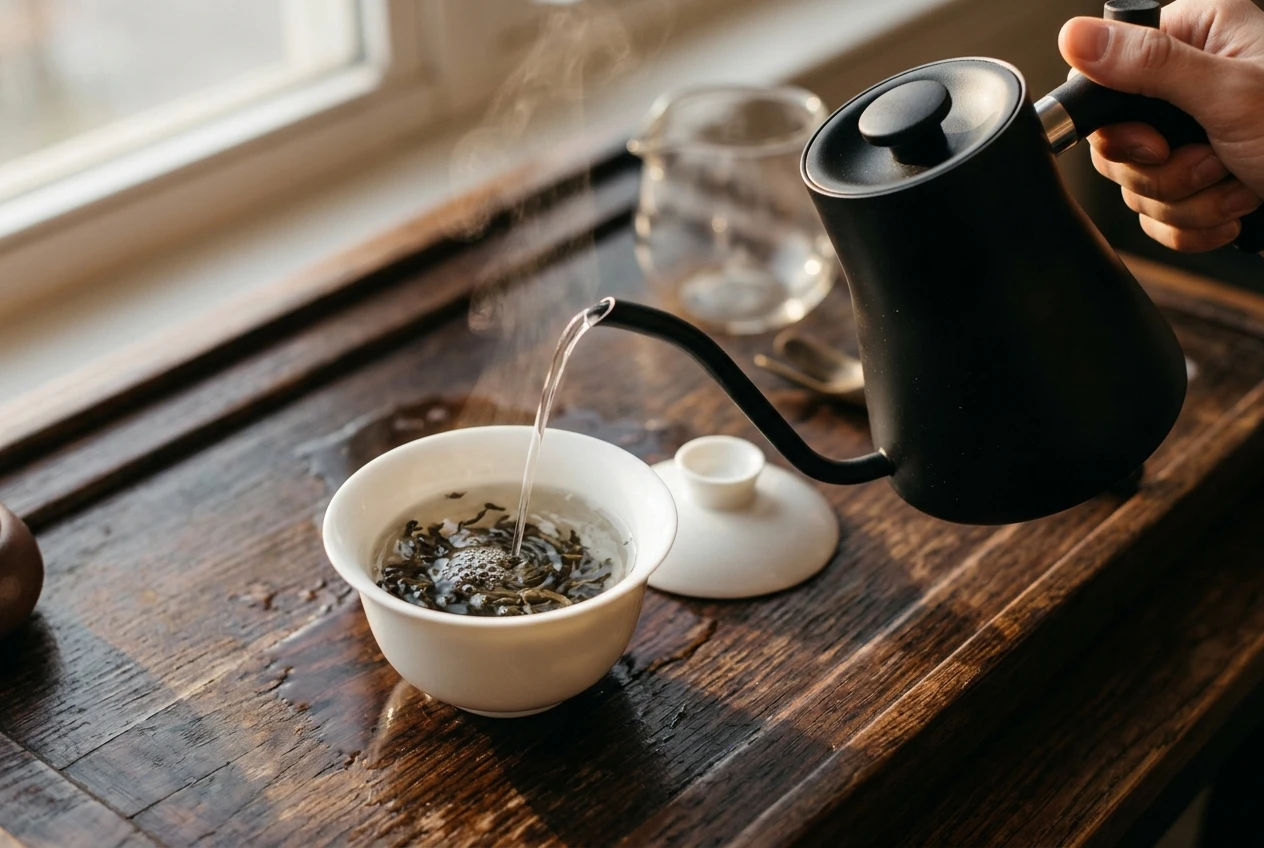
- Judgment: Hand wins. Tea leaves vary by harvest, by age and by how they were stored. A preset treats every batch the same, while a person can smell the wet leaf, see how fast it opens and adjust the next steep. A machine can only follow the numbers it was given.
- Water flow: Hand wins, by a small margin. How you pour affects how the leaves move and how evenly they extract. Pouring gently down the side of the vessel treats leaves differently from pouring straight onto them. Some machines offer flow settings, but a hand can vary the pour from one infusion to the next.
- Infusion-by-infusion adjustment: Hand wins. Teas brewed gongfu style are steeped many times in quick succession, and each infusion may need a slightly different time. A fixed program has to be changed by you anyway, at which point you are brewing manually with extra steps.
- Learning the tea: Hand wins. Brewing by hand teaches you what over-steeped and under-steeped taste like, and that knowledge carries over to any device you use later.
- Cost and upkeep: Hand wins. A kettle and a pot have few parts to break and nothing to descale beyond the kettle. If you do own a device, cleaning and maintaining a smart tea brewer is an ongoing task to plan for.
Which teas suit which method?
Match the method to how forgiving the tea is and how many times you steep it.
- Green and white teas: Automation suits them well. They are sensitive to temperature and tend to turn bitter when the water is too hot, so precise heat is the biggest benefit.
- Black teas and most herbal blends: Either method works. These are usually brewed in one steep with hot water and tolerate small errors, so a machine saves effort without changing much.
- Oolongs: These split by style. A single Western-style steep works fine in a device. Brewed gongfu style, with small leaf-to-water ratios and many short steeps, oolong rewards a hand that can adjust each infusion. Our guide to brewing Tieguanyin gongfu style covers leaf ratio, temperature and timing for one example.
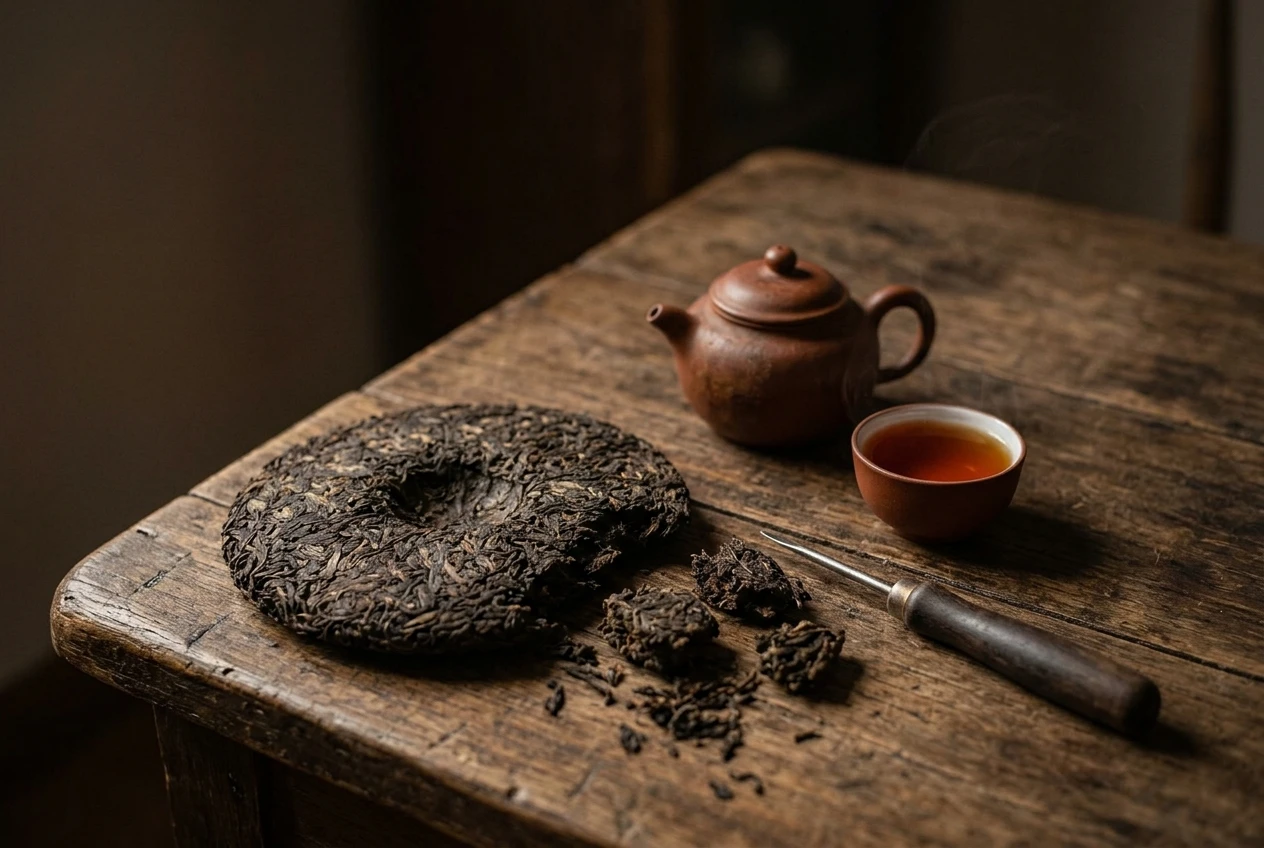
- Aged and pressed teas: These favor manual brewing. Their flavor changes with age and storage, and the best steep time shifts from one infusion to the next, so judgment matters more than repeatability.
- Teas you are still learning: Start by hand, or use a device only for temperature, so you can see what each variable does.
Can you mix both?
Yes, and for many drinkers this is the best answer. Splitting the work by variable gives you most of the benefit of each method.
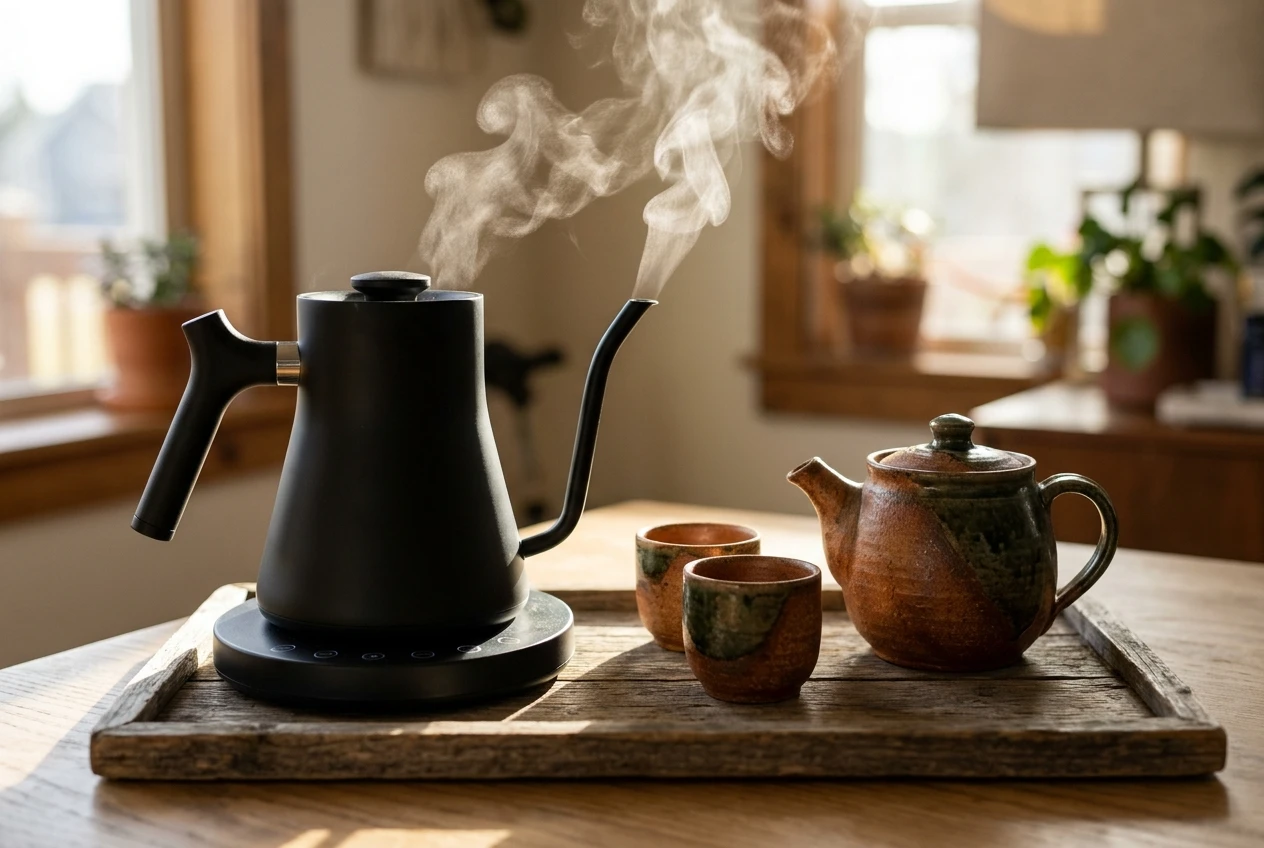
- Machine for temperature, hand for everything else: A variable-temperature kettle gives you exact heat, and you keep control of the pour, the timing and the vessel. If you are unsure about a full device, this is the lowest-commitment option.
- Machine on weekdays, hand on weekends: Use a preset when you need a consistent cup quickly, and brew by hand when you have time to pay attention to the leaf.
- Machine for the first brew, hand to adjust: Run a preset to get a baseline, taste it, then change the leaf amount or time by hand on the next brew.
- Different methods for different teas: Keep a device for delicate teas and everyday brews, and brew your more complex teas by hand.
If you lean toward the partly automated route, the best smart tea brewers by budget lists options at several price levels.
How do you decide?
Answer four questions, in order.
- How many times do you steep each tea? If you steep once, a machine loses little. If you steep the same leaf many times, manual brewing gives you more control.
- How sensitive is the tea to temperature? The more delicate the tea, the more a precise heater helps, whether it comes in a kettle or a full device.
- How much do you want to be involved? If brewing is part of the enjoyment, a machine takes away what you like. If tea is something you want ready when you sit down, automation gives you that.
- How consistent does the cup need to be? If you want the same result every time, such as at a desk or in a shared space, a preset is hard to beat.
Then apply this rule: let a machine own the variables that depend on repetition, which are temperature and timing, and keep the variables that depend on judgment, which are water flow and adjusting between infusions, for yourself. Drinkers who mostly brew green, white and black teas in a single steep will find that a device covers most of what they need. Drinkers who brew aged teas, or oolong in many short steeps, will get more from a kettle, a gaiwan and their own attention.
If you are still weighing the two, spend a week brewing one tea by hand with a timer and a thermometer or temperature-control kettle. You will find out which variables you want to hand over before you spend money on a device.
Ready to pick a device? Find the smart tea brewer that fits how you brew.

Chris is the founder of Zen Tea Tools and a passionate explorer of traditional and modern tea brewing. From Gongfu sessions to smart tea technology, he shares practical insights to help others find clarity, calm, and better tea.Learn more about Chris →
Leave a Reply